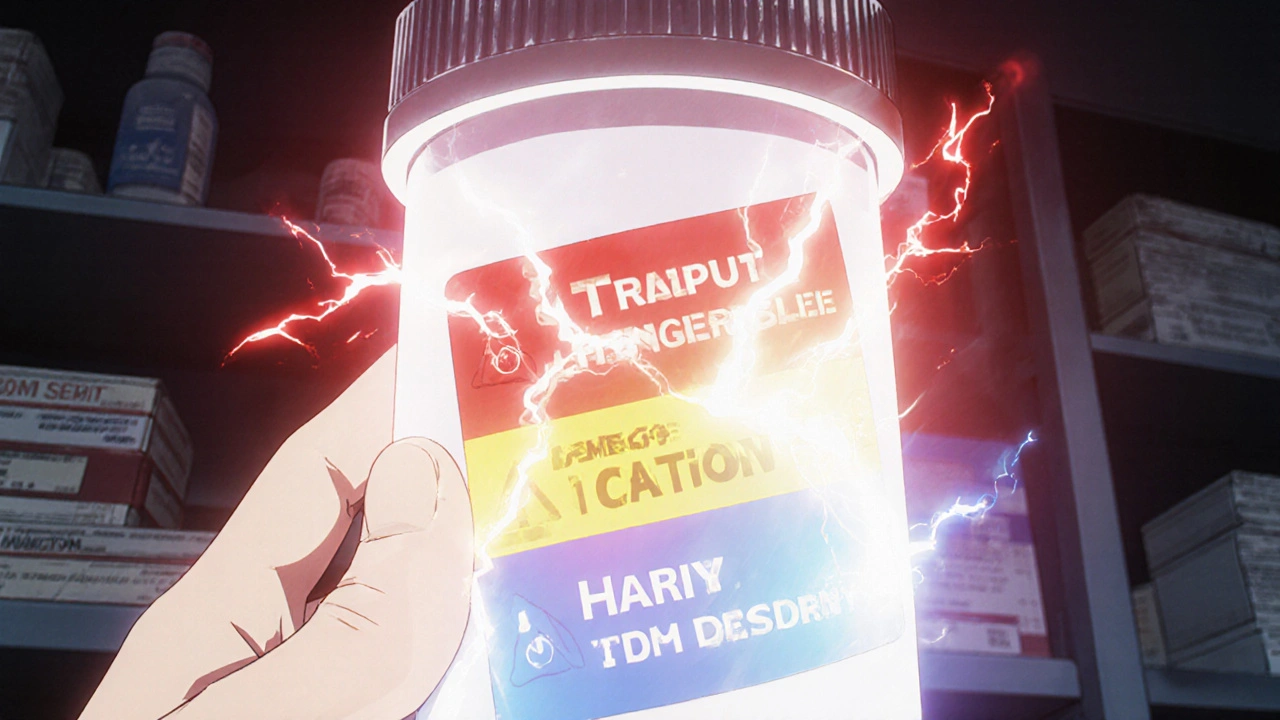
When you pick up a prescription, you might not notice the small, colorful sticker on the bottle—but that sticker is a medication sticker, a visual label applied to prescription containers to reduce confusion and prevent dangerous mistakes. Also known as drug labeling aids, these stickers are a simple tool that saves lives by making sure you take the right pill, at the right time, in the right way. They’re not just reminders—they’re safety nets.
Behind every medication sticker is a system designed to fight one of the most common and dangerous problems in healthcare: medication errors, mistakes in prescribing, dispensing, or taking drugs that lead to harm or death. These errors happen more than you think—up to 1.5 million people in the U.S. are injured each year because of them. Stickers help by clearly showing the drug name, dosage, frequency, and special instructions. For seniors taking ten different pills, or parents managing a child’s ADHD meds, a sticker with a clock icon for "take at bedtime" or a red flag for "avoid alcohol" can be the difference between healing and hospitalization.
They’re also tied to how pharmacy safety, the set of practices and tools used to ensure patients receive correct medications without harm works in real life. Barcode scanning, electronic prescriptions, and automated dispensers all rely on clear labeling to function. But when systems fail—like when a label smudges, a pharmacy is rushed, or a patient can’t read small print—the sticker becomes the last line of defense. Some pharmacies even use color-coded stickers: green for daily meds, yellow for prn (as needed), red for high-risk drugs like blood thinners. These aren’t just design choices—they’re clinical tools.
And it’s not just pharmacies. At home, caregivers use stickers to track when a loved one took their medicine, especially for dementia patients or kids on complex regimens. A sticker with a picture of a heart for heart meds or a sun for morning pills makes routines stick—literally. Even the FDA and CDC recommend visual aids like these to reduce confusion, especially with look-alike or sound-alike drugs like Hydroxyzine and Hydralazine.
What you’ll find in the posts below isn’t just a list of articles—it’s a real-world look at how medication safety works. From barcode scanning in pharmacies to how a single misread label can lead to overdose, these stories show you the hidden systems that protect you every time you open a pill bottle. You’ll see how generic meds get labeled, how kids’ medicines are made safer, and why a simple sticker can be the smartest thing on your medicine shelf.