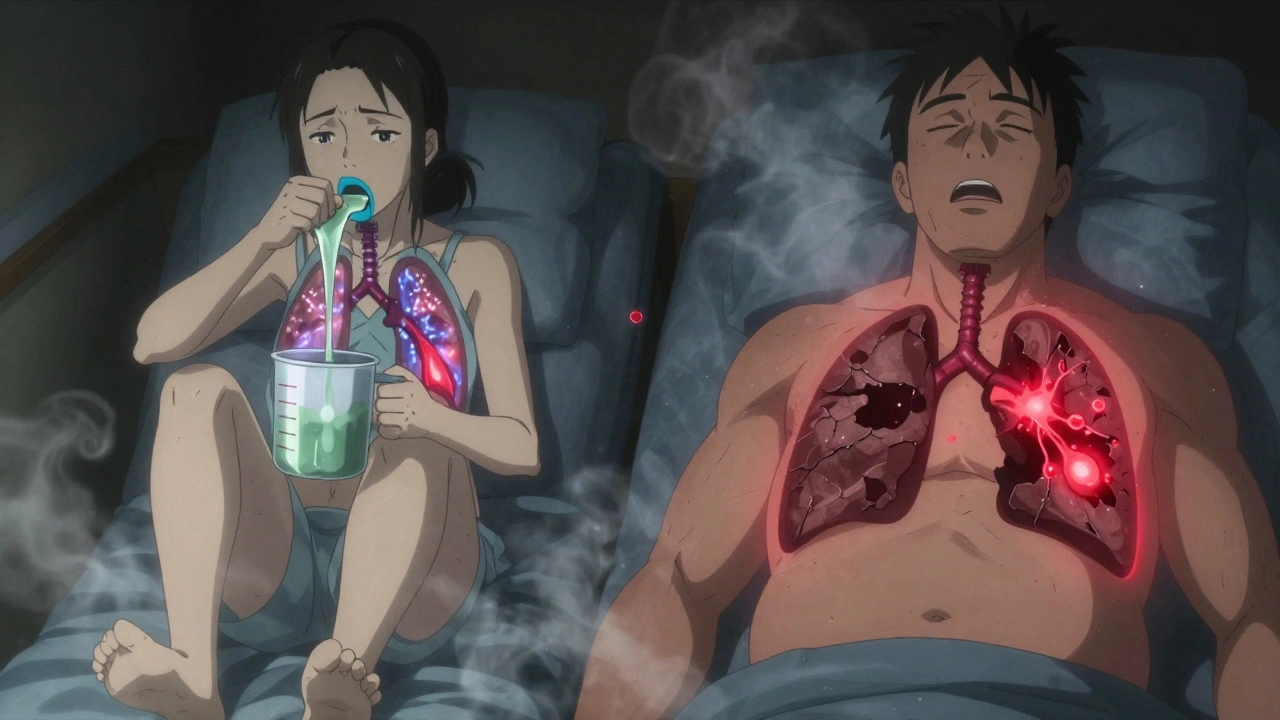
When you have emphysema, a type of chronic lung disease that breaks down the air sacs in your lungs. Also known as chronic obstructive pulmonary disease, it’s not just a bad cough—it’s permanent damage that makes every breath feel like trying to suck air through a straw. This isn’t something that goes away. Once the tiny air sacs, called alveoli, are destroyed, they don’t grow back. And that’s why people with emphysema get winded so easily—even walking to the mailbox can leave them gasping.
Most cases are caused by smoking, the leading trigger for lung tissue destruction. About 80% to 90% of people with emphysema have smoked, or used to smoke. But it’s not just cigarettes. Long-term exposure to air pollution, chemical fumes, or dust can also wear down your lungs over time. And if you’ve got a rare genetic condition called alpha-1 antitrypsin deficiency, you’re at higher risk even if you never touched a cigarette. Emphysema doesn’t show up overnight. It creeps in over years, often mistaken for getting out of shape. By the time people realize something’s wrong, the damage is already advanced. That’s why it’s often grouped under COPD, a broader term that includes chronic bronchitis and emphysema. Together, these conditions are the third leading cause of death in the U.S.
People with emphysema don’t just struggle to breathe—they also face higher risks of heart problems, lung infections, and even depression. The lack of oxygen strains the heart, and the constant fatigue makes daily life harder. You might notice a persistent cough, wheezing, or a barrel-shaped chest from lungs that are overinflated. Some people lose weight because breathing takes so much energy. And unlike asthma, where airways can open up with medication, emphysema’s damage is mostly permanent. Treatment doesn’t fix the lungs—it helps you live better with them.
That’s where the posts below come in. You’ll find clear, practical advice on how emphysema connects to heart health, what medications to watch out for, and how lifestyle choices can slow the damage. Some articles talk about how COPD affects drug absorption after surgery, others explain how to avoid dangerous interactions with common prescriptions. You’ll also see how tools like cardiac risk calculators and pulmonary rehab programs help manage the bigger picture. This isn’t about quick fixes. It’s about understanding what’s happening inside your body and making smart choices to protect what’s left.