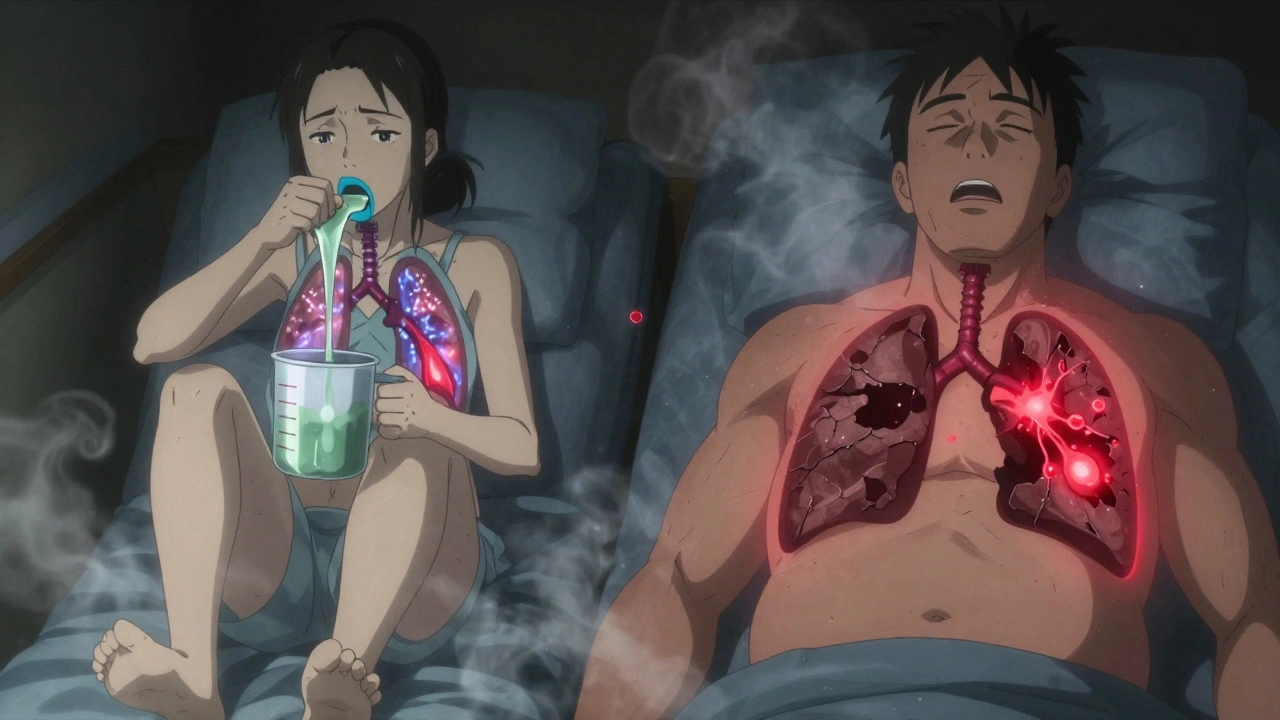
When your lungs start to feel like they’re working harder just to keep up, it’s not just being out of shape. Chronic obstructive pulmonary disease, a progressive lung condition that makes breathing difficult. Also known as COPD, it’s not one disease—it’s a group of conditions, mostly chronic bronchitis and emphysema, that damage your airways and air sacs over time. Many people mistake the early signs for aging or being out of shape. But if you’ve smoked, been around smoke or fumes for years, or keep getting bronchitis, those coughs and breathlessness aren’t normal.
COPD symptoms don’t show up overnight. They creep in. You start noticing you get winded faster when climbing stairs. Your morning cough gets worse, maybe with mucus you can’t shake. You wheeze after walking to the mailbox. These aren’t just annoyances—they’re your lungs telling you they’re struggling. Chronic bronchitis means your airways are swollen and full of mucus, making it hard to clear your lungs. Emphysema destroys the tiny air sacs that move oxygen into your blood. Together, they force your body to work harder just to breathe. And if you’ve got both? That’s when symptoms really pile up: tightness in your chest, frequent lung infections, blue lips or fingernails, and even unexplained weight loss because breathing burns so many calories.
What makes COPD tricky is that it doesn’t always show up on a regular chest X-ray until it’s advanced. Doctors often miss it early because the symptoms overlap with asthma or heart issues. But if you’re over 40, have a history of smoking, and your breathing has changed over the last few years, it’s worth asking for a simple lung test called spirometry. It’s quick, non-invasive, and can catch COPD before it steals your independence. The sooner you know, the more you can do—quit smoking, start pulmonary rehab, use the right meds, and slow the damage.
And it’s not just about medicine. Your environment matters. Dust, chemicals, cold air, even strong perfumes can trigger flare-ups. Learning to recognize your warning signs—like increased coughing or needing more puffs from your inhaler—can keep you out of the ER. The posts below cover what to watch for, how treatments actually work, what drugs help most, and how to avoid the mistakes that make COPD worse. You’ll find real advice on managing symptoms, avoiding hospital visits, and living better with limited lung function. This isn’t about fear. It’s about knowing what’s happening and taking control before it takes over.