

When you need a life-saving drug like HIV antiretrovirals, cancer treatments, or insulin, your access doesn’t depend just on your income or where you live-it depends on a 30-year-old international treaty called TRIPS. The TRIPS Agreement is a global legal framework under the World Trade Organization that sets minimum standards for intellectual property protection, including 20-year patents on pharmaceuticals. It was created in 1995 to standardize patent laws across countries, but its real-world impact has been uneven: while it boosted profits for big drug companies, it also blocked millions of people in low- and middle-income countries from buying affordable generic versions of the same medicines.
How TRIPS Changed the Global Medicine Market
Before TRIPS, countries like India, Brazil, and Thailand didn’t have to grant patents on drug molecules. They could legally copy and produce generic versions of patented drugs at a fraction of the cost. In the 1990s, a year’s supply of HIV treatment in South Africa cost over $10,000. In India, the same treatment cost $87. That difference wasn’t because Indian doctors were better-it was because Indian manufacturers could make the drugs without paying royalties to U.S. or European patent holders. TRIPS changed all that. Under Article 33, every WTO member had to grant 20-year patents on pharmaceutical products. That meant countries could no longer produce generics unless the patent expired or they used a legal loophole. Suddenly, the cheapest HIV drugs in the world were illegal to make in places that needed them most. The World Health Organization estimates that 80% of the gap in medicine access in low-income countries is due to patent barriers-and TRIPS made those barriers official international law.The Doha Declaration: A Loophole That Wasn’t Enough
By the early 2000s, the global AIDS crisis was killing over 3 million people a year. Most of them lived in countries where the patented drugs were unaffordable. In response, WTO members agreed to the Doha Declaration on TRIPS and Public Health in 2001. It said public health emergencies override patent rights. Countries could issue compulsory licenses-allowing local manufacturers to produce generics without the patent holder’s permission-as long as they paid "adequate remuneration." But here’s the catch: Article 31f of TRIPS said those generics could only be made for the domestic market. That meant countries without drug factories-like Rwanda, Uganda, or Zambia-couldn’t import generics made elsewhere. They were stuck. Even if another country had the capacity to produce cheap drugs, they couldn’t legally send them over.The 2005 Fix That Almost No One Uses
In 2005, the WTO tried to fix that with the Article 31bis system. It created a legal pathway for countries without manufacturing capacity to import generic drugs produced under compulsory licenses. Sounds simple, right? It’s not. To use it, the importing country must notify the WTO, prove it lacks manufacturing capacity, and specify exactly which drug it needs. The exporting country must issue a separate compulsory license, label the shipment, and ensure the drugs don’t get diverted. The whole process requires 78 separate steps across two governments. It takes an average of 3.8 years from request to delivery. Only one country has ever successfully used it: Rwanda in 2008. With help from Médecins Sans Frontières and Canada’s Apotex, Rwanda imported HIV drugs. But it took four years. The final price? Still 30% higher than if Rwanda had its own factory. Apotex and MSF called the system "unworkable." And they weren’t wrong.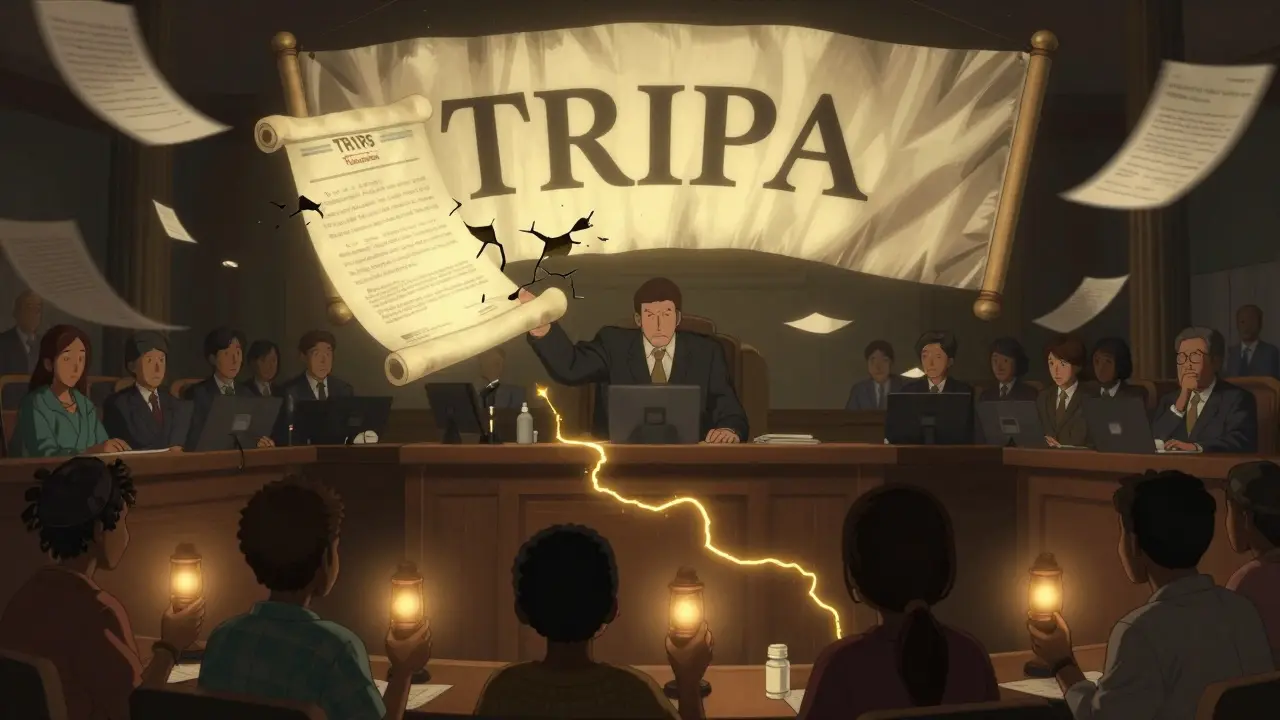
Why Do So Few Countries Use These Flexibilities?
A 2017 study of 105 low- and middle-income countries found that 83% had never issued a compulsory license-even when their people were dying. Why? Three reasons:- Complex bureaucracy: Most countries don’t have lawyers or officials trained in patent law. One study found the average country has just 1.2 full-time staff handling all IP and medicine policy.
- Political pressure: The U.S. Trade Representative has placed countries like Thailand and Brazil on its "Priority Watch List" for using compulsory licenses. Thailand lost $57 million a year in export benefits after licensing HIV and cancer drugs. Brazil faced two years of trade threats after licensing efavirenz.
- Fear of retaliation: Between 2007 and 2015, there were 423 documented cases of trade threats or sanctions against countries considering generic production. That’s not a coincidence-it’s a strategy.
Voluntary Licenses: A Better Alternative?
Some companies have chosen to license their patents voluntarily through the Medicines Patent Pool (MPP). Since 2010, the MPP has helped generic manufacturers produce HIV, hepatitis C, and tuberculosis drugs for 118 countries. As of 2022, it covered 44 patented medicines. But here’s the problem: MPP only covers 1.2% of all patented drugs globally. And 73% of its licenses are restricted to sub-Saharan Africa-even though diseases like hepatitis C or diabetes affect people everywhere. Big pharma picks which drugs to license, which countries get access, and when. It’s not a right-it’s a favor.TRIPS-Plus: The Hidden Rules That Make Things Worse
Even worse than TRIPS are the "TRIPS-plus" provisions buried in bilateral trade deals. The U.S.-Jordan Free Trade Agreement, for example, extends patent terms beyond 20 years. It also blocks generic approval until the patent expires-even if the drug hasn’t been marketed yet. These rules appear in 86% of WTO member countries’ trade agreements. A 2019 study estimated that TRIPS-plus provisions cost low-income countries $2.3 billion a year in lost savings from generic competition. That’s enough to treat millions of people with HIV or diabetes. Yet these deals are rarely debated in public. They’re signed in secret, often under pressure from powerful trade negotiators.
What’s Happening Now? The COVID-19 Waiver and What’s Next
In October 2020, India and South Africa proposed a temporary waiver of TRIPS for COVID-19 vaccines and treatments. After two years of pressure, the WTO approved a limited waiver in June 2022-but only for vaccines. Therapeutics and diagnostics were left out. Even then, the waiver requires complex notifications and doesn’t guarantee technology transfer. In September 2024, the UN adopted a resolution calling for "reform of the TRIPS Agreement to ensure timely access to health technologies during health emergencies." That’s a start. But without binding rules, it’s just words. Meanwhile, 58 low- and middle-income countries are currently negotiating new trade deals that include TRIPS-plus clauses. And 67 of the 48 least-developed countries still don’t have laws allowing compulsory licensing-even though they’re legally allowed to wait until 2033 to implement pharmaceutical patents.The Real Cost of Patent Monopolies
The global pharmaceutical market hit $1.42 trillion in 2022. Patented drugs make up 68% of that revenue, even though they account for only 12% of prescriptions. Generic drugs make up 89% of U.S. prescriptions but only 28% in low-income countries. For the same drug, the price difference can be 1,000-fold. Two billion people still lack regular access to essential medicines. The UN Development Programme predicts that without major TRIPS reform, that number will rise to 3.2 billion by 2030. That’s not a failure of healthcare systems. It’s a failure of international law.What Can Be Done?
There’s no magic fix. But here’s what’s needed:- Expand the Article 31bis system to cover all medicines-not just vaccines
- Remove the requirement for each country to prove it has no manufacturing capacity
- Prohibit TRIPS-plus clauses in all trade agreements
- Create a global pool of generic manufacturing capacity, funded by governments and multilateral agencies
- Require transparency from drug companies on R&D costs and pricing
The TRIPS Agreement was never meant to be a death sentence for people who can’t afford medicine. But for 30 years, that’s exactly what it’s become. Reform isn’t optional. It’s a matter of life and death.
What is the TRIPS Agreement?
The TRIPS Agreement, or Agreement on Trade-Related Aspects of Intellectual Property Rights, is a global treaty under the World Trade Organization that sets minimum standards for protecting intellectual property, including patents on pharmaceuticals. It requires all member countries to grant 20-year patents on drugs, which has limited the production and import of affordable generic medicines in low- and middle-income countries.
Can countries still produce generic medicines under TRIPS?
Yes, but it’s difficult. TRIPS allows compulsory licensing-where a government permits local production of a patented drug without the company’s consent-for public health emergencies. Countries can also import generics from other countries under the 2005 Article 31bis system. But both options involve complex legal steps, political pressure, and long delays, making them rarely used.
Why hasn’t the Article 31bis system worked well?
The Article 31bis system requires 78 separate legal and administrative steps across two countries, takes an average of 3.8 years to complete, and demands detailed notifications to the WTO. Only one country-Rwanda-has ever successfully used it, importing HIV drugs from Canada after four years of negotiations. Experts call it unworkable because the process is too slow, too bureaucratic, and too vulnerable to political interference.
What are TRIPS-plus provisions?
TRIPS-plus provisions are stricter intellectual property rules added to bilateral trade agreements beyond what TRIPS requires. Examples include extending patent terms beyond 20 years, blocking generic approval until the patent expires (even if the drug isn’t sold), and limiting parallel imports. These rules, found in 86% of WTO members’ trade deals, further restrict access to affordable medicines.
Did the COVID-19 vaccine waiver fix the problem?
No, not fully. The 2022 WTO waiver only applies to vaccines and excludes treatments, diagnostics, and technologies needed to produce them. It also doesn’t require companies to share manufacturing know-how. Many countries still can’t produce vaccines locally because they lack technology transfer. The waiver is a partial step, but it leaves the core problem-patent monopolies-intact.
How do generic drugs help low-income countries?
Generic drugs can cost 5-10% of the price of patented versions. In the early 2000s, HIV treatment dropped from $10,000 per year to $87 in countries that produced or imported generics. Generic competition saved an estimated $100 billion globally between 2001 and 2016. Without generics, millions of people with HIV, diabetes, or cancer simply can’t afford treatment.
What role do pharmaceutical companies play in this system?
Pharmaceutical companies rely on patents to recoup R&D costs and generate profits. While some offer voluntary licenses through the Medicines Patent Pool, they often restrict which drugs are included and which countries can access them. Many also lobby governments to block compulsory licensing and push for TRIPS-plus rules in trade deals. Their legal and political influence has shaped TRIPS to favor profit over access.
Is there hope for change?
Yes-but only if governments act. The UN and WHO now recognize TRIPS as a barrier to health equity. Countries like South Africa, India, and Brazil have shown that local production works. The key is political will: removing TRIPS-plus clauses, simplifying compulsory licensing, funding global manufacturing hubs, and holding companies accountable. Without systemic reform, medicine access will keep getting worse.
When a child in Malawi needs insulin, or a grandmother in Nigeria needs blood pressure medicine, the answer isn’t charity. It’s law. The TRIPS Agreement was written by governments-for governments. If it’s causing harm, it can be changed. The question is: who will make it happen?
12 Comments
Adewumi Gbotemi January 10, 2026 AT 14:13
Man, I seen this play out in Lagos. My cousin needed insulin, cost more than his rent. Then we got generics from India-same pill, one-tenth the price. No magic, just law that says profit matters more than life. We need to change the law, not beg for charity.
Sean Feng January 12, 2026 AT 05:38
Patents are for innovation. If you can't afford medicine, get a better job. Simple.
Alfred Schmidt January 13, 2026 AT 01:52
This is why capitalism is broken. Big Pharma makes billions while kids in Africa die because some lawyer in Geneva decided a 20-year monopoly is more important than a human life. And you want to talk about "fairness"? Where was the fairness when they priced insulin at $1,000 a vial? This isn't policy-it's murder by spreadsheet.
Priscilla Kraft January 13, 2026 AT 03:31
Thank you for writing this. 🙏 I work in global health and this is exactly what we fight against daily. The Article 31bis system is a joke-78 steps? For life-saving drugs? We need a global generic hub, funded by the UN and run like the COVAX model but for all medicines. Not just vaccines. All of them. 💊🌍
Vincent Clarizio January 14, 2026 AT 22:37
Let’s be honest here: the entire global intellectual property regime is a colonial relic dressed up in legalese. The West invented patents to protect its own industries, then forced the Global South to adopt them under threat of trade sanctions. Now we act surprised when people can’t afford insulin? We built this cage. We locked the door. And now we’re surprised the prisoners are angry. The TRIPS Agreement wasn’t designed to help-it was designed to control. And until we admit that, nothing changes. The math is simple: 2 billion people without medicine = 2 billion failures of moral imagination.
Sam Davies January 16, 2026 AT 04:11
Oh wow, another ‘TRIPS is evil’ manifesto. Shocking. Next you’ll tell me that the sun rises in the east and water is wet. Meanwhile, India’s generic industry thrives because it ignored TRIPS for decades. So why aren’t we all just copying India? Oh right-because it’s not that simple. But sure, blame the WTO while you sip your $8 latte.
Alex Smith January 17, 2026 AT 01:13
Interesting how everyone blames the law, but no one talks about capacity. Even if TRIPS vanished tomorrow, most low-income countries still lack the labs, regulators, and supply chains to make drugs. The real problem isn’t just patents-it’s infrastructure. We need to invest in manufacturing, not just legal loopholes.
Michael Patterson January 18, 2026 AT 15:25
Look, I get it, people are dying, but you can't just ignore property rights. If you don't protect innovation, no one will invest in new drugs. Ever. Think about it. Who's gonna spend $2 billion on R&D if some country just copies it? The system's flawed, sure, but tearing it down? That's not reform-that's suicide. We need better incentives, not chaos.
Matthew Miller January 19, 2026 AT 17:55
Pathetic. You think this is about morality? It's about power. The U.S. and EU pharmaceutical lobbies wrote TRIPS. They wrote TRIPS-plus. They wrote the Doha Declaration’s loopholes. They’ve spent billions lobbying to keep this system alive. This isn't a policy debate-it's a war. And we're losing because we're still asking nicely.
Madhav Malhotra January 19, 2026 AT 21:55
As someone from India, I’ve seen this firsthand. Our generic industry didn’t just happen-it was built by people who refused to bow. We made HIV drugs for $87 because we believed health was a right, not a privilege. The world calls us ‘pirates.’ We call it justice. TRIPS was never meant to kill people. But the people who enforce it? They forgot what it was for.
Priya Patel January 21, 2026 AT 16:56
My uncle died of diabetes in 2012 because insulin was too expensive. We had the money, but not for the medicine. Now I work with a group that helps people get generics. It’s not glamorous. But every bottle we get to someone? That’s a win. We don’t need new laws-we need people to stop pretending this is just a ‘trade issue.’ It’s people. Real people.
Jason Shriner January 23, 2026 AT 05:08
So… you’re saying the whole world is just waiting for some magical UN decree to fix capitalism? Cute. The real answer? Let the market work. If generics are cheaper, people will buy them. If pharma wants to charge $10k for a drug? Then they’ll sell zero. Simple economics. Stop overcomplicating it with treaties.