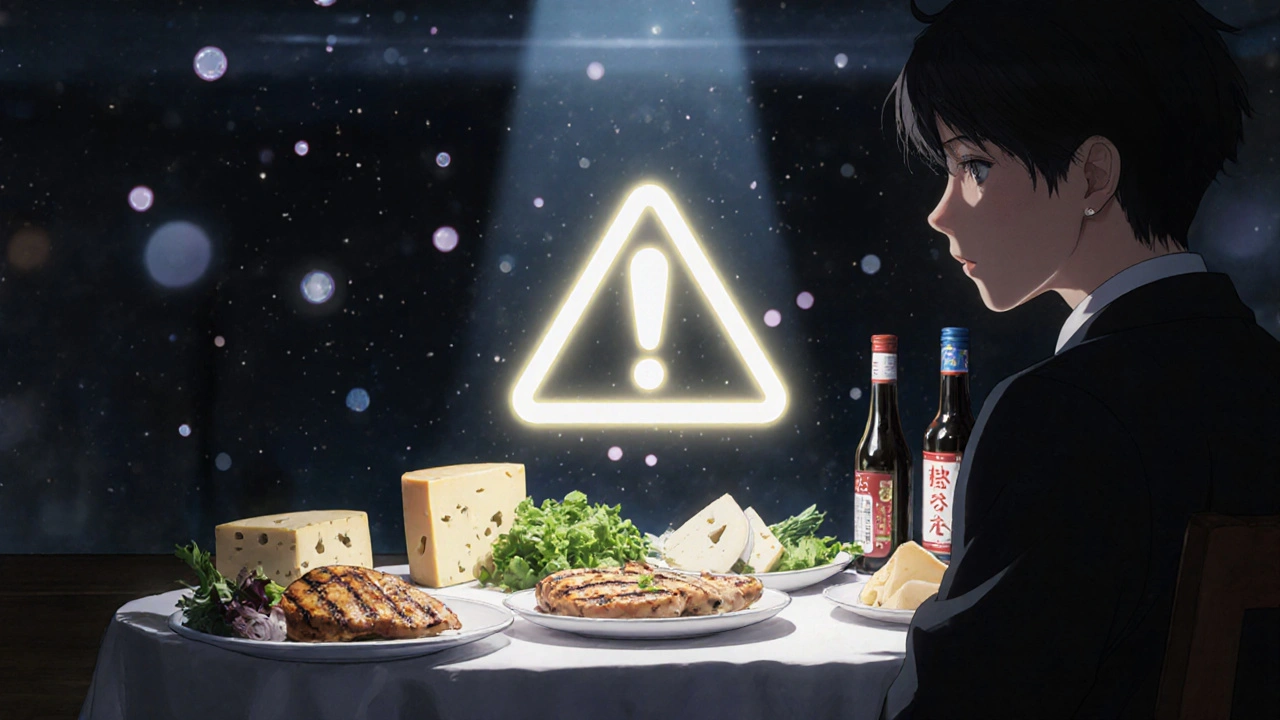
When you're taking monoamine oxidase inhibitors, a class of antidepressants that block an enzyme that breaks down tyramine. Also known as MAOIs, they can be life-changing for depression and anxiety—but they come with a strict food rule: avoid tyramine, a naturally occurring compound found in aged, fermented, or spoiled foods. If you mix MAOIs with too much tyramine, your blood pressure can spike dangerously fast—sometimes leading to stroke or heart attack.
This isn’t a weight-loss plan or a trendy cleanse. It’s a medical safety protocol. People on MAOIs like phenelzine, tranylcypromine, or selegiline must treat their diet like a medication schedule. One bite of aged cheese, a glass of red wine, or even leftover meat in the fridge can trigger a reaction. The body can’t break down tyramine properly when MAOIs are active, so it builds up and forces blood vessels to constrict. That’s why you can’t just cut back—you need to eliminate high-tyramine foods entirely.
What counts as high? Aged cheeses like parmesan, blue, or cheddar. Fermented soy products like miso, tempeh, and soy sauce. Cured meats like salami, pepperoni, and pastrami. Tap beer, draft wine, and overripe bananas. Even pickled herring or sauerkraut can be risky. Some people think "a little won’t hurt," but the threshold varies by person, and there’s no safe margin. If you’re on an MAOI, you’re not just avoiding tyramine—you’re protecting your life.
It’s not just about what you eat. It’s about how food is stored. Leftovers older than 24 hours? Skip them. Refrigeration slows tyramine growth, but doesn’t stop it. Fresh meat and dairy are fine. Frozen fish is safer than refrigerated. And never trust a "low-sodium" label—it doesn’t mean low-tyramine. This diet is simple in theory but hard in practice because tyramine hides in plain sight. You’ll need to rethink your grocery list, your leftovers, even your favorite bar snacks.
Most people don’t know this diet exists until they’re prescribed an MAOI. That’s why so many end up in the ER after eating a slice of pizza with aged cheese or a burger with pickles. But once you learn the rules, it becomes routine. You’ll find plenty of safe alternatives: fresh chicken, plain rice, steamed veggies, and store-bought bread. The key is consistency. One slip-up can undo weeks of careful eating.
The good news? You’re not alone. Thousands of people follow this diet successfully. And once you get used to reading labels and asking questions at restaurants, it gets easier. This collection of articles gives you real-world tips from others who’ve walked this path—how to handle social events, what to order at a diner, how to spot hidden tyramine, and what to do if you accidentally eat something risky. You’ll also find guides on how MAOIs interact with other meds, supplements, and even over-the-counter cold remedies. This isn’t just about food. It’s about staying alive while getting better.