


Statins & ALS Risk Comparison Tool
Statins protect against heart attacks and strokes, but many patients worry they might increase ALS risk. This tool compares the actual risks to help you understand why continuing statins is usually the better choice.
Risk Comparison
Based on US population data (2024)
Heart Attack Risk (without statins): 1 in 40 per year
Statins reduce heart attack risk by 25-35% but have zero evidence of increasing ALS risk.
Statins and ALS: What the Latest Science Really Says
If you’re taking a statin for high cholesterol, you’ve probably heard rumors-maybe even from your doctor-that it could raise your risk for ALS, also known as Lou Gehrig’s disease. The fear is real. ALS is terrifying: it slowly steals your ability to move, speak, swallow, and breathe. And if a common pill could trigger it, that’s enough to make anyone pause.
But here’s the truth: statins don’t cause ALS. Not according to the best science we have today.
It’s not that the concern came out of nowhere. In 2007, the FDA started seeing more reports than usual linking statins to ALS. That triggered a deep dive. By 2008, they analyzed 41 major clinical trials involving thousands of people. Result? No increase in ALS cases among statin users. The FDA said then, and still says now: don’t stop your statin because you’re worried about ALS.
Yet, over the years, new studies popped up-some saying yes, some saying no. And that’s where confusion sets in. Let’s cut through the noise with what the real data shows.
Why Did People Think Statins Cause ALS?
The alarm started with spontaneous reports to the FDA’s database. These aren’t controlled studies. They’re just doctors or patients saying, ‘I took statins, then got ALS.’ That sounds scary, but it’s not proof.
Think of it this way: millions of Americans take statins. About 5,000 to 6,000 people are diagnosed with ALS every year in the U.S. By pure chance, some people on statins will also get ALS. That doesn’t mean one caused the other.
Then came the 2024 Mendelian Randomization study that made headlines. It claimed three statins-atorvastatin, simvastatin, and rosuvastatin-were linked to massively increased ALS risk. One number stood out: rosuvastatin had an odds ratio of 693,000. That’s not just high-it’s biologically impossible. Experts immediately questioned it. Genetic studies like this can go wrong if the genes used as proxies also affect other biological pathways. This one likely did. Most neurologists dismissed it as a statistical artifact.
What the Big, Solid Studies Say
The most reliable evidence comes from large, long-term population studies. One of the strongest came out of Norway in March 2024. Researchers tracked over 500 ALS patients using national health records from 1972 to 2003. They compared those who took statins with those who didn’t. After adjusting for age, sex, smoking, cholesterol levels, and even whether they took riluzole (the only FDA-approved ALS drug), they found no difference in survival time.
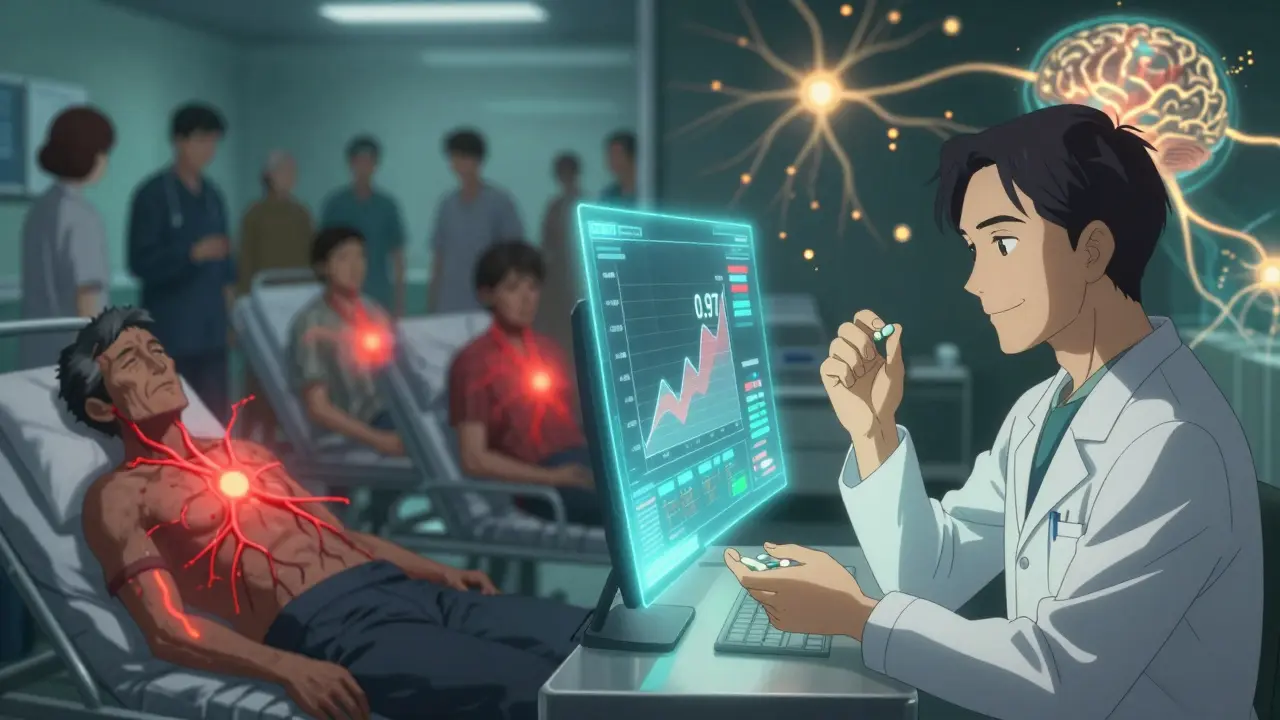
The hazard ratio? 0.97. That’s essentially 1.0-meaning no effect. Statin users lived about 22 days longer on average, but the range of possible difference? From losing nearly six months to gaining over seven. In plain terms: statins didn’t make ALS worse.
Another major study in Neurology (May 2024) found something even more surprising: long-term statin use might actually lower ALS risk-in men, specifically. People who took statins for more than three years had a reduced chance of developing ALS. The researchers think it might be due to statins’ anti-inflammatory effects in the brain.
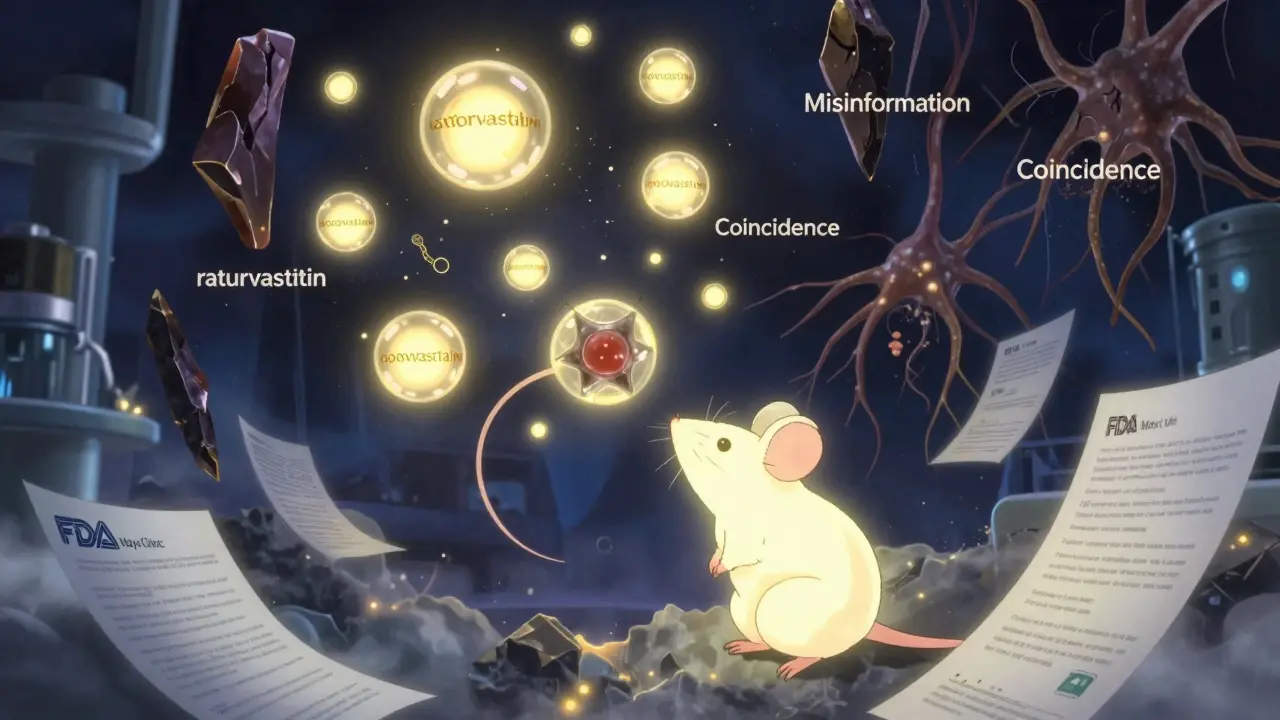
And here’s the kicker: preclinical research from May 2024 showed that in mice with ALS-like symptoms, lovastatin and atorvastatin actually slowed motor neuron loss. Atorvastatin cut neuron death by 30%. That’s not a cause-it’s a possible shield.
Why Do Some People Stop Statins After an ALS Diagnosis?
Here’s where things get messy in real life. Early ALS symptoms-muscle weakness, cramps, fatigue-look a lot like common statin side effects. So when someone starts feeling weak, they might blame the statin. That’s understandable.
The Norwegian study found that 21% of ALS patients stopped taking statins in the year before their diagnosis. Many did it because they thought the statin was making them worse. But here’s what the doctors noticed: those who stopped had worse outcomes. Not because statins were harmful, but because they were already in the early, undiagnosed stages of ALS. Stopping the statin didn’t cause the decline-it was just happening at the same time.
Neurologists report that 35% of ALS patients ask about stopping statins after diagnosis. About 12% actually do. That’s dangerous. Statins prevent heart attacks and strokes. For someone with ALS, keeping their heart healthy matters. A stroke on top of ALS? That’s a double blow.
What Major Medical Groups Say Today
The American Heart Association still lists statins as first-line treatment for high cholesterol. Their 2018 guidelines haven’t changed because of ALS concerns.
The Mayo Clinic updated their website in January 2024 with a clear statement: ‘There’s no good evidence that statins cause or trigger ALS.’
The European Medicines Agency reviewed the evidence in 2023 and concluded the same: no causal link. They recommend continuing statins unless a patient has clear muscle damage from them.
The FDA hasn’t changed its 2008 position. Their warning system still gets reports of ALS in statin users-but they stress: reports ≠ proof. They’re still watching, but they’re not alarmed.
Should You Stop Taking Statins If You Have ALS?
No. Unless you’re having real muscle pain or damage from the statin, don’t stop.
The American Academy of Neurology’s 2023 guidelines say this clearly: ‘Statins should be continued in ALS patients with established cardiovascular indications.’ That means if you’re on a statin for heart disease, high LDL, or diabetes, keep taking it.
Only consider stopping if:
- You have unexplained, worsening muscle pain that your doctor can’t explain by ALS progression
- Your creatine kinase (CK) levels are very high
- Your doctor confirms it’s statin-induced myopathy, not ALS
For most people, the risk of stopping outweighs the risk of continuing. Statins save lives. ALS is rare. You’re far more likely to die from a heart attack than from ALS-even if you have both.
What’s Next in Research?
The CDC’s National ALS Registry is funding five new studies in 2025, including one tracking 10,000 statin users over five years. They’re looking at lipid metabolism, inflammation markers, and genetic factors. We’ll get better data soon.
One thing we already know: duration matters. Short-term use? Might look risky because of reverse causality-people start statins when they’re already getting sick. Long-term use? May be protective. That’s a big difference.
And sex matters too. The protective effect in long-term users is stronger in men. Why? We don’t know yet. Maybe hormones. Maybe differences in how statins cross the blood-brain barrier. More research needed.
Bottom Line: Keep Taking Your Statin
Statins are among the most studied drugs in history. We know how they work. We know how safe they are for most people. The idea that they cause ALS is a myth built on coincidence, bad statistics, and fear.
ALS is devastating. But it’s not caused by statins. If you’re on a statin, you’re not making yourself more likely to get ALS. In fact, you might be lowering your risk.
Don’t stop your statin because of rumors. Talk to your doctor if you’re worried. But don’t let fear make you trade a proven heart protector for a phantom risk.
Do statins cause ALS?
No, there is no credible evidence that statins cause ALS. Major health agencies-including the FDA, Mayo Clinic, and European Medicines Agency-have reviewed the data and found no causal link. Reports of ALS in statin users are rare and likely coincidental, especially given that millions take statins while only a few thousand develop ALS each year.
Can statins make ALS worse?
No. A large 2024 Norwegian study found no difference in survival time between ALS patients who took statins and those who didn’t. In fact, stopping statins after an ALS diagnosis may worsen outcomes because patients lose the cardiovascular protection statins provide. Muscle symptoms from ALS are often mistaken for statin side effects, leading to unnecessary discontinuation.
Should I stop taking statins if I have ALS?
Only if you have clear signs of statin-induced muscle damage, like very high CK levels and muscle pain not explained by ALS progression. Otherwise, guidelines from the American Academy of Neurology recommend continuing statins, especially if you have heart disease, high cholesterol, or diabetes. Stopping statins increases your risk of heart attack or stroke, which can be life-threatening for someone with ALS.
Do any statins have a higher risk than others?
No. Some studies claimed atorvastatin, simvastatin, or rosuvastatin had higher ALS risk, but those were flawed genetic analyses with implausible results. Real-world population studies show no difference in ALS risk between statins. The type of statin doesn’t matter-the key is whether you need it for heart health.
Why do some studies say statins lower ALS risk?
Long-term statin use (over three years) has been linked to lower ALS risk in men, possibly due to statins’ anti-inflammatory and cholesterol-regulating effects in the brain. Animal studies show statins can reduce motor neuron loss. While this doesn’t mean statins prevent ALS, it suggests they may have a protective effect over time-not a harmful one.
Is it safe to take statins if I have a family history of ALS?
Yes. Having a family history of ALS does not change the risk-benefit profile of statins. The risk of developing ALS is extremely low-even with a family history-and statins still provide strong protection against heart disease. There’s no evidence that statins trigger ALS in genetically predisposed individuals. Continue statins if your doctor recommends them for cardiovascular reasons.
11 Comments
Laura Arnal January 29, 2026 AT 12:51
Okay but can we just take a second to appreciate how wild it is that people think a cholesterol pill is secretly turning them into ALS patients? 😅 I’ve been on statins for 8 years-my heart’s happy, my muscles are fine, and I’m still walking my dog every morning. This fear is 90% noise and 10% coincidence. Keep taking your meds, folks. 🙌
Jasneet Minhas January 30, 2026 AT 21:27
Statins cause ALS? Interesting. Next you’ll tell me that oxygen causes lung cancer because people who breathe air also get cancer. 🤔 I mean, statistically, it’s airtight. 100% of ALS patients have breathed. 100% of statin users have also breathed. Conclusion: air + statins = doom. 🚨
Eli In February 1, 2026 AT 02:35
I’m from the Philippines and my abuela takes statins for her high cholesterol. She’s 82, walks to the market every day, and still makes the best lumpia. If statins were causing ALS, she’d be in a wheelchair by now. 😊 But she’s not. She’s just… alive. And happy. Maybe science is more complicated than fear-mongering headlines. 🌏❤️
Megan Brooks February 1, 2026 AT 14:45
It’s important to distinguish between correlation and causation, especially when dealing with neurodegenerative conditions. The temporal proximity of statin initiation and early ALS symptoms creates a cognitive bias-what clinicians call ‘reverse causality.’ The muscle weakness attributed to statins is often the earliest manifestation of ALS itself. Discontinuing statins based on this misattribution may deprive patients of vital cardiovascular protection, potentially increasing mortality from comorbid conditions. Evidence-based medicine must prevail over anecdotal narratives.
Ryan Pagan February 2, 2026 AT 17:24
Let’s be real-this whole ‘statins cause ALS’ thing is like blaming your toaster for your phone dying because you used both at the same time. 🤦♂️ The 2024 Mendelian study? That thing had an odds ratio of 693,000 for rosuvastatin. That’s not science-that’s someone’s Excel spreadsheet on acid. Real-world data? No link. Animal studies? Statins might actually *protect* neurons. If you’re scared, talk to your doc. But don’t ditch your statin like it’s a bad Tinder date.
Paul Adler February 2, 2026 AT 21:25
I appreciate the depth of this post. It’s rare to see such a balanced breakdown of conflicting data. The Norwegian study, the preclinical mouse models, the FDA’s long-standing position-it all paints a consistent picture. What’s more dangerous than statins? Fear-driven decisions. I’ve seen patients stop their meds out of panic, then end up in the ER with a heart attack. The real villain here isn’t the pill-it’s misinformation.
Kristie Horst February 4, 2026 AT 08:57
Let me just say this: I used to be a nurse on a neurology floor. I saw ALS patients. I also saw patients on statins. I never saw one cause the other. I saw people stop statins because they were scared-and then they had strokes. I saw families grieve. I saw the real cost of misinformation. Please, if you’re reading this and you’re on a statin-don’t stop. Talk to your doctor. But don’t let fear write your prescription.
Andy Steenberge February 5, 2026 AT 17:44
One thing that’s consistently overlooked: ALS is incredibly rare. About 1.5-2 per 100,000 people per year. Statins are taken by over 40 million Americans. The odds of someone on statins developing ALS by coincidence? Pretty high. The odds of statins causing it? Near zero. This isn’t a conspiracy. It’s probability. And the fact that long-term use might lower risk? That’s the real story. Let’s celebrate the science, not the scare.
Laia Freeman February 7, 2026 AT 12:22
ok but like… i took a statin for 2 years and i swear i felt kinda weak?? so i stopped and then my doctor said it was probably just aging?? but now i’m scared i’m gonna get als?? like… is this real?? or am i just a hypochondriac?? 😭
rajaneesh s rajan February 9, 2026 AT 06:46
People are terrified of ALS. I get it. But fear doesn’t make bad science good. That 693,000 odds ratio? It’s not a red flag-it’s a giant flashing sign that the model broke. Like trying to predict rain using the number of pigeons in the park. The real data? Statins are neutral or protective. The fear? It’s the real epidemic. Chill. Check the sources. Keep your pill.
paul walker February 10, 2026 AT 10:48
My dad had ALS. He was on a statin. He didn’t die from it. He died from ALS. Don’t let fear steal your heart health. Keep taking it. ❤️