

Medication Storage Safety Calculator
How Safe Is Your Medication Storage?
Answer a few quick questions to get your personalized safety score and recommendations. This tool is based on CDC, AAP, and FDA guidelines for preventing accidental poisonings.
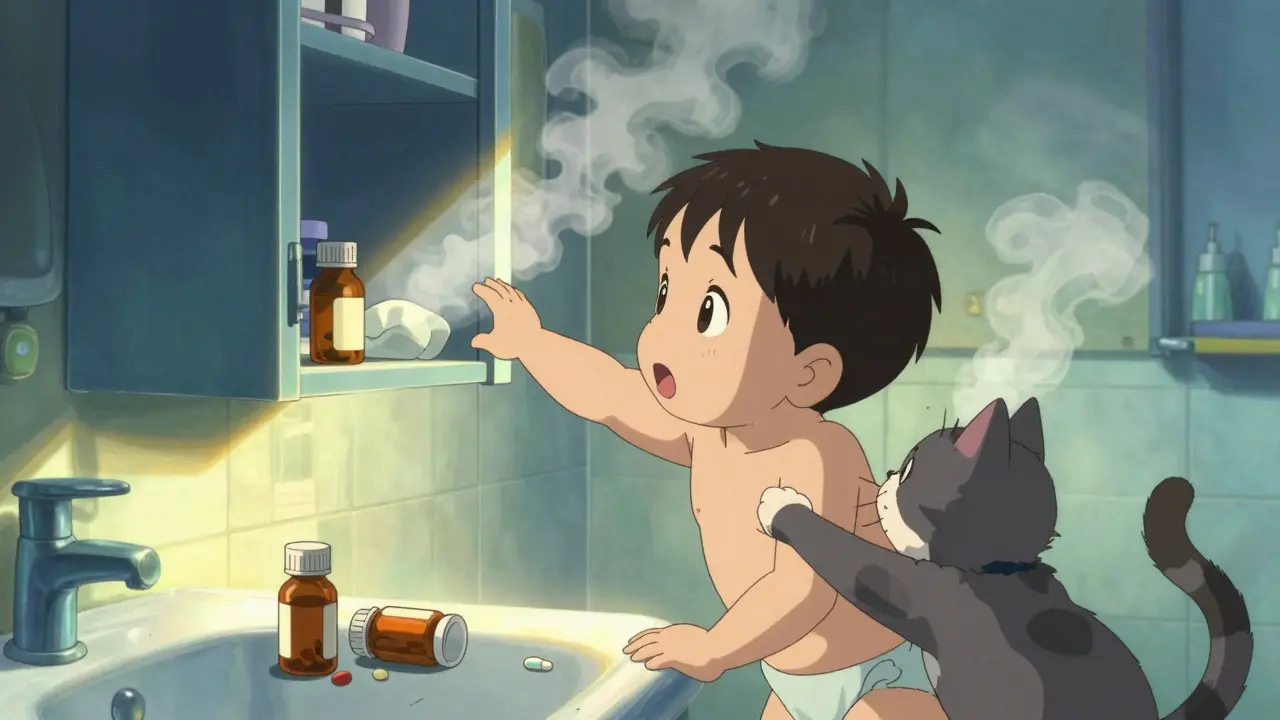
Every year, 60,000 children under age 5 end up in emergency rooms because they found and swallowed medications they weren’t supposed to touch. And it’s not just kids-pets are at risk too. Dogs, cats, and even horses have died after eating human pills left on counters, in purses, or in unlocked cabinets. The scary part? Most of these incidents are completely preventable.
You might think, "I only leave pills out for a minute." But in that minute, a toddler climbs a chair, a dog jumps on the bed, or a curious cat knocks over a bottle. Medications don’t have to be opioids or antidepressants to be deadly. A single dose of heartworm medicine, a topical cream, or even a child’s chewable vitamin can be fatal if ingested by the wrong person-or pet.
Why Locked Storage Isn’t Optional
Child-resistant caps sound like a solution, but they’re not. The Consumer Product Safety Commission found these caps stop only 50 to 80% of kids. That means up to half of children can still open them. And pets? Forget it. VCA Animal Hospitals tested 100 dogs and found 65% could open a standard pill bottle in under two minutes. One dog even figured out how to twist off a child-resistant cap using its teeth.
The only reliable barrier is a locked container. Research from Nationwide Children’s Hospital shows that locked storage cuts pediatric medication poisonings by 92%. That’s not a suggestion-it’s a medical fact. The same applies to pets. A locked box keeps human and animal meds separate, prevents mix-ups, and removes temptation.
Where Not to Store Medications
Most households store meds in the bathroom. It’s convenient, right? Wrong. Bathrooms are humid, hot, and full of easy access points. Moisture ruins 40% of medications within 30 days, according to FDA stability tests. And kids and pets know exactly where the medicine cabinet is.
Other dangerous spots:
- On nightstands (68% of parents admit to this)
- In purses or coat pockets
- On kitchen counters near food
- In the same drawer as baking supplies
One family in Oregon lost their 80-pound dog after he ate a tube of ivermectin paste stored next to pancake mix. The flavoring made it taste like candy. The dog didn’t survive.
Human vs. Pet Medications: A Dangerous Mix
Here’s something most people don’t realize: 42% of pet medications are flavored with banana, strawberry, or chicken to make them easier for animals to swallow. That’s a recipe for disaster in a home with kids. A 2022 PetMD study found 1,200 cases where parents accidentally gave their child their pet’s medicine-or vice versa.
Some pet meds are deadly to humans. Ivermectin, used in heartworm preventatives, can be 10 times more toxic to a child than a dog. A 5mL dose meant for a 50-pound dog contains enough poison to kill a toddler. And then there’s 5-fluorouracil cream-used for skin cancer in humans. One drop on a cat’s tongue can be 100% fatal.
The CDC says storing human and pet meds in separate locations reduces mix-up errors by 89%. The American Academy of Pediatrics updated its guidelines in February 2024 to recommend keeping them at least 15 feet apart. That’s not overkill-it’s science.
What to Use for Safe Storage
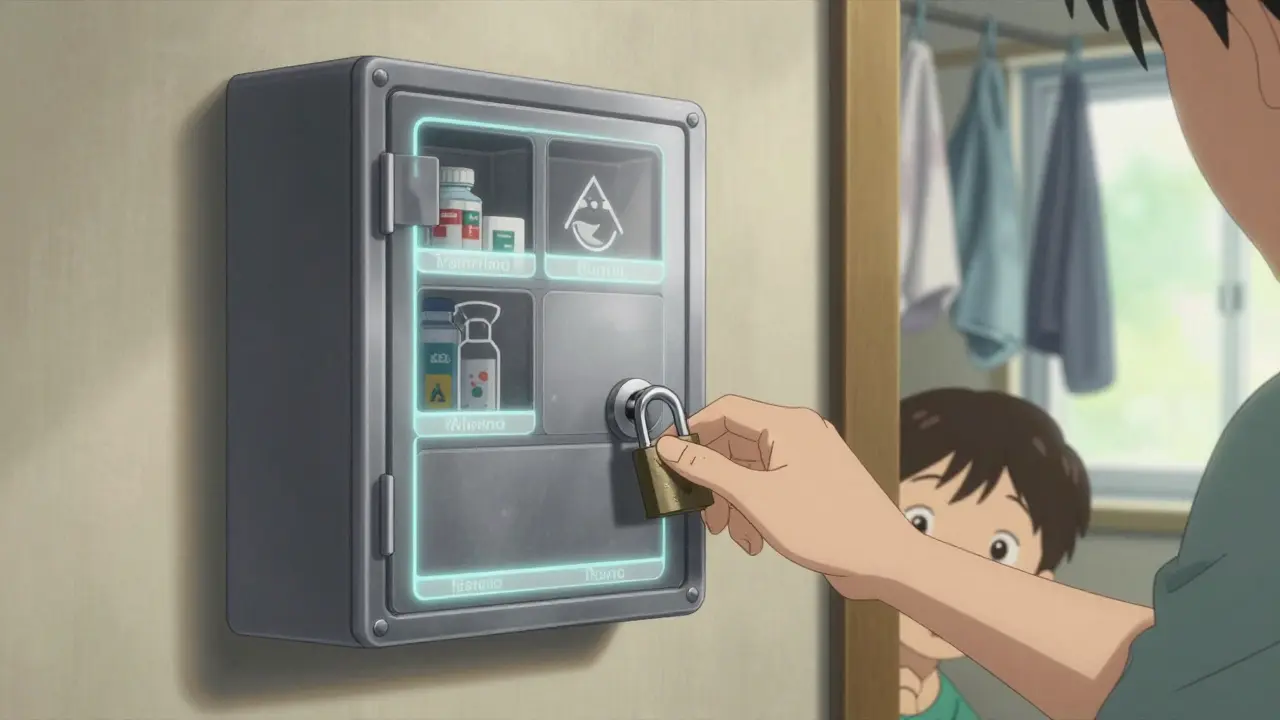
You don’t need a fancy safe. But you do need something that locks.
Here are affordable, proven options:
- Wall-mounted lockbox ($24.99, tested by Consumer Reports)
- Small gun safe (used ones on Craigslist cost $35-$150)
- Locked toolbox or file cabinet with a padlock
- Smart lockbox with keypad or app control (emerging tech, 12% market penetration by 2026)
One parent in Portland used an old toolbox from her husband’s garage. She drilled a hole, added a padlock, and mounted it high on the wall in the laundry room. Her 2-year-old hasn’t gotten near it. No incidents. No stress.
For households with elderly members who struggle with child-resistant caps, install a lower lockbox with an emergency release. That way, you can still get to your meds quickly without risking a child’s safety.
Temperature, Humidity, and Labels Matter
Medications aren’t just dangerous-they’re fragile. The FDA says 70% of pills need to be stored between 68-77°F. Too hot? Too cold? They lose potency. Moisture? They break down. That’s why the kitchen pantry is 3.2 times safer than the bathroom.
Always keep meds in their original bottles. The CDC found that 35% of dosing errors happen when people transfer pills into unmarked containers. A random pill in a spice jar? That’s a poisoning waiting to happen.
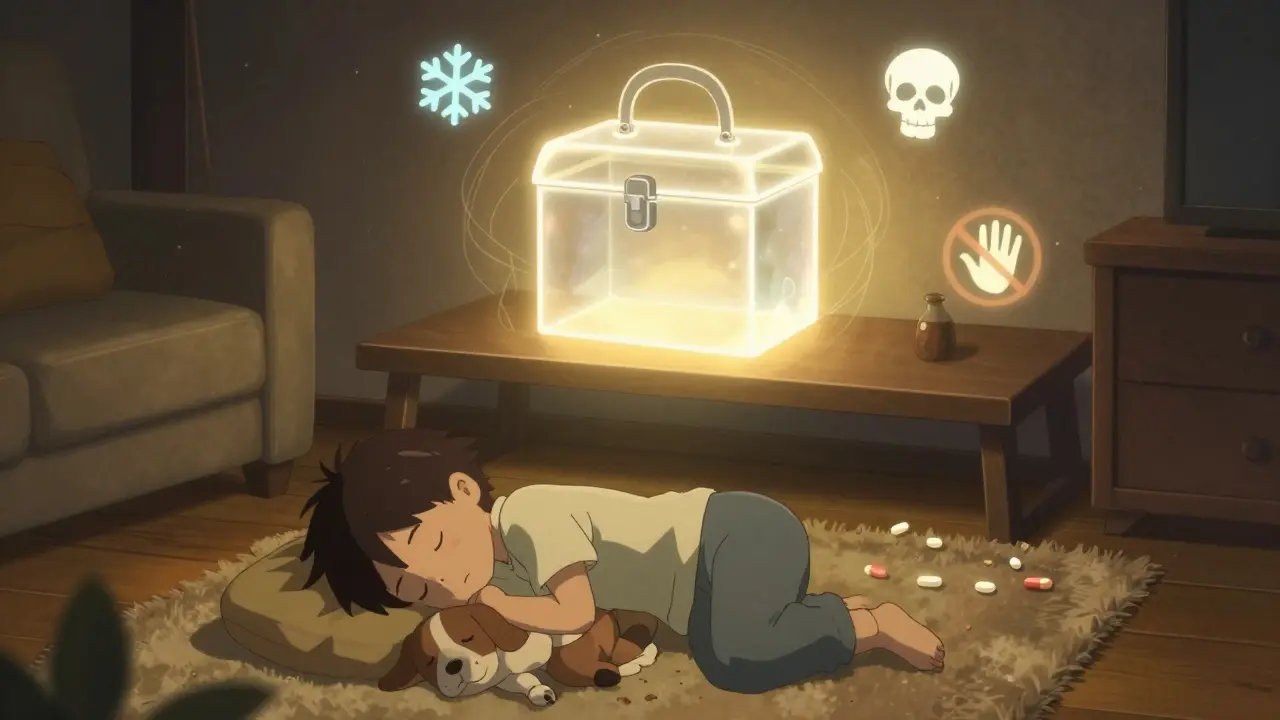
Check labels. If it’s a pet med, look for storage pictograms-FDA required them on all veterinary products as of May 2023. They show if the medicine needs refrigeration, should be kept dry, or is especially toxic to children.
How to Build a Real Safe Storage Routine
Safe storage isn’t a one-time fix. It’s a habit. Here’s how to make it stick:
- Choose one locked, high, dry, cool spot-no exceptions.
- Put all human and pet meds in it, even vitamins and supplements.
- Lock it every single time. Even if you’re just grabbing a pill.
- Do a weekly audit: Check expiration dates, count pills, toss what’s expired.
- Use the CDC’s Up and Away campaign visual reminders: Put a sticker on the lockbox or fridge saying "Medications Locked Away".
Studies show it takes 21-30 days to form a new habit. After that, 98% of people remember to lock it. One session of education is all you need. No complicated apps, no expensive gear-just consistency.
What About Expired or Unused Meds?
Don’t flush them. Don’t throw them in the trash. The FDA warns that flushing pollutes waterways, and trash can lead to accidental ingestion by pets or scavengers.
Use a drug take-back program. The DEA’s National Take Back Day happens twice a year, with over 11,000 collection sites nationwide. You can also find permanent drop boxes at many pharmacies and police stations. In Portland, over 60 locations accept unused meds year-round.
If you can’t get to a drop-off, mix pills with coffee grounds or cat litter, seal them in a plastic bag, and throw them in the trash. Remove labels first to protect your privacy.
Why This Matters More Than You Think
Only 22% of U.S. households with kids and pets use locked storage. Even though 95% own child-resistant packaging, most never use it properly. And in low-income homes, the rate drops to 18%.
This isn’t about being perfect. It’s about being intentional. A locked box costs less than a month of coffee. It takes five minutes to set up. And it could save a life.
The CDC estimates that if every household with children and pets followed safe storage rules, we could prevent 180,000 emergency room visits every year. That’s not a statistic-it’s 180,000 families who won’t spend a night in a hospital wondering how it happened.
It’s not about fear. It’s about control. You control where your meds go. You control who can reach them. And that’s power.
Can I just keep medications in a high cabinet without a lock?
No. Children as young as 18 months can climb furniture up to 3 feet tall. A cabinet on a counter is still reachable. Locks are the only reliable barrier. Even if the cabinet is high, if it’s not locked, it’s not safe.
Are pet medications really more dangerous than human ones?
Some are. Pet meds are often flavored to make them palatable to animals-but that makes them irresistible to kids. Ivermectin, permethrin, and 5-fluorouracil are especially deadly. A single drop of 5-fluorouracil cream can kill a cat. A teaspoon of ivermectin paste can kill a child. They’re not just "different"-they’re lethal in ways most people don’t expect.
What if I have elderly parents living with me? Won’t locking meds make it hard for them to get their pills?
Not if you set it up right. Install a lockbox at waist height with an emergency release-like a code or key that only they know. Many models have large buttons and loud clicks for easier use. You can also use a pill organizer with a timer that dispenses meds at set times. The goal is safety without sacrificing accessibility.
Is it safe to store human and pet meds in the same locked box?
Only if you use clear, separate compartments and never mix them. But even then, mistakes happen. The CDC says separate locations reduce mix-up errors by 89%. The American Academy of Pediatrics now recommends keeping them 15 feet apart. It’s a small distance for a huge safety gain.
How do I know if a medication needs refrigeration?
Check the label. If it says "Refrigerate" or has a snowflake symbol, keep it cold. Most insulin, some antibiotics, and liquid pet meds need refrigeration. If you’re unsure, call your pharmacist. Storing these meds at room temperature can make them ineffective-or even toxic.
What should I do if my child or pet swallows a medication?
Call Poison Control immediately at 1-800-222-1222. Don’t wait for symptoms. Don’t try to make them vomit. Have the pill bottle ready when you call-tell them the name, dose, and time ingested. Save the number in your phone. It’s the fastest way to get help.
Are there any free or low-cost options for locked storage?
Yes. Many local health departments, pharmacies, and pediatric clinics give away free lockboxes. Check with your city’s public health office or your child’s pediatrician. Used gun safes, toolboxes, or even a locked drawer in a dresser can work if they’re out of reach and secured with a padlock.
Final Thought: It’s Not About Perfection-It’s About Protection
You don’t need to be a safety expert. You don’t need to spend hundreds of dollars. You just need to lock it. Every time. No exceptions.
Medications are tools for healing. But left unsecured, they become weapons. The difference between safety and tragedy is often just a lock, a few feet of distance, and a habit you choose to build.
Start today. Lock the box. Keep it high. Keep it separate. Keep it clean. Your child, your pet, and your peace of mind are worth it.
10 Comments
Mike Rose January 30, 2026 AT 19:20
lol why are we treating meds like nuclear waste? my kid just eats whatever, and he’s fine. my dog licks my socks and lives. chill out.
Adarsh Uttral January 31, 2026 AT 20:45
Interesting read. In India, we often keep medicines on top shelves without locks, and somehow no one dies. Maybe it’s about supervision, not just locks?
April Allen February 1, 2026 AT 22:46
Let’s be clear: the data here isn’t just suggestive-it’s epidemiologically robust. The 92% reduction in pediatric ingestions with locked storage is replicated across multiple longitudinal studies, including the 2021 JAMA Pediatrics meta-analysis. The real issue is behavioral inertia. People conflate convenience with safety, but pharmacokinetics don’t care about your laziness. The biological half-life of a child’s curiosity is 3.7 seconds. Lock it. Or don’t, and accept the statistical inevitability of tragedy.
Sheila Garfield February 3, 2026 AT 20:06
I get the fear, but I also know how hard it is to be a parent with aging relatives. My mom has diabetes and needs insulin fast if she feels dizzy. I put her meds in a small lockbox at waist height with a simple code she remembers. She’s safe, and so is my nephew. It’s not about locking everything away-it’s about locking it right.
Shawn Peck February 4, 2026 AT 03:19
YOU’RE ALL BEING TOO NICE. THIS ISN’T A TIP. IT’S A LIFE OR DEATH REQUIREMENT. IF YOU’RE NOT LOCKING YOUR MEDS, YOU’RE A TERRIBLE PARENT. AND YOUR DOG ISN’T A PET-IT’S A LIVING BOMB. STOP BEING LAZY. BUY A SAFE. NOW.
Holly Robin February 4, 2026 AT 05:24
They’re hiding the real agenda. Why is the CDC pushing this? Who profits from lockboxes? Big Pharma? The gun industry? The same people who sold you opioids now want you to buy a safe? It’s a control play. They don’t want you to know how many of these meds are just poison with a prescription label. And don’t get me started on the 5-fluorouracil thing-that’s a chemical weapon disguised as skincare.
Shubham Dixit February 5, 2026 AT 19:04
In India, we don’t need all this Western paranoia. Our grandparents stored medicines in cloth bags tied to the ceiling. Kids learned respect, not fear. This obsession with locks and boxes is a sign of cultural decay. We raised children without child-resistant caps and they turned out fine. Now we’re turning our homes into Fort Knox for pills? What kind of society does this make? We need to teach responsibility, not install more locks.
KATHRYN JOHNSON February 7, 2026 AT 13:04
This post is medically sound, well-referenced, and urgently necessary. The CDC’s 180,000 annual preventable ER visits statistic is not hyperbole-it is a national failure of public health literacy. I have personally witnessed a 3-year-old ingest a fentanyl patch from an unlocked drawer. The trauma is irreversible. Locking medications is not optional. It is non-negotiable. Please act.
Blair Kelly February 8, 2026 AT 22:37
Wait-so you’re telling me I can’t leave my anxiety meds on the nightstand next to my phone? After a 16-hour shift? I’m supposed to walk to the laundry room, unlock a box, take one, lock it again? That’s not safety. That’s a prison sentence. And what if I’m having a panic attack? Who’s gonna unlock it for me? This isn’t protection-it’s performative parenting.
Rohit Kumar February 9, 2026 AT 21:28
The real issue isn’t the lockbox-it’s the normalization of pharmaceutical dependency. We live in a world where a child’s chewable vitamin is treated like a lethal weapon, while sugar-laden cereals and processed snacks are left unregulated. The fear of accidental ingestion is real, but it’s being exploited to distract from the deeper crisis: we’ve turned medicine into a crutch for systemic failures in healthcare, education, and nutrition. A lockbox won’t fix that.