

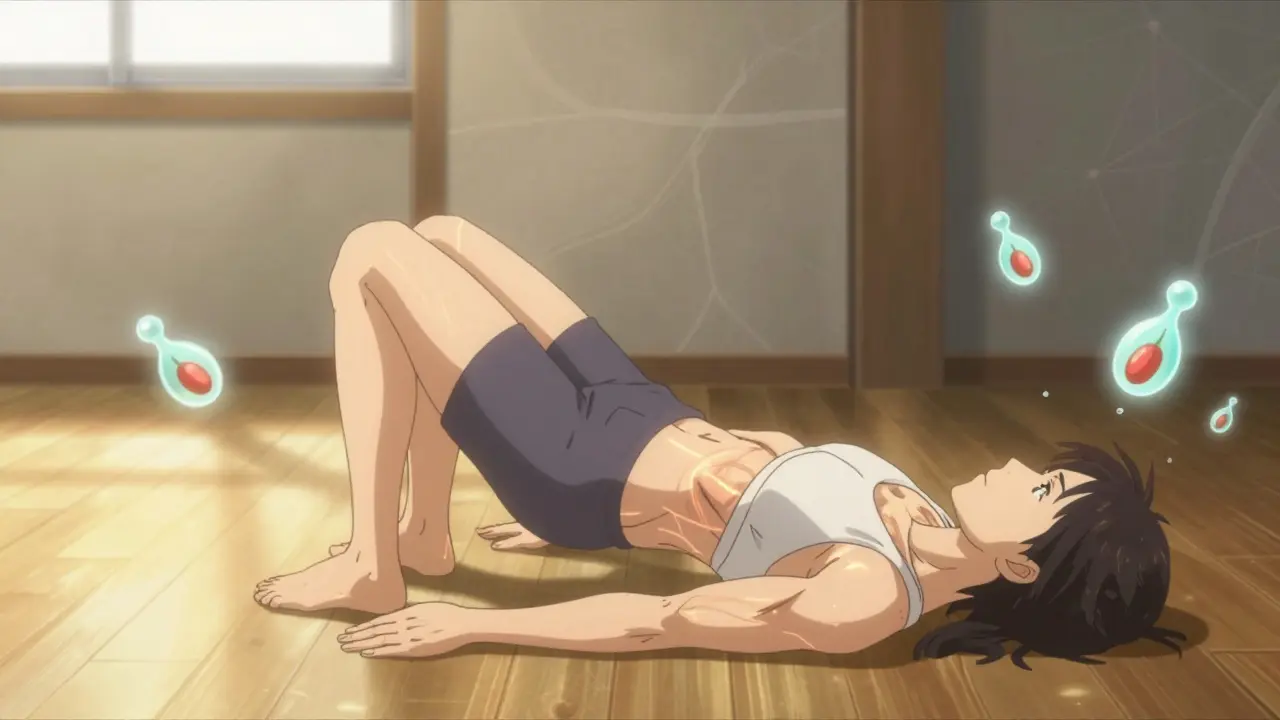
When pain sticks around-whether it's a sore back, stiff knees, or nagging neck pain-most people reach for pills first. But what if the real fix isn’t in a bottle, but in movement? Physical therapy for pain isn’t about brute force or pushing through discomfort. It’s about restoring how your body moves, feels, and heals. And the science backing it is strong.
How Movement Stops Pain
Think of pain as your body’s alarm system. Sometimes the alarm goes off even when there’s no real danger. Physical therapy doesn’t just silence the alarm-it rewires it. When you move correctly, your body releases natural painkillers called endorphins. At the same time, gentle exercise improves blood flow to injured tissues, bringing oxygen and nutrients that speed healing.
Studies show that people who stick with a structured physical therapy plan for 6 to 8 weeks typically cut their pain by 50 to 75%. That’s not luck. It’s biology. A 2016 study from Hoffman et al. found that just 30 minutes of treadmill walking at 75% of your maximum oxygen capacity (VO2max) dropped pain ratings significantly. The effect? Lasting. Not just during the workout, but for hours after.
The Three Pillars: Exercise, Stretching, Restoration
Effective physical therapy for pain rests on three simple, powerful pillars: exercise, stretching, and functional restoration. Each one plays a different role.
- Exercise rebuilds strength where it’s weak. Weak muscles don’t support joints well. That’s why your knee hurts when you walk, or your back aches after sitting. Strength training at 60-80% of your one-rep max, for 2-3 sets of 8-15 reps, three times a week, is the sweet spot. Increase weight by 5-10% every week. No need to lift heavy-just consistent.
- Stretching brings back lost motion. Tight muscles pull bones out of alignment. Hold each stretch for 30 to 60 seconds, five to seven days a week. You’ll gain 15 to 25 degrees of movement in just four weeks, according to clinical data from Delmarva Physical Therapy. Don’t bounce. Don’t force. Breathe. Let the stretch happen.
- Restoration means getting back to what you love. Can you bend to tie your shoes? Walk without limping? Lift groceries without wincing? That’s the goal. Physical therapists don’t just treat pain-they rebuild your life around it.
What Kind of Exercise Works Best?
Not all movement is equal. The type of exercise matters as much as how often you do it.
For joint pain like osteoarthritis, low-impact options like swimming, cycling, or walking cut pain by 35-40%. Why? Water reduces knee pressure by half compared to walking on land, according to a 2023 Mayo Clinic biomechanics study. If you have back pain, core-strengthening moves like bird-dogs and bridges are more effective than crunches.
Fibromyalgia? Tai chi beats regular aerobic exercise. A 2022 Arthritis Foundation trial with nearly 300 people showed tai chi reduced pain 30% more than standard cardio over 12 weeks. Why? It combines movement, breath, and mindfulness-three tools that calm the nervous system.
And here’s the surprise: short bursts work. A Duke University study of 198 office workers found that two minutes of daily shoulder and neck exercises lowered pain as much as 12-minute sessions. No gym needed. Just elastic bands and a chair.
But go too hard, and you risk making things worse. High-intensity workouts over 80% VO2max increased pain in 22% of fibromyalgia patients, according to Koltyn’s 2020 review. Moderation isn’t optional-it’s essential.

How to Know If You’re Doing It Right
Pain during exercise isn’t always bad. But there’s a line.
The rule most therapists use: if your pain stays below a 3 out of 10 during movement, and it returns to your baseline within an hour after, keep going. If pain spikes above 5, or lingers for more than two hours, you pushed too far. That’s not progress-that’s injury.
Most people feel worse at first. About 38% of beginners report increased pain in the first week. That’s normal. The key is the 2-hour pain rule: if you’re sore but not worse after two hours, you’re on track. If you’re still hurting the next day, scale back.
Use a simple 0-10 scale to track it. Write it down. Notice patterns. Does your pain drop after walking? Rise after sitting? That data tells your therapist-and your body-what works.
Real Stories, Real Results
Reddit’s r/Physical_Therapy community has over 142,000 members sharing their journeys. One user, u/ChronicPainWarrior, said daily tai chi cut their fibromyalgia pain by 80% after 16 weeks. Another, u/BackPainSufferer, saw sciatica pain drop from 7/10 to 2/10 in just three weeks with straight leg raises.
But not everyone succeeds. A 2023 analysis of Healthgrades reviews found that 42% of negative experiences came from exercises done with wrong form. A poorly timed stretch, a tilted pelvis during a bridge, or locking your knees in a squat can make pain worse. That’s why supervised sessions matter.
Most clinics offer 1:1 sessions for 45 minutes. Corporate clinics? Often 30 minutes with two or three patients at once. The difference? Personalized feedback. That’s worth paying for.
What You Need to Get Started
You don’t need equipment. You don’t need a gym. You need three things:
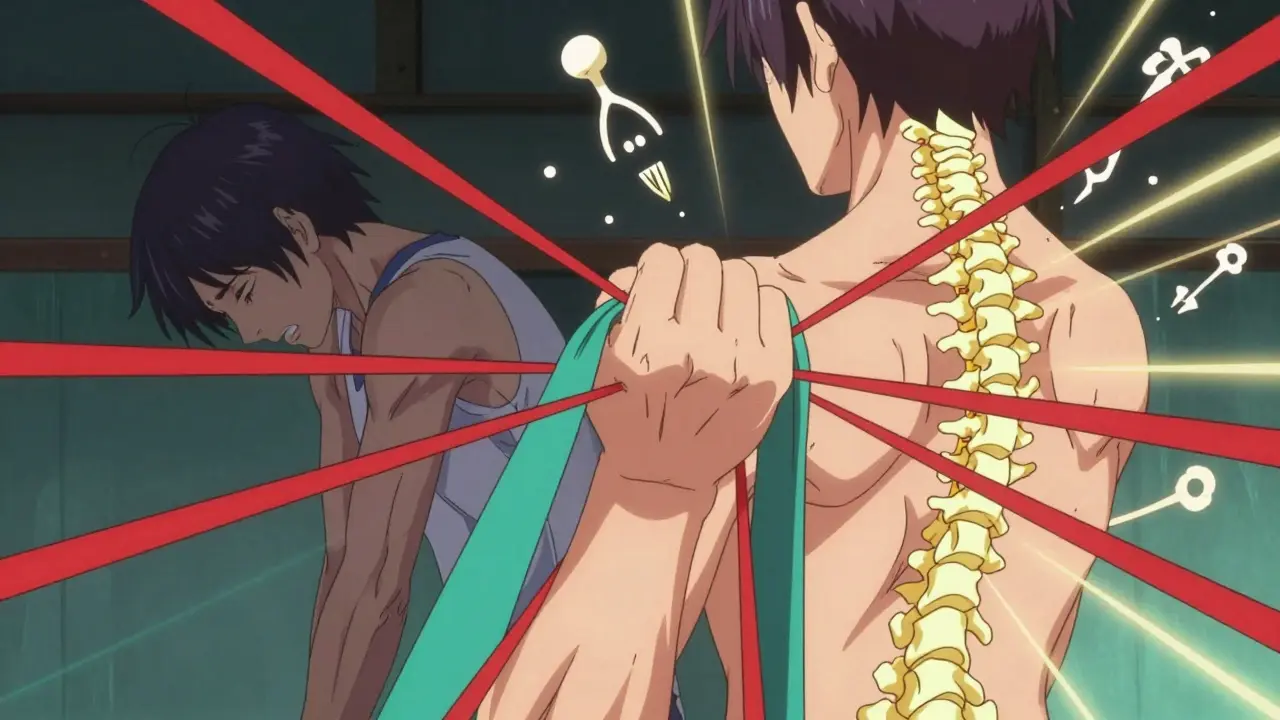
- Knowledge: Know your body. Learn where your spine segments sit, which muscles support your hips and shoulders. You don’t need to be an anatomist-just understand the basics.
- Consistency: Do it every day. Even if it’s five minutes. A 2023 VAOP Therapy study showed video demos boosted home exercise adherence from 45% to 78%.
- Patience: Pain didn’t build in a day. It won’t vanish in one.
The Arthritis Foundation’s two-minute exercise protocol has helped over 1,200 people. Users reported a 31% drop in neck and shoulder pain after four weeks. That’s not magic. It’s science.
Where Physical Therapy Fits Today
In 2023, the global non-opioid pain market hit $58.3 billion. Physical therapy made up 22% of that. Why? Because doctors are tired of prescribing pills that don’t fix the problem.
The American College of Physicians now says: try exercise and spinal manipulation before medication for back pain. Medicare covers 80% of physical therapy costs for approved conditions. And in March 2024, Mayo Clinic rolled out a 15-minute back exercise protocol that cut pain by 62% in six weeks-with 92% adherence.
Telehealth is growing fast. 63% of clinics now offer virtual sessions. Wearable sensors track your movement, giving therapists real-time feedback. You can do your exercises at home, and your therapist sees your form live.
Don’t Wait Until It’s Too Late
Pain is not normal. It’s not aging. It’s not something you just have to live with. It’s a signal. And physical therapy gives you the tools to listen-and respond.
You don’t need to be an athlete. You don’t need to spend hours at the gym. Just move. Move gently. Move often. Move with awareness. That’s how you restore your body-not with a pill, but with purpose.
Can physical therapy really help with chronic pain without medication?
Yes. Multiple studies, including randomized trials published in the Journal of Orthopaedic & Sports Physical Therapy, show that structured exercise and stretching reduce chronic pain by 50-75% in 6-8 weeks. It works by improving muscle support, reducing inflammation, and resetting pain signals in the nervous system. It’s not a quick fix, but it’s one of the most effective long-term solutions.
How long should I stretch each day to relieve pain?
Hold each stretch for 30 to 60 seconds, repeating 2-3 times per muscle group. Do this 5-7 days a week. Research from Delmarva Physical Therapy shows this routine increases range of motion by 15-25 degrees within four weeks. Focus on tight areas like hamstrings, hip flexors, shoulders, and neck. Don’t rush-breathe into the stretch.
Is walking enough for pain relief, or do I need to lift weights?
Walking helps, especially for joint pain like osteoarthritis. But strength training is essential for long-term relief. Weak muscles force joints to take extra stress. Aim for 2-3 sessions per week of resistance training using bodyweight, bands, or light dumbbells. Focus on major muscle groups: glutes, quads, core, and upper back. Combine walking with strength for the best results.
What if exercise makes my pain worse?
It’s normal to feel some discomfort at first. But if pain stays above a 5/10 during movement, or lasts more than two hours after, you’re overdoing it. Use the "2-hour pain rule": if you’re back to baseline within two hours, keep going. If not, reduce intensity or duration. Never push into sharp or shooting pain. That’s a red flag.
Do I need a physical therapist, or can I do this on my own?
You can start on your own with proven routines like the Arthritis Foundation’s two-minute exercises or Mayo Clinic’s back protocol. But if pain persists, or you’re unsure about form, seeing a physical therapist for 2-3 sessions is worth it. They’ll teach you correct technique, tailor the plan to your body, and prevent mistakes that could make things worse. Video tutorials help, but live feedback is irreplaceable.
Are there specific exercises for back pain?
Yes. Bird-dogs, dead bugs, glute bridges, and pelvic tilts are proven for lower back pain. These strengthen the deep core and stabilize the spine without straining it. A 2024 Mayo Clinic protocol showed 62% pain reduction in six weeks with just 15 minutes a day of these moves. Avoid sit-ups and toe touches-they often make back pain worse.
How soon will I feel better with physical therapy?
Some people feel relief after just a few sessions. But lasting results take time. Most studies show noticeable improvement in 3-4 weeks, with major gains by 6-8 weeks. The key is consistency. Even 10 minutes a day, done right, adds up. Don’t quit if you don’t feel better immediately-your body is rebuilding.
8 Comments
Morgan Dodgen March 10, 2026 AT 00:31
Let’s be real-this whole 'movement cures pain' narrative is just Big PT’s way of replacing pharma profits. 🤡 You think your 'bird-dogs' are fixing your sciatica? Nah. It’s the placebo effect wrapped in a foam roller. The real solution? Gene therapy. Or at least CRISPR edits for pain receptors. But nope, we’re stuck doing squats while Big Pharma laughs all the way to the bank. 💸
rafeq khlo March 10, 2026 AT 18:59
The data presented here is statistically unsound. 50-75% pain reduction? Where is the p-value? The sample sizes are anecdotal. Hoffman 2016? That study had a control group of 12 participants. Delmarva Physical Therapy? Not a peer-reviewed journal. This is pseudoscientific fluff dressed in clinical language. If you want real results, consult a biomechanics PhD-not a YouTube PT with 300 followers. 📊
George Vou March 11, 2026 AT 11:02
i mean yeah but like… what if u just dont move at all? like maybe ur body is telling u to chill? why force it? i had a back thing last year and i just laid on the couch for 2 weeks and it went away. no stretchin. no gym. just pizza and netflix. 🍕
Nicholas Gama March 11, 2026 AT 21:29
Exercise is a Band-Aid. Restoration requires systemic recalibration. Your nervous system isn't broken-it's been hijacked. NSAIDs mask. PT distracts. True healing? Fasting. Cold exposure. Breathwork. The body heals when it's in sympathetic dominance. You're not healing. You're performing.
Mary Beth Brook March 12, 2026 AT 02:26
This is why America is falling behind. We’re replacing real medicine with yoga and breathing. In China, they use targeted neurostimulation. In Germany, they deploy AI-driven biomechanical analysis. Here? We tell people to do 'two-minute shoulder exercises' like it’s a TikTok trend. Pathetic.
Ray Foret Jr. March 12, 2026 AT 17:29
Yo I tried this for 3 weeks after my car accident and it actually worked? Like I was in so much pain I couldnt tie my shoes, now I can walk to the fridge without wincing 😭 I did the 2-min routine every morning while my coffee brewed. No gym. No fancy gear. Just me, a chair, and some dumbbells I stole from my brother. You dont need to be perfect. Just show up. 💪
Philip Mattawashish March 13, 2026 AT 16:43
You're all delusional. Pain is not a bug-it’s a feature. Your body is not malfunctioning. It’s warning you. You're ignoring the message because you’re addicted to convenience. You want to move? Fine. But you’re not healing. You’re suppressing. The real cure? Accountability. Responsibility. A confrontation with your own lifestyle. You sit 14 hours a day, eat processed garbage, and sleep 5 hours. Then you think 30 seconds of stretching fixes it? Wake up. This isn’t therapy. It’s self-deception wrapped in stretch marks.
Tom Sanders March 15, 2026 AT 02:24
this whole thing is just a sales pitch for physical therapy clinics. they make you pay $150/hour to teach you how to do what you could’ve learned from a 10-minute youtube video. i did all this for free. i’m fine. you’re not.