

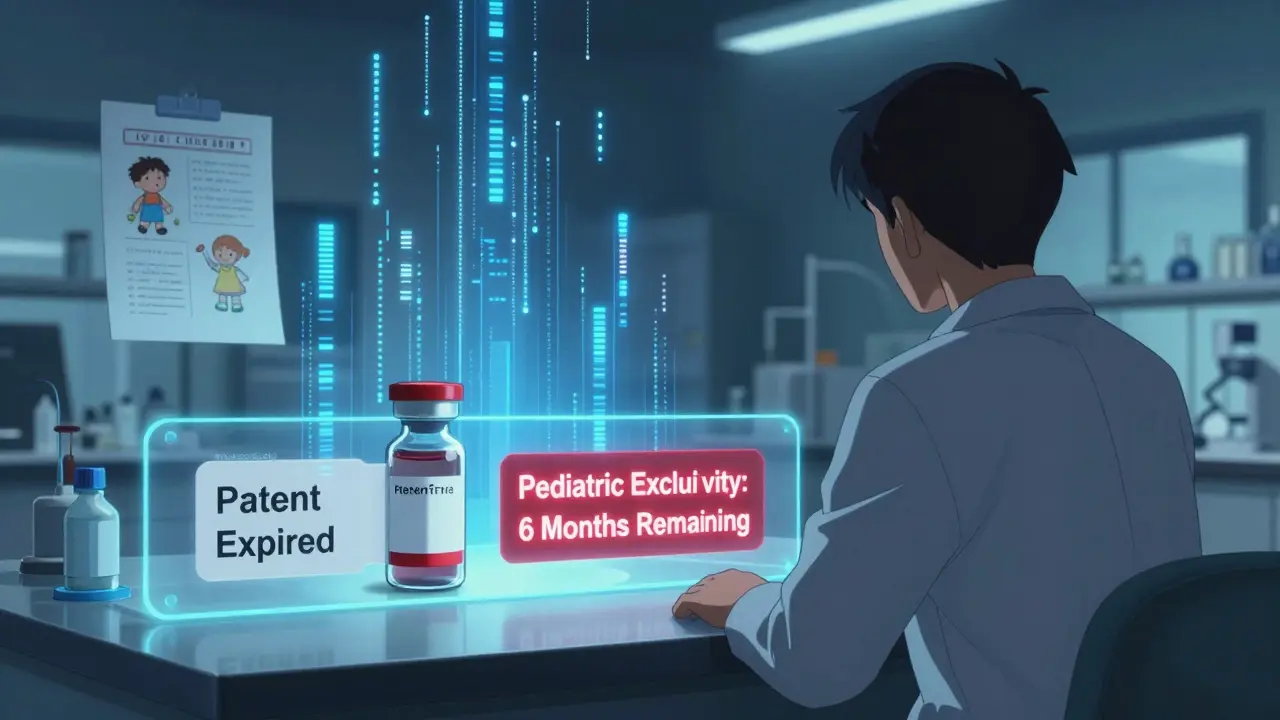
When a drug company gets approval for a new medicine, it doesn’t just get a patent-it gets a whole set of legal shields that keep generics off the market. One of the most powerful, yet rarely discussed, of these shields is pediatric exclusivity. It’s not a patent extension. It’s not even a patent at all. But it can block generic drugs from entering the market for six full months-sometimes even after the patent has expired. And it’s not a loophole. It’s a rule written into law to make sure kids get safe, tested medicines. Here’s how it actually works.
What pediatric exclusivity really does
Pediatric exclusivity doesn’t change the length of a patent. You can look up a drug’s patent in the FDA’s Orange Book, and the actual expiration date won’t move. But right next to it, you’ll see a second expiration date-six months later. That’s the pediatric exclusivity clock. It’s not about the patent. It’s about what the FDA can approve.
The FDA can’t approve a generic version of a drug if there’s any active exclusivity blocking it. That includes patents, but also other types of market protection like five-year new chemical entity exclusivity or three-year exclusivity for new clinical studies. Pediatric exclusivity doesn’t create a new patent. It adds six months to all of those existing protections. So if a drug still has four months of patent life left, pediatric exclusivity pushes the clock to ten months. If the patent already expired? Then pediatric exclusivity becomes the only thing standing between the brand drug and generics.
This is why it’s so valuable. A drug like a blockbuster asthma inhaler or a common ADHD medication might have lost its patent years ago. But if the company did pediatric studies, the FDA still can’t approve a generic for six more months. That’s pure market protection. No lawsuits. No court battles. Just a regulatory wall.
How companies earn it
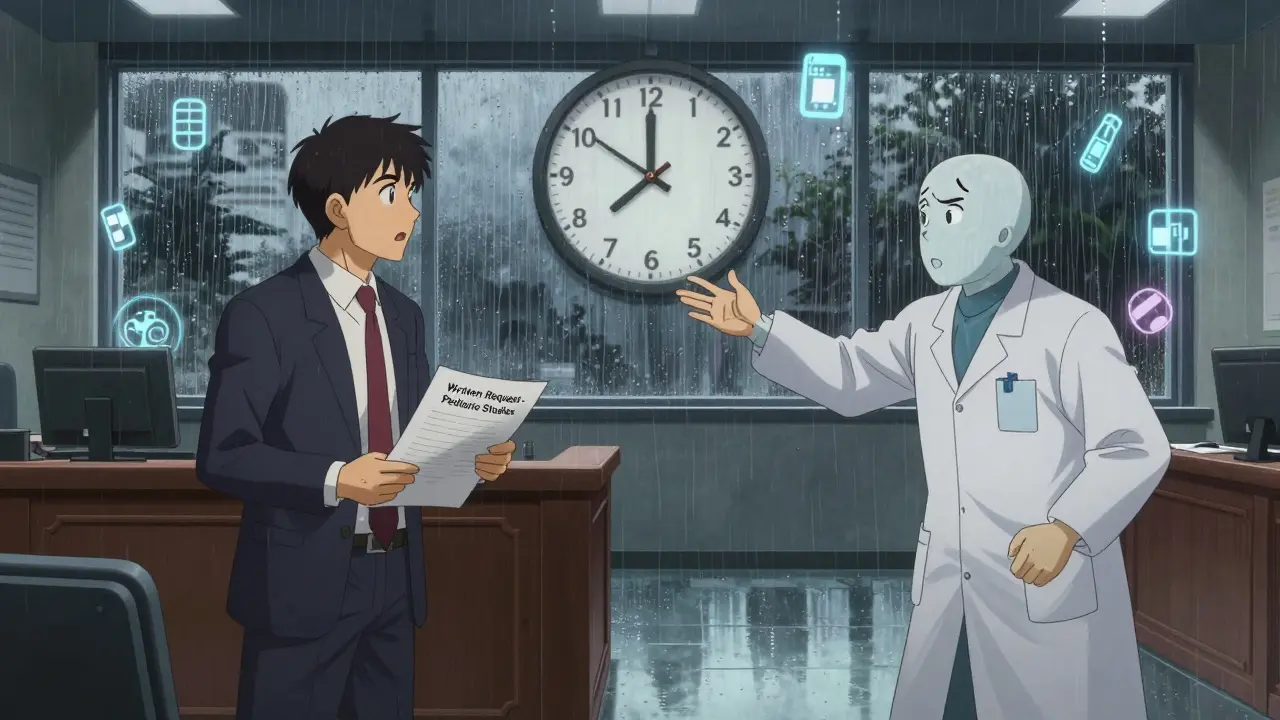
It’s not automatic. To get pediatric exclusivity, a drug company must respond to a Written Request from the FDA. The FDA doesn’t just ask for any studies. It tells them exactly what studies are needed-what age groups, what doses, what endpoints. These aren’t optional. If the company skips them, they get nothing.
The company then runs the studies in children. That’s not easy. Recruiting kids for clinical trials is expensive. Ethical reviews are strict. The data has to be solid. Once the studies are done, the company submits the reports. The FDA has 180 days to review them. If the studies meet the Written Request, the exclusivity kicks in. No new application needed. No approval process. Just a yes or no from the FDA.
And here’s the kicker: it doesn’t even require the drug’s label to change. You can get six months of extra market protection even if the label says the same thing it did before. The FDA only cares that the studies were done right. That’s why so many companies do it-even if they don’t plan to change how the drug is used. It’s pure business.
It applies to everything
Pediatric exclusivity doesn’t just protect one form of the drug. If a company makes a pill, a liquid, and a cream-all with the same active ingredient-and they do the pediatric studies for one, the exclusivity applies to all of them. Same for every condition it’s approved for. So if a drug is used for both epilepsy and migraines in adults, and the company studies it in kids for epilepsy, the exclusivity covers both uses.
This makes pediatric exclusivity incredibly broad. A single study can lock up multiple products. That’s why it’s called an "add-on" to existing exclusivity. It’s not limited. It’s a blanket extension across the entire product line.
When it doesn’t work
There are limits. Pediatric exclusivity won’t help if the drug has no patent or other exclusivity left-unless the company is applying for a new pediatric indication. In that case, if the FDA requires new clinical studies to approve the pediatric use, then the exclusivity can be granted even if the original patent expired years ago.
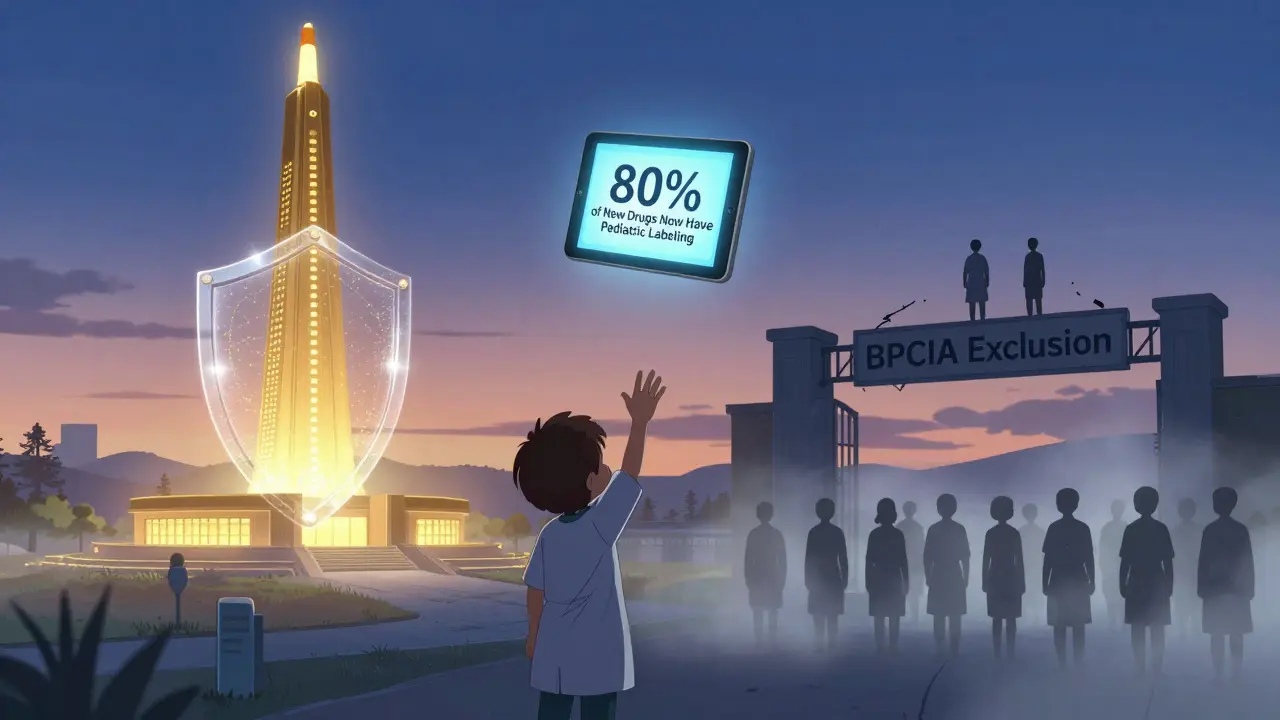
And it doesn’t apply to biologics. That’s important. Biologics like insulin or monoclonal antibodies are regulated under a different law (the BPCIA), and they don’t have the same patent linkage system. So even if a biologic company does pediatric studies, they won’t get this six-month exclusivity. That’s a major gap in the system.
Another big exception: if a generic company wins a patent lawsuit (a Paragraph IV challenge), the FDA can still approve their drug-even if pediatric exclusivity is still active. The law says Congress didn’t intend for pediatric exclusivity to block generics that have already proven the patent is invalid or not infringed. So litigation can override it.
Why it matters more than you think
Most people think patent extensions are the big deal in drug pricing. But pediatric exclusivity is often more powerful. A six-month delay on a top-selling drug can mean hundreds of millions in lost revenue for generics. For a drug that brings in $2 billion a year, six months of exclusivity could be worth $1 billion. That’s why companies fight hard to get it-and why generics watch every deadline like a hawk.
It also creates a weird twist: some companies wait until just before their patent expires to submit pediatric studies. That way, the exclusivity kicks in right when the patent runs out, giving them a seamless six-month buffer. It’s a legal trick, but it’s completely allowed. The FDA has upheld this in court. Timing matters. A difference of one day can mean the difference between a generic entering the market or being blocked.
What happens after exclusivity ends
Once the six months are up, the FDA can approve generics. No more delays. No more exceptions. The market opens. But the exclusivity doesn’t disappear-it just stops. The drug’s patent or other exclusivity may still be active, but pediatric exclusivity is done. And once it’s gone, it can’t be restarted. It’s a one-time offer.
That’s why companies are careful. They don’t just do pediatric studies because they care about kids (though that’s part of it). They do them because it’s the most reliable way to extend their market control. It’s not about innovation. It’s about timing, regulation, and the fine print of the law.
Real-world impact
Take a drug like Adderall. Its patent expired years ago. But because the manufacturer did pediatric studies and got exclusivity, generics couldn’t launch for six months after the patent ran out. Same with Vyvanse. Same with many other ADHD, asthma, and epilepsy drugs. In 2023, the FDA granted pediatric exclusivity to over 30 drug products. Many of them were already off-patent. Yet, they still had no generics because of this rule.
It’s not just about money. It’s about safety. Before this rule, most drugs were never tested in kids. Doctors had to guess doses. Kids got side effects no one understood. Pediatric exclusivity forced companies to study children properly. That’s the original goal-and it worked. Today, over 80% of new drugs come with pediatric labeling. That’s progress.
But the system is still lopsided. Big companies with resources use it to protect their biggest sellers. Smaller companies? They rarely have the budget. And biologics? They’re left out entirely. The rule was designed to help kids. But it became a tool for protecting profits.
Does pediatric exclusivity extend the actual patent term?
No. Pediatric exclusivity does not change the legal expiration date of a patent. Instead, it extends the period during which the FDA cannot approve generic versions of the drug. Even if the patent has expired, the FDA still can’t approve a generic for six months if pediatric exclusivity is active. It’s a regulatory delay, not a patent extension.
Can a generic drug be approved during pediatric exclusivity?
Only under specific conditions: if the generic company wins a patent lawsuit (Paragraph IV challenge), if they get a waiver from the brand company, or if a court rules the patent is invalid or unenforceable. Otherwise, the FDA will not approve the generic until the six-month exclusivity period ends. The agency requires unambiguous legal documentation before granting approval.
Does pediatric exclusivity apply to biologics?
No. Pediatric exclusivity only applies to small-molecule drugs regulated under the Hatch-Waxman Act. Biologics, such as insulin or monoclonal antibodies, are governed by a different law (the BPCIA), which does not include pediatric exclusivity provisions. This means biologic manufacturers cannot use pediatric studies to delay biosimilar entry.
What happens if a drug has no patent or exclusivity left?
Pediatric exclusivity can still be granted if the company is seeking approval for a new pediatric indication and the FDA requires new clinical studies to support that use. In this case, the exclusivity attaches to the supplemental application, even if the original patent has expired. But if no new studies are needed, the company won’t qualify.
How long does the FDA take to review pediatric study submissions?
The FDA has 180 days to review the pediatric study reports submitted by the drug company. If the studies meet the requirements outlined in the original Written Request, the agency grants the six-month exclusivity. This review period starts after the company submits the final reports-not after the studies are completed.
What’s next?
There’s growing pressure to fix this system. Critics say pediatric exclusivity is too easily exploited. Some want to limit it to drugs that actually change pediatric labeling. Others want to extend it to biologics. The FDA has said it’s watching the issue closely. But for now, the rule stands. And as long as it does, pediatric exclusivity will remain one of the most effective-and least understood-tools in pharmaceutical strategy.