

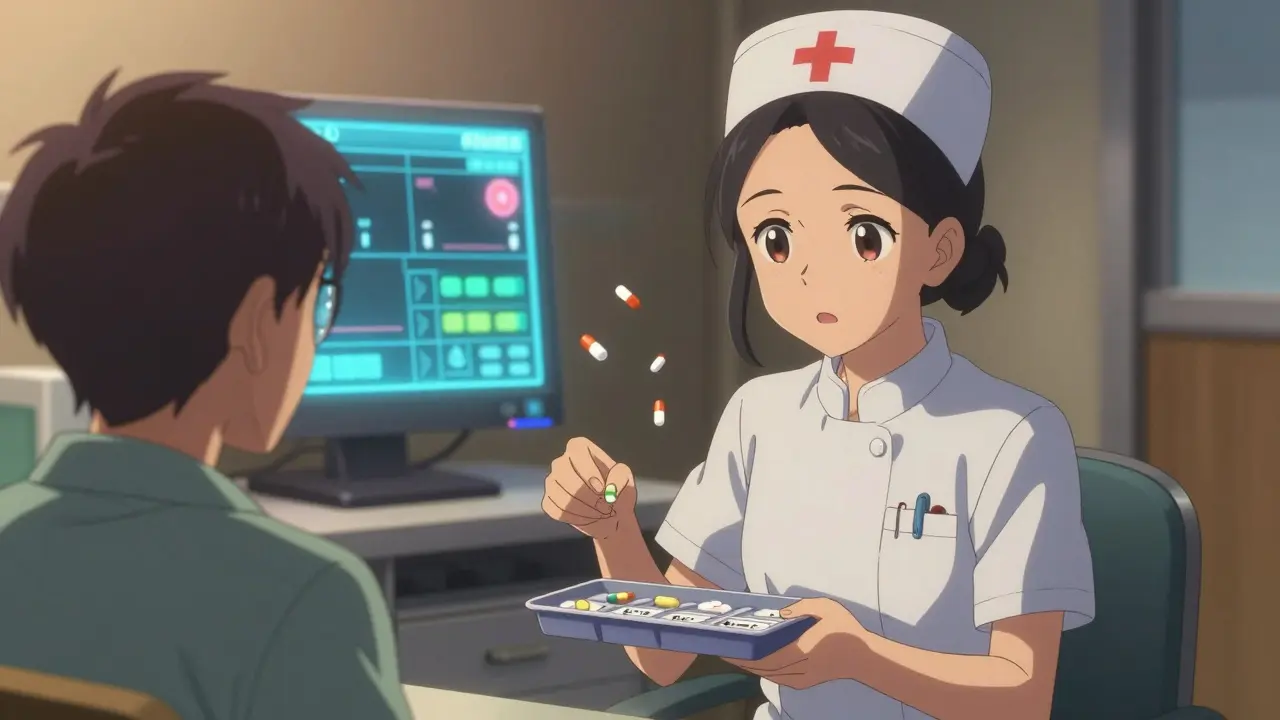
Why Medication Safety in Mental Health Is Different
People with mental health conditions are more likely to experience serious harm from medications than those with physical illnesses alone. It’s not because the drugs are inherently dangerous-it’s because the system often fails them. A person taking lithium for bipolar disorder might forget to get their blood tested every three months. Someone on clozapine for treatment-resistant schizophrenia might not have their white blood cell count checked at all. And in a busy emergency room or jail clinic, a doctor might miss that the patient is also taking three other antidepressants, a sleep aid, and a painkiller-all prescribed by different providers.
These aren’t rare mistakes. In England, only 40% of patients on lithium get the required blood tests. In prisons, medication errors are twice as common as in community clinics. Why? Because mental health care is fragmented. The same person might see a psychiatrist, a primary care doctor, a therapist, a pharmacist, and a correctional nurse-all without any one person holding the full picture of their meds.
The Ten Rights and Three Checks: A Simple Framework That Works
Frontline nurses in Saskatchewan use a straightforward system called the "ten rights and three checks" to keep patients safe. It’s not fancy, but it saves lives. Here’s what it looks like:
- Right patient - Double-check name and date of birth, even if you’ve known them for years.
- Right medication - Look at the label. Don’t assume because it’s the same color pill as yesterday.
- Right dose - Lithium at 900 mg is therapeutic. At 1,200 mg, it’s toxic.
- Right route - Is this supposed to be swallowed, injected, or applied to the skin?
- Right time - Some meds must be taken with food. Others can’t be taken with dairy.
- Right documentation - If it wasn’t written down, it didn’t happen.
- Right reason - Why is this drug being given? Is it for depression, anxiety, or just to make them sleep?
- Right response - Did the patient improve? Or did they get worse?
- Right to refuse - Can they say no? Are they being coerced?
- Right education - Do they know what the drug does and what side effects to watch for?
The "three checks" happen at three points: when you pull the med from storage, when you prepare it, and when you hand it to the patient. No shortcuts. This system cuts medication errors by nearly half in mental health units.
Medicines Reconciliation: The Most Overlooked Lifesaver
When someone moves from a hospital to a group home, or from jail to outpatient care, their medication list often gets lost. One study found that over 70% of patients had at least one error in their meds during these transitions. Maybe they were taken off a drug that helped them. Maybe they got a new one that interacts badly with something they’re already on.
Medicines reconciliation isn’t just updating a list. It’s a conversation. A pharmacist or nurse sits down with the patient and asks: "What are you actually taking right now?" Not what the chart says. Not what the last doctor prescribed. What’s in their pocket, their bathroom cabinet, their pill organizer?
They compare that with what the hospital or clinic says they should be taking. Then they fix the gaps. This simple step reduces hospital readmissions by 30% in mental health populations. Yet, fewer than half of community clinics do it consistently.
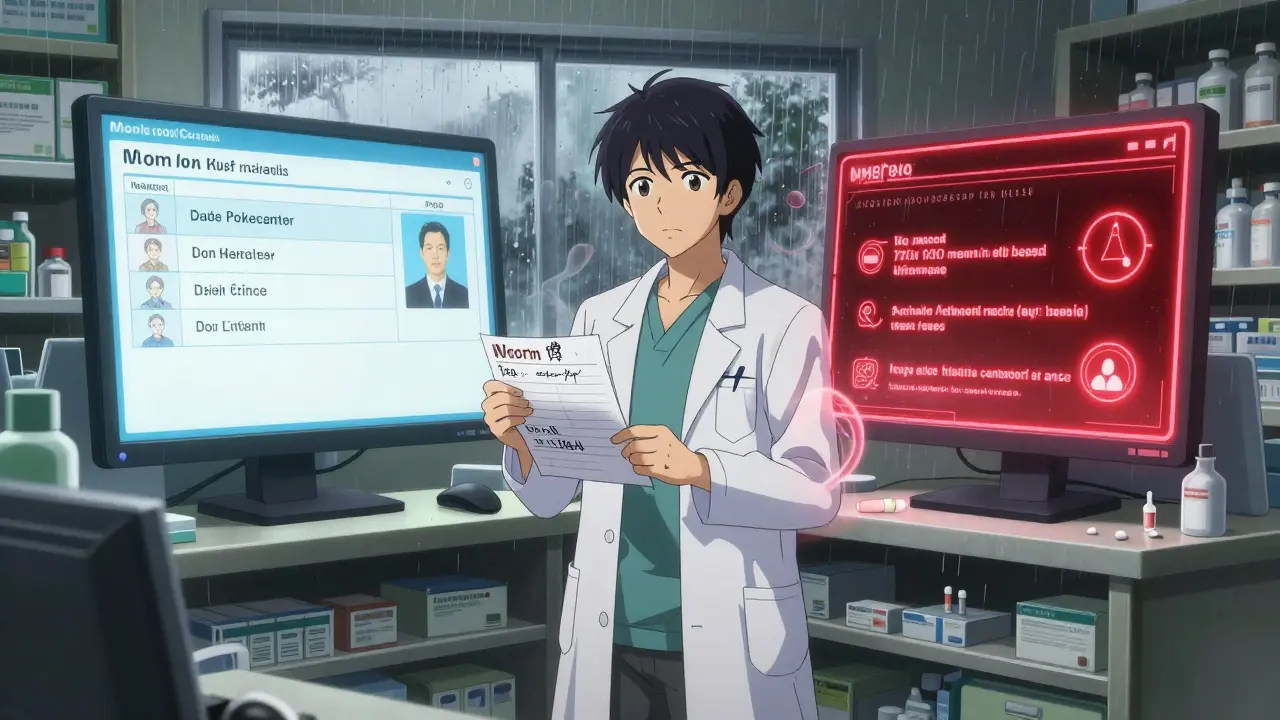
Why Polypharmacy Is a Silent Killer
Combining multiple psychiatric drugs sounds logical-until it isn’t. A person might be on an SSRI for depression, a benzodiazepine for anxiety, an antipsychotic for hallucinations, a sleep aid, and a beta-blocker for high blood pressure. That’s five drugs. Each one can interact. Each one adds side effects: dizziness, weight gain, slowed thinking, dry mouth, tremors.
Worse, some doctors prescribe low-dose antidepressants like mirtazapine just to make patients sleepy. It’s off-label. It’s common. And it’s dangerous. These drugs are often diverted-sold or traded-because they have sedating effects. In correctional settings, they become currency.
Every time a new drug is added, ask: "What are we trying to fix? And what are we risking?" If a patient’s mood is stable but they’re on four meds, it’s time to simplify. One study showed that cutting down from five to two psych meds improved alertness, reduced falls, and made patients feel more like themselves.
Technology Can Help-If It’s Used Right
Electronic prescribing cuts errors by 55%. That’s huge. But it’s not magic. A digital system won’t stop a nurse from giving the wrong pill if they’re rushed. It won’t fix a doctor who doesn’t check for drug interactions because they’re overwhelmed.
Good systems do three things: they flag dangerous combinations (like lithium and NSAIDs), they remind clinicians when blood tests are due, and they share data across clinics, hospitals, and pharmacies. In New Zealand, clinics that used these systems saw a 40% drop in medication-related emergencies.
The problem? Many mental health clinics still use paper charts. Or they have electronic records, but they don’t talk to the hospital’s system. Or the pharmacist can’t see what the community doctor prescribed. Technology only works when it connects.

Who’s Responsible? Everyone-But Someone Must Lead
No single person can manage all this alone. But someone has to be in charge. That’s the key. In the best-run programs, a clinical pharmacist is assigned to each mental health team. They review every patient’s meds monthly. They call doctors when doses are too high. They educate nurses on side effects. They make sure lithium levels are tracked.
Primary care doctors need training too. Many don’t know how to manage clozapine. They don’t know when to refer back to a psychiatrist. A 2023 study found that GPs often misdiagnose bipolar disorder as depression-and prescribe antidepressants that can trigger mania.
Patients need to be part of the team too. They should know their own meds. They should know why they’re taking them. And they should feel safe asking questions without fear of being labeled "noncompliant."
What You Can Do Right Now
If you’re a patient: Keep a written list of every medication you take-including over-the-counter pills, supplements, and what you use for sleep. Bring it to every appointment. Ask: "Is this still necessary?" and "What happens if I stop?"
If you’re a caregiver: Watch for signs of side effects-slurred speech, unsteady walking, confusion, extreme drowsiness. Don’t assume it’s just "their illness."
If you’re a clinician: Use the ten rights every time. Reconcile meds at every transition. Don’t prescribe sedatives just to manage behavior. Check blood levels. Talk to the pharmacist. Document everything.
If you’re a policy maker: Fund clinical pharmacists in mental health clinics. Require electronic prescribing with alerts. Mandate medicines reconciliation in jails and emergency rooms. Track outcomes-not just prescriptions.
It’s Not About Perfection. It’s About Consistency.
Medication safety in mental health isn’t about having the fanciest tech or the smartest doctors. It’s about doing the basics, every single time. Checking the name. Confirming the dose. Asking why. Writing it down. Connecting the dots between care settings.
People with mental illness are not harder to treat. They’re just more likely to fall through the cracks. And those cracks are filled with preventable harm.
Change doesn’t come from grand reforms. It comes from a nurse pausing before handing out a pill. A pharmacist calling a doctor about a dangerous mix. A patient speaking up. One small step, repeated, over and over.
What are the most dangerous mental health medications?
Lithium, clozapine, and benzodiazepines carry the highest risk when not monitored properly. Lithium can cause kidney and thyroid damage if blood levels aren’t checked every 3 months. Clozapine can dangerously lower white blood cell counts, requiring weekly blood tests at first. Benzodiazepines like lorazepam can lead to dependence, withdrawal seizures, and are often diverted for misuse. These are not "bad" drugs-they’re powerful tools that need careful handling.
Why do people with mental illness have more medication errors?
Three main reasons: First, cognitive issues like brain fog, memory problems, or paranoia can make it hard to remember or understand meds. Second, care is often split between multiple providers who don’t communicate. Third, systems like paper charts and disconnected electronic records make it easy for doses to be missed, duplicated, or forgotten.
Can I stop my psychiatric medication if I feel better?
Never stop abruptly. Many psychiatric drugs require slow tapering. Stopping lithium or an antipsychotic suddenly can cause rebound psychosis, severe anxiety, or seizures. Always talk to your prescriber first. Even if you feel fine, your brain may still need the medication to stay stable. Stopping without guidance is one of the leading causes of hospital readmission.
What’s the role of a pharmacist in mental health care?
Pharmacists are medication detectives. They review all prescriptions for dangerous combinations, check if blood tests are up to date, spot when a drug is being used off-label (like using an antidepressant for sleep), and educate patients on side effects. In clinics where pharmacists are part of the team, medication errors drop by 25%.
How can I tell if my meds are causing side effects?
Watch for changes you didn’t expect: sudden weight gain, shaking hands, extreme tiredness, confusion, dry mouth, trouble walking, or new thoughts of self-harm. These aren’t normal "side effects of illness." They’re signs your meds may be out of balance. Write them down and bring them to your next appointment. Don’t wait for your doctor to ask.