

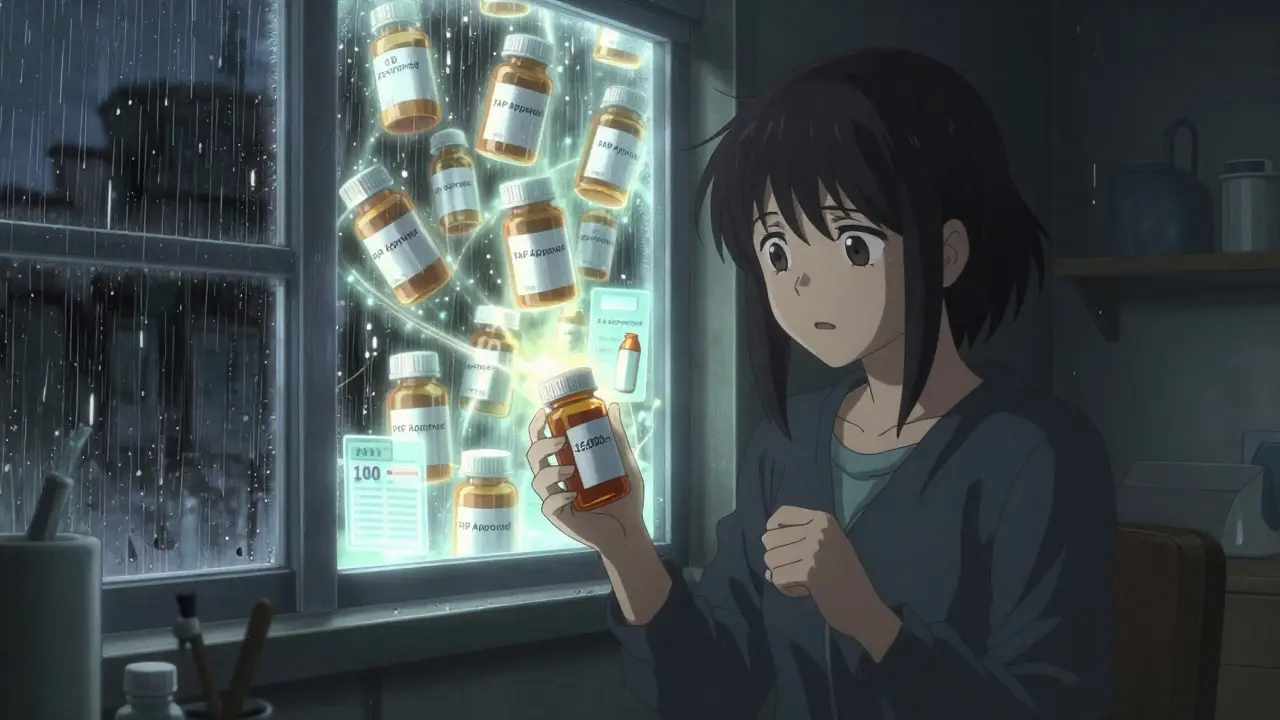
When a life-saving medication has no generic version, the price can feel like a punch to the gut. Some drugs cost more than $10,000 a month. For many people, that’s not just expensive-it’s impossible. But there’s a lifeline: patient assistance programs (PAPs). These are free or low-cost drug programs run by drug makers, nonprofits, and sometimes states. They’re not a cure-all, but for people who need brand-name drugs with no cheaper alternative, they can mean the difference between staying alive and giving up.
Why PAPs Exist When No Generic Is Available
Generic drugs usually cut costs by 80% or more. But when a drug is new, rare, or complex-like those for cancer, autoimmune diseases, or genetic disorders-a generic version might not exist for years, or ever. Think of drugs like Soliris for PNH, Orkambi for cystic fibrosis, or Tasigna for leukemia. These aren’t ordinary pills. They’re engineered with precision. Manufacturing them is expensive. So the list price skyrockets. And without a generic, patients have no fallback. That’s where PAPs step in. Drug companies set them up not just out of charity, but because they’re legally required to show they’re helping patients access their own products. In 2022 alone, these programs gave away $4.7 billion worth of medicine. Most of that went to brand-name drugs with no generic. For uninsured patients, 89% of PAP users rely on them because they have no other option.How PAPs Actually Work
PAPs don’t work like insurance. You don’t pay a monthly premium. Instead, you apply directly to the program. If you qualify, you get the medication for free-or sometimes just a small copay. Most programs require three things:- Proof of income (usually below 400% of the Federal Poverty Level-$60,000 for one person in 2023)
- A valid prescription from your doctor
- Proof that you don’t have insurance, or that your insurance won’t cover the drug
- Manufacturer-run (65% of all programs): These are the biggest and most reliable. Companies like Novartis, Gilead, and Eli Lilly run their own. They usually approve applications in 7-10 days.
- Foundation-run (25%): Nonprofits like the Patient Access Network Foundation or the Chronic Disease Fund help with costs. These take longer-14 to 21 days-but they’re often the only option for Medicare patients.
- State-run (10%): Some states, like Pennsylvania with their PACE program, help seniors. But they usually cap assistance at $400 per month. PAPs from drug makers often cover the full cost.
What You Can Actually Save
Let’s say you’re on a drug that costs $15,000 a month. Without help, that’s $180,000 a year. With a manufacturer PAP? You pay $0. That’s not a discount. That’s a full rescue. Compare that to pharmacy discount cards like GoodRx. They work great for generics. But for brand-name drugs with no generic? GoodRx saves you about 8.3% on average. That’s $1,245 a month instead of $15,000. Still a lot. Not enough. PAPs are the only real solution here. Studies show patients using PAPs for cancer drugs are 37% less likely to skip doses because they can’t afford them. That’s not just money saved. That’s lives saved.The Hidden Problem: Accumulator Adjustments
Here’s the catch. If you have commercial insurance, your PAP help might not count toward your deductible or out-of-pocket max. That’s called an accumulator adjustment. It’s legal, and 78% of major pharmacy benefit managers (PBMs) like Express Scripts and Optum use it. What does that mean? Let’s say your deductible is $8,700. You get PAP assistance for your $12,000-a-month drug. You pay $0 out of pocket. But your insurance doesn’t count that $12,000 toward your deductible. So you’re still stuck paying $8,700 on other meds, doctor visits, or hospital stays before your insurance kicks in. In one documented case, a patient paid $20,700 out of pocket in a single year-because their PAP didn’t count. This is a trap. You think you’re getting help. You’re not. You’re just getting the drug for free while still being punished financially by your own insurance plan.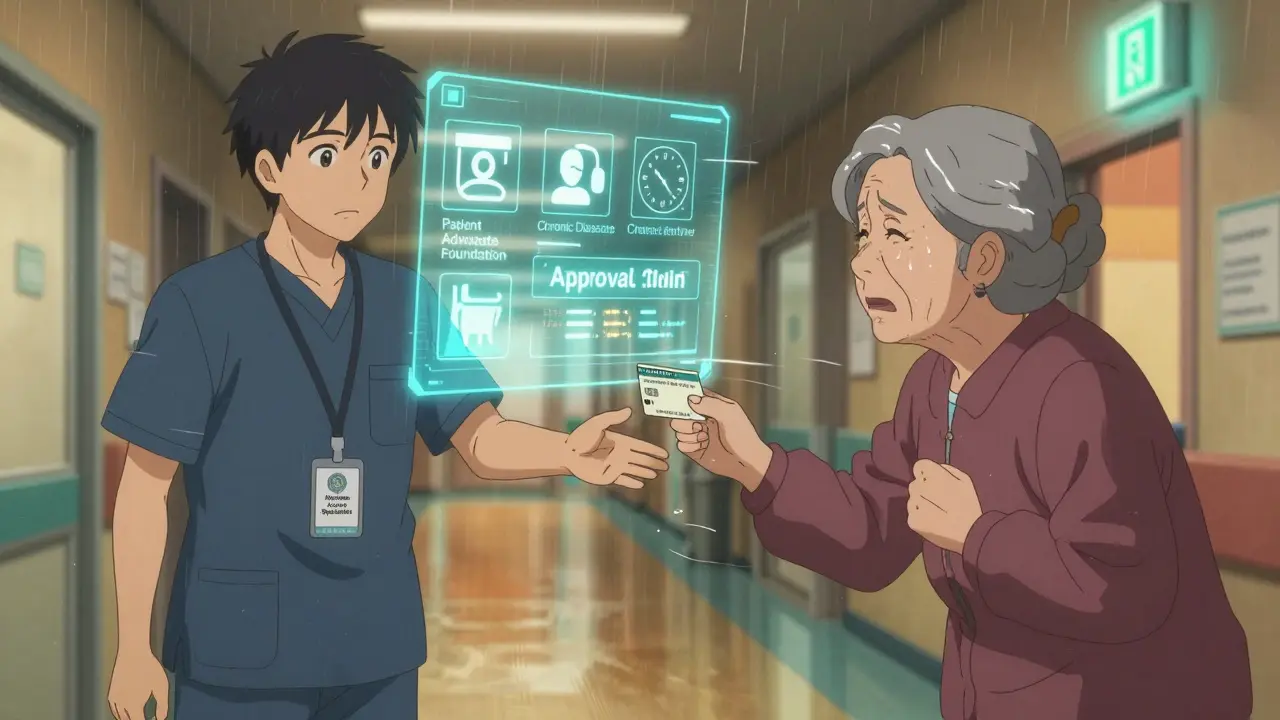
What to Do If You Have Medicare
If you’re on Medicare Part D, you can’t use manufacturer copay assistance anymore. That rule changed in January 2020. So you’re stuck with foundation-run PAPs or state programs. The good news? Foundation PAPs don’t have to follow the same rules. They can still help Medicare patients. The bad news? They’re harder to get into. They often have income caps lower than manufacturer programs, and they’re oversubscribed. Your best move? Apply to multiple foundation PAPs at once. Organizations like the Patient Advocate Foundation and the Chronic Disease Fund have waiting lists, but they move fast if you’re in crisis. Call them. Don’t wait for an email.How to Apply: A Step-by-Step Guide
Applying for a PAP isn’t hard, but it’s messy. You’ll need patience and organization. Here’s how to do it right:- Find the right program. Go to RxHope.com or NeedyMeds.org. Both are free, nonprofit sites that list every major PAP. Search by drug name.
- Check eligibility. Most require income under 400% FPL. Some go as low as 200%. If you’re on Medicaid, you usually don’t qualify-because you already get help.
- Gather documents. You’ll need: your most recent tax return or W-2, your prescription, and proof of insurance status (or denial letter if your insurer refused coverage).
- Get your doctor involved. Ask them to fill out the form. Many clinics now have medication access specialists who handle this for you. If your doctor’s office doesn’t, ask if they can refer you to a patient navigator.
- Submit and follow up. Manufacturer PAPs take 7-10 days. Foundations take 2-3 weeks. Call after 10 days if you haven’t heard back. Don’t assume it’s approved.
Who Can Help You?
You don’t have to do this alone. Many hospitals and cancer centers now have patient navigators-staff trained to handle PAP applications. They know which programs work, which ones are slow, and which ones are scams. If your hospital doesn’t have one, contact:- Patient Advocate Foundation (1-800-532-5274)
- Chronic Disease Fund (1-800-258-3415)
- NeedyMeds (free online tool with live chat)
- RxHope (online screener that auto-fills applications)

Real Stories, Real Stakes
One patient on Reddit shared: “Without Gilead’s PAP for my $15,000/month HIV drug, I would’ve chosen homelessness over bankruptcy.” Another, on a cancer forum, wrote: “I spent 11 hours over three weeks just to get Novartis to approve my $14,000/month drug. But now I’m alive. And I’m not paying a dime.” But not everyone wins. A Medicare patient in Florida spent three months fighting UnitedHealthcare’s accumulator policy. Even though her PAP covered her $12,000 drug, she still had to pay $20,700 out of pocket because the PAP didn’t count toward her deductible. These stories aren’t rare. They’re the norm.What’s Changing in 2026?
The landscape is shifting. The Inflation Reduction Act banned manufacturer copay assistance for Medicare Part D drugs starting January 2025. That means more pressure on nonprofit PAPs. More demand. Fewer resources. On the bright side, drug companies are making applications easier. Eli Lilly’s “Simple Bridge” program cut its insulin PAP application from 17 steps to 5. Approval time? 48 hours. Electronic health records are also starting to integrate PAP tools. Epic Systems now lets doctors check PAP eligibility right in the patient chart. That’s huge. It means your doctor might be able to get you approved before you even leave the office.Final Advice: Don’t Give Up
If your drug has no generic, you’re not out of options. You’re just in a harder lane. PAPs are the only real path forward. But they require work. You’ll need to call, write, follow up, and sometimes fight. Start with RxHope or NeedyMeds. Print out the application. Talk to your doctor. Ask if they have a patient navigator. If they say no, ask them to call one of the nonprofits listed above. You’re not asking for charity. You’re asking for access to a medicine your body needs. That’s not a favor. It’s a right. And if you’re told no? Apply again. Appeal. Try another program. There are over 1,500 of them. One of them will say yes.Frequently Asked Questions
Can I use a patient assistance program if I have insurance?
Yes, but only if your insurance doesn’t cover the drug-or if it does, but your out-of-pocket cost is still too high. Most PAPs require proof that you’ve been denied coverage or that your copay exceeds a certain amount. However, if you have commercial insurance, your PAP assistance may not count toward your deductible due to accumulator adjustment policies. That means you’ll still pay your full deductible even if your drug is free.
Can Medicare beneficiaries get help from manufacturer PAPs?
No. Since January 1, 2020, federal law prohibits drug manufacturers from offering copay assistance to Medicare Part D beneficiaries. This rule was strengthened in 2025 under the Inflation Reduction Act. Medicare patients must rely on nonprofit foundation PAPs, state programs, or hospital-based assistance. These programs have different income rules and often have waiting lists.
How long does it take to get approved for a patient assistance program?
Manufacturer PAPs typically approve applications in 7-10 business days. Foundation-sponsored programs take longer-usually 14 to 21 days-because they require more documentation and review. Some urgent cases can be fast-tracked, especially for life-threatening conditions like cancer or organ transplant rejection. Always call the program after 10 days if you haven’t heard back.
What if my PAP application is denied?
Don’t accept a denial as final. About 41% of initial applications are denied, usually because of missing documents or incomplete forms. You can appeal. Call the program and ask for the reason. Fix the issue-get a new tax form, ask your doctor to resubmit, or provide additional proof of income. Many patients get approved on the second try. Organizations like the Patient Advocate Foundation offer free appeal support.
Are there free tools to find patient assistance programs?
Yes. Two of the most reliable are RxHope.com and NeedyMeds.org. Both are nonprofit and free to use. RxHope has an online screener that matches your drug and income to available programs and even auto-fills applications. NeedyMeds has a searchable database with contact info, eligibility rules, and links to each program. Neither sells your data or charges fees.
Do I have to reapply every year?
Yes. Most PAPs require annual recertification. You’ll need to submit updated income documents and a new prescription. Some programs send reminders, but many don’t. Mark your calendar. Missing a renewal can mean losing your medication. Set a reminder three months before your current approval expires.
Can I use more than one PAP at the same time?
Yes, if you qualify for multiple programs. Many patients combine a manufacturer PAP for their main drug with a foundation PAP for a secondary medication. Some even use state programs on top of both. But you can’t use two PAPs for the same drug. Each program will ask if you’re receiving assistance elsewhere. Always be honest. Lying can get you kicked out of all programs.
9 Comments
Katie Schoen January 6, 2026 AT 19:50
So let me get this straight - we’ve got drugs that cost more than my rent, and the only thing keeping people alive is a bunch of paperwork that feels like climbing Mount Everest in flip-flops? And the system *expects* you to be a full-time bureaucrat just to breathe? 😅
I’ve seen friends spend weeks chasing down forms, only to get denied because a fax didn’t go through. Meanwhile, the pharma execs are on vacation in Bali. Not even a little ironic?
But hey - at least we have RxHope and NeedyMeds. Shoutout to those folks. They’re the real MVPs. If you’re reading this and you’re stuck? Don’t give up. Call. Email. Beg. Someone out there will help. I promise.
Beth Templeton January 7, 2026 AT 07:22
PAPs are a bandaid on a gunshot wound
Ryan Barr January 7, 2026 AT 16:43
It’s fascinating how the market failure here is being papered over by charitable initiatives that were never meant to be systemic solutions. The real issue is the lack of price regulation and the perverse incentive structure that rewards monopolistic pricing for biologics. PAPs are a symptom, not a cure.
And yet, the fact that we’ve normalized this as ‘acceptable’ speaks volumes about the moral bankruptcy of our healthcare infrastructure. We don’t fix the system - we just hand out Band-Aids while the patient bleeds out.
Dana Termini January 8, 2026 AT 06:34
Thank you for writing this. I’ve been on a PAP for my autoimmune med for three years now. It’s not perfect, but it’s kept me alive. I’ve had to reapply every year, fight through denials, and beg my doctor to fill out forms - but I’ve never gone without. I’m not ‘lucky.’ I’m persistent.
To anyone reading this and feeling overwhelmed: you’re not alone. Reach out to a patient navigator. They exist. They care. And they’ve seen it all before. Just start with one step.
Wesley Pereira January 10, 2026 AT 02:00
accumulator adjustments are a total scam bro. like you get your $12k drug for free but your insurance still treats you like you spent it all? that’s not healthcare, that’s financial torture with a side of corporate jargon.
and dont even get me started on how pbms are the real villains here - they’re the ones designing these traps so they can keep their cut. meanwhile, people are choosing between insulin and groceries. absolute madness.
also - if your doc says ‘we dont have a patient nav’ - tell them to get their shit together. this is 2025. its not hard to have a link on the website.
Rachel Wermager January 10, 2026 AT 21:29
For Medicare beneficiaries, the 2025 Inflation Reduction Act effectively eliminated manufacturer copay assistance, which has forced a structural shift toward foundation-based aid. However, the eligibility thresholds for nonprofit PAPs are often more restrictive than those of manufacturer programs, creating a coverage gap for low-income seniors who fall just above Medicaid thresholds but below the 200% FPL cutoff for many foundations.
Additionally, the lack of interoperability between EHRs and PAP databases remains a systemic bottleneck - even with Epic’s integration, only 38% of clinics have enabled the feature as of Q1 2025, according to the Center for Medicare and Medicaid Innovation’s latest report.
Katelyn Slack January 12, 2026 AT 15:41
i just applied for my dads meds and it took 3 weeks and i forgot to send one page and they denied it… i cried for an hour. then i resubmitted and got approved. dont give up. even if you mess up. just try again. i promise it’s worth it.
Molly McLane January 13, 2026 AT 01:30
If you’re reading this and you’re scared or overwhelmed - I see you. I’ve been there. I’ve sat in a hospital room holding my partner’s hand while they cried because they couldn’t afford the next dose. We didn’t have insurance. We didn’t know where to start.
But we found NeedyMeds. We called Patient Advocate Foundation. We got help. It wasn’t easy. It wasn’t fast. But it worked.
Don’t think you have to do this alone. There are people - real, human people - who want to help. You just have to reach out. And if you’re a provider? Please, please, please - don’t make your patients beg. Point them to the resources. Do your job.
This isn’t charity. It’s justice.
Harshit Kansal January 14, 2026 AT 08:48
bro this is wild. i live in india and we dont even have these programs. our meds are cheaper but also sometimes fake. here you guys have the drugs but cant afford them? i mean… what even is this world anymore?
but seriously - thanks for the guide. even if i dont need it, i’m sharing this with my cousin in texas. she’s on a $10k/month drug. she needs this.