

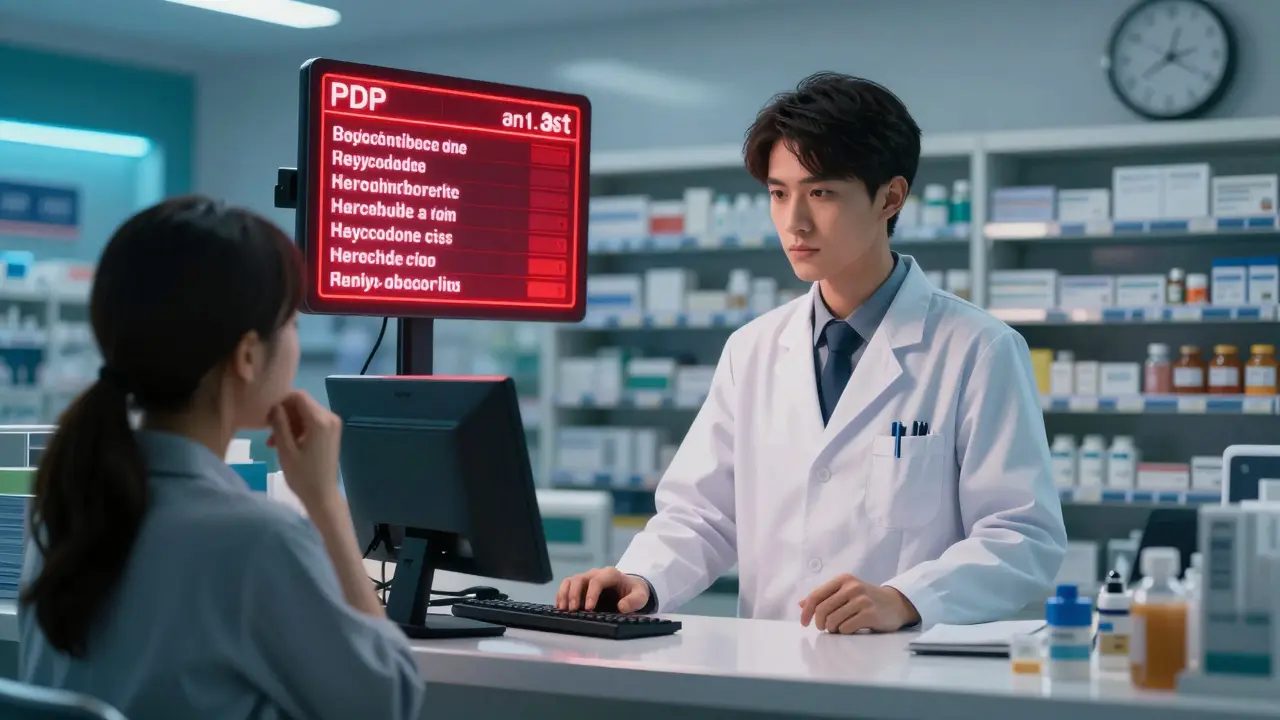
Every month, pharmacists face the same frustrating pattern: a patient shows up two weeks early for a 30-day prescription, insists they need it now, and gets upset when you say no. They might claim their insurance allows it, their doctor wrote it, or they’ll pay cash. But behind that request could be something far more dangerous-early refills that lead to overdose, drug diversion, or duplicate therapy from multiple prescribers. These aren’t just administrative headaches. They’re patient safety emergencies.
Why Early Refills Are a Red Flag
Early refills aren’t always mistakes. Sometimes, a patient loses their pills, or a child spills medication. But when it happens month after month-especially with controlled substances like oxycodone, Adderall, or alprazolam-it’s a pattern. The DEA strictly prohibits refills on Schedule II drugs. No exceptions. Yet, some patients still try to get them early by switching pharmacies or doctors. That’s called "doctor shopping," and it’s a major driver of opioid misuse. According to Pharmacy Times, repeated early refill requests from different prescribers and pharmacies are one of the clearest warning signs of potential drug misuse. The CDC also links early refills to poor medication adherence, not just abuse. Patients who consistently refill too soon may be taking more than prescribed, hoarding pills, or not using them as directed-all of which increase overdose risk.Duplicate Therapy: When Two Prescriptions Do the Same Thing
Duplicate therapy happens when a patient gets two different prescriptions for the same drug or drugs in the same class. Think: two different doctors each prescribing lisinopril for high blood pressure, or one prescribing sertraline and another prescribing fluoxetine-both SSRIs. This isn’t just wasteful. It can cause serotonin syndrome, dangerously low blood pressure, or kidney damage. Pharmacists are often the last line of defense. But if you’re only looking at your own pharmacy’s records, you’re blind. A patient might fill one prescription at Walgreens, another at CVS, and a third at a mail-order pharmacy. Without access to statewide prescription drug monitoring programs (PDMPs) or clinical viewers, you won’t see the full picture. OCP Info recommends pharmacists regularly check patient profiles for gaps in refill timing, multiple prescribers, and overlapping drug classes. Many health systems now require pharmacists to register for clinical viewers that pull data from public and private pharmacy networks. That’s not optional anymore-it’s standard practice.How High-Risk and Low-Risk Medications Are Handled Differently
Not all medications need the same level of scrutiny. The American Academy of Family Physicians (AAFP) breaks prescriptions into three tiers:- Low-risk meds: Nasal steroids, thyroid meds, or some antihistamines. These can often be refilled automatically every 3 months if the patient has been seen recently.
- Medium-risk meds: Blood pressure pills, diabetes drugs, birth control. These need a 3-month visit before refill, but can be pre-signed and scheduled.
- High-risk meds: Opioids, benzodiazepines, stimulants. These require direct provider approval every time. No exceptions.
Technology Is Your Best Ally
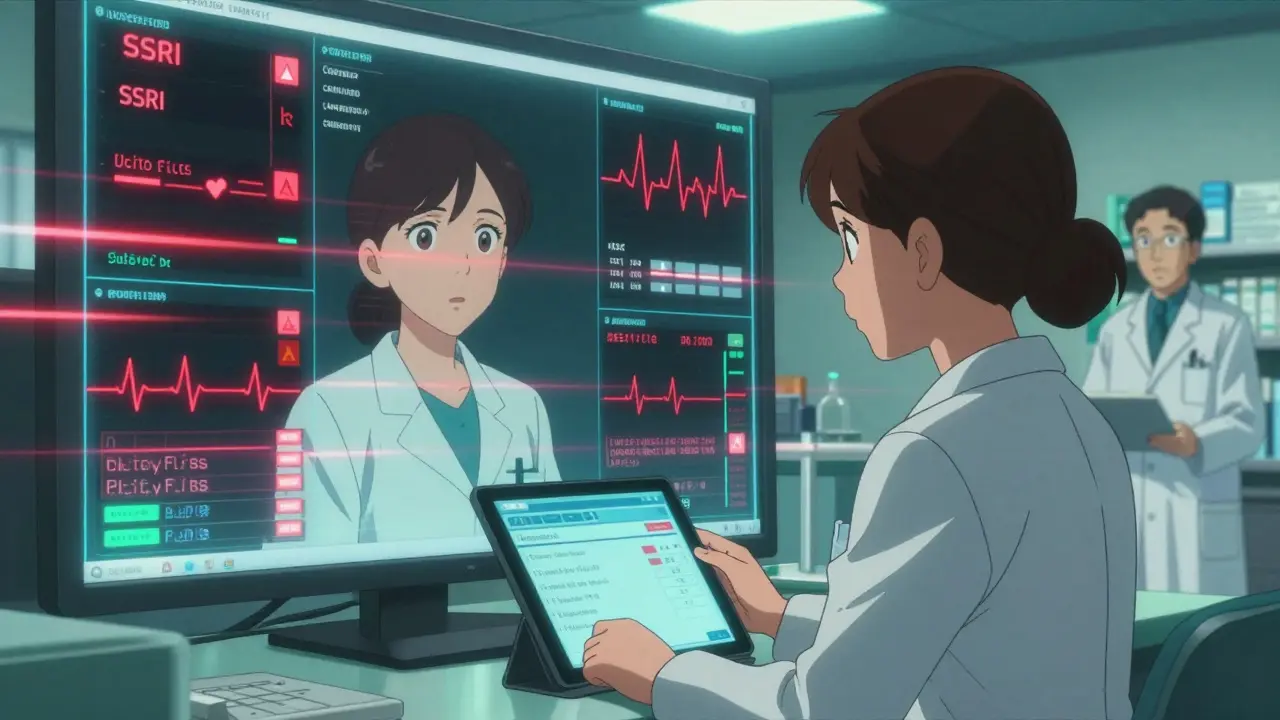
Electronic Health Records (EHRs) aren’t just for charting. They’re powerful tools to stop errors before they happen. Here’s how:- Set up automated alerts when a patient requests a refill too early. The system should flag it for review.
- Use "cancel all prior" notes in the EHR to stop automatic refill reminders from triggering again.
- Enable E-prescribing for controlled substances. It’s required by law in most states and cuts down on forged prescriptions.
- Integrate your pharmacy system with your state’s PDMP. If a patient has 5 opioid prescriptions in 3 months, the system should scream.
Clear Policies Save Lives (and Time)
Vague rules lead to inconsistent decisions. Patients sense that. If one pharmacist says "you can get it 5 days early," and another says "no way," the patient will go to the one who says yes. Here’s what works:- For controlled substances: Allow no more than 2 days early. Only if there’s documented proof of loss, travel, or emergency.
- For chronic meds: Allow refill 5 days before the end of the prescription-but only if the patient has had a visit in the last 90 days.
- For all meds: Never assume past use = current safety. Every refill is a new clinical decision.
What to Do When a Patient Pushes Back
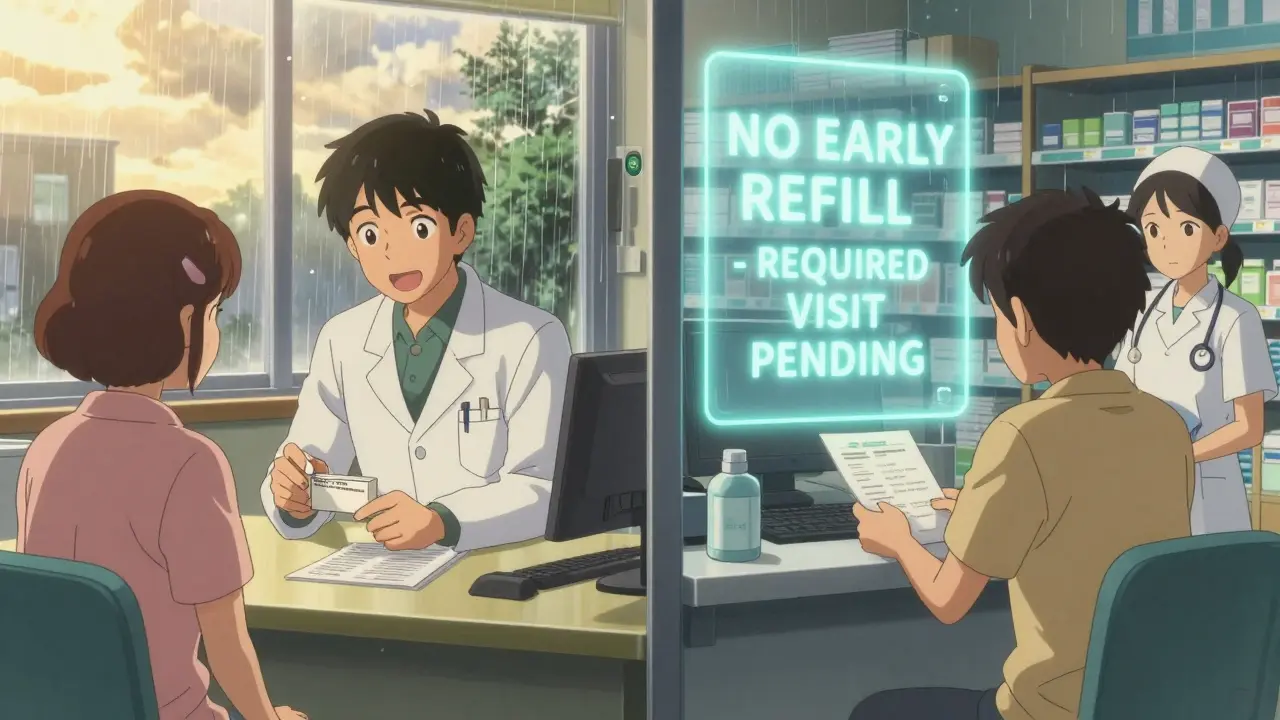
Patients get angry. They say, "My insurance says I can get it early!" But most insurance plans allow 5 days early for logistical reasons-not because it’s safe or encouraged. Many patients misunderstand this and think they’re supposed to use the medication 5 days early. That’s a dangerous assumption. Here’s how to respond without escalating tension:- "I understand you need this. Let me check if we can get you an earlier appointment with your provider so we can safely renew this."
- "I see you’ve had this prescription filled twice in the last 4 weeks. Is everything okay with how you’re feeling on it?"
- "I want to make sure you’re getting the right dose without risking side effects. Can we schedule a quick check-in?"
Training Staff Is Non-Negotiable
Pharmacy technicians often handle the first refill request. If they don’t know the protocol, they’ll approve it anyway. Training isn’t a one-time webinar. It’s ongoing. Make sure every staff member can answer:- What’s the policy on early refills for Schedule II drugs?
- How do I access the PDMP or clinical viewer?
- When do I escalate to the pharmacist?
- How do I document a denied refill properly?
What’s Next? System-Wide Change
Preventing early refills and duplicate therapy isn’t just about individual pharmacists saying no. It’s about systems that make the right choice the easy choice. Health Catalyst and the CDC both recommend customizable technology tools that:- Automate low-risk refills
- Flag high-risk patterns
- Connect data across pharmacies and providers
- Reduce provider burnout by cutting paperwork
Can I refill a controlled substance early if my doctor says it’s okay?
No. Under DEA rules, Schedule II controlled substances cannot be refilled under any circumstances-even with a doctor’s note. If a patient needs more, the prescriber must write a new prescription. Some states allow emergency overrides for hospital discharges or travel, but these are rare and require strict documentation. Never assume a verbal request from a doctor is enough-always verify in writing.
Why do some pharmacies allow refills 5 days early?
Insurance companies often allow a 5-day early refill to account for weekends, holidays, or travel. This is a logistical convenience, not a medical green light. Many patients misunderstand this and think they’re supposed to use the medication early. Pharmacists must clarify this to prevent misuse. The standard policy is: you can pick it up 5 days early, but you’re still expected to use it as prescribed.
How do I know if a patient is getting duplicate therapy?
Check your pharmacy’s clinical viewer or state PDMP. Look for multiple prescriptions for the same drug class-like two different SSRIs, or two different opioids. Also watch for gaps in refill timing that suggest the patient is using multiple pharmacies. If a patient fills a 30-day supply every 18 days, they’re likely getting another source. Always ask: "Are you taking any other medications from another doctor?"
What should I do if a patient refuses to see their doctor before a refill?
Stand firm. For high-risk medications, no visit = no refill. Explain that this isn’t about bureaucracy-it’s about safety. Offer to help schedule the appointment. If they’re upset, say: "I want to make sure you’re not at risk of side effects or overdose. Let’s get you seen so you can stay safe." Document the refusal. If patterns continue, report to your state’s PDMP or medical board if required by law.
Are there tools to help automate this process?
Yes. Many EHRs and pharmacy systems now include Clinical Decision Support (CDS) tools that flag early refills, duplicate therapies, and potential misuse based on patient history. Systems like Epic, Cerner, and others can be configured to require provider approval for high-risk refills, auto-schedule follow-up visits, and integrate with state PDMPs. The key is customization-don’t just accept default settings. Work with your IT team to tailor alerts to your patient population.
10 Comments
Marie-Pier D. January 23, 2026 AT 20:11
Ugh, I just had a patient cry because I wouldn't give her alprazolam 7 days early. She said her dog ate her pills. I checked PDMP-she’s had 4 refills in 8 weeks. Same script. Same pharmacy. Same sob story. I said, 'I believe you, but I can’t risk your life.' She left mad. I cried in the back room. We’re not just pharmacists-we’re the last ones holding the line.
❤️
Alexandra Enns January 24, 2026 AT 22:36
Oh please. This is Canada. We don’t need all this drama. In Quebec, we just refill everything on the 28th day and call it a day. Why are you making this so complicated? Your EHR is glitching, your staff is overtrained, and your patients are just trying to survive. Stop treating people like criminals because you’re scared of liability.
PS: The DEA doesn’t own you. Stop being their puppet.
Marlon Mentolaroc January 26, 2026 AT 05:32
Let’s be real-this whole post is just a 2,000-word justification for why pharmacists don’t want to do their job. You’re scared of lawsuits, so you turn every refill request into a forensic investigation. The real problem? Doctors write bad scripts. Insurance companies push early refills for profit. And now you want *us* to be the bad guys?
Here’s the data: 92% of early refills are legit. The other 8%? That’s the 1% of patients you’re over-policing while ignoring the 20% of prescribers who are writing 50 scripts a week.
Fix the system. Don’t punish the pharmacy tech who just wants to go home.
Gina Beard January 28, 2026 AT 02:20
Safety is not a policy. It’s a practice.
Rules are just echoes of trauma.
Every denied refill is a conversation that never happened.
You’re not preventing abuse. You’re preventing trust.
And that’s the real overdose.
siva lingam January 28, 2026 AT 21:44
So you want us to check PDMP, EHR, clinical viewer, staff training, doctor calls, and still say no? And you wonder why pharmacists quit?
Just give the pills. Let the patient die. Then sue the doctor. Easy.
Karen Conlin January 30, 2026 AT 15:47
I’ve been a pharmacy tech for 18 years. I’ve seen people lose limbs from unmanaged diabetes because they ran out of insulin and were too scared to ask for help. I’ve seen moms refill Adderall early because their kid was failing school and they didn’t know how else to keep them alive.
This isn’t about rules. It’s about compassion with boundaries.
Train your staff like they’re lifesavers, not gatekeepers. Ask, ‘What’s going on?’ before you say ‘No.’
And if you’re using EHR alerts to automate denial instead of connection-you’re doing it wrong.
We are the bridge. Not the wall.
Tiffany Wagner January 31, 2026 AT 12:25
i just want to say i saw a guy yesterday who looked like he hadn't slept in days and asked for his oxycodone 10 days early
i didn't say no right away
i asked if he was okay
he said his wife left and he couldn't sleep without it
i called his prescriber
they said it was okay to give him 5 days early with a follow-up
he cried when he got it
we didn't break policy
we just saw him
Chloe Hadland February 1, 2026 AT 20:40
my mom’s a pharmacist and she says the hardest part isn't saying no
it's knowing you're the only one who cares enough to say no
everyone else just wants the pill
and you're stuck holding the bag
thank you for doing this work
even when no one says thank you
Viola Li February 2, 2026 AT 13:44
Oh wow. So now pharmacists are the moral arbiters of opioid use? Since when did we outsource ethics to the pharmacy counter?
You think your PDMP integration makes you a saint? You’re just the latest in a long line of gatekeepers who think their rules are divine.
Let the doctors decide. Let the patients decide. Don’t turn your counter into a courtroom with a prescription pad.
venkatesh karumanchi February 2, 2026 AT 19:16
I’m from India. Here, people refill everything without paperwork. No PDMP. No EHR. Just trust. And guess what? We have less overdose than the US.
Maybe the problem isn’t the patients.
Maybe it’s the system that treats them like criminals.
Give them the pill. Talk to them. That’s all.
Not more alerts.
Not more policies.
Just humanity.