

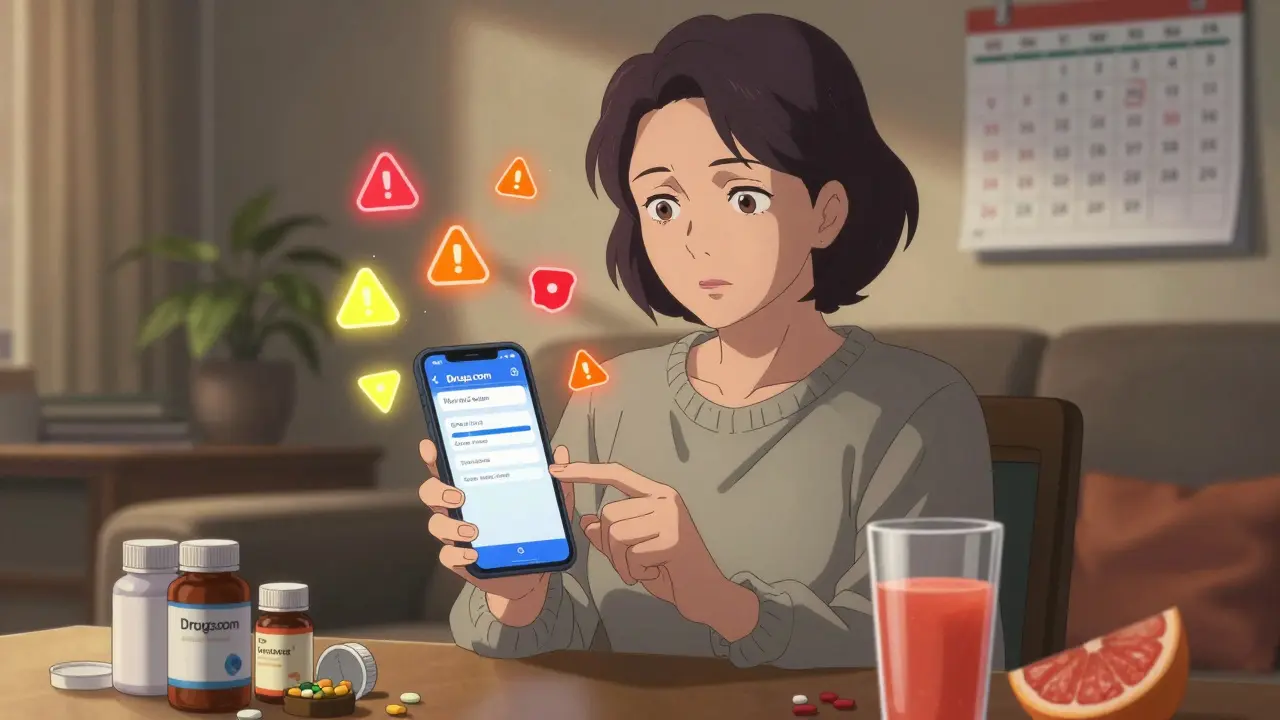
Every year, over 1.3 million people in the U.S. end up in the emergency room because of bad reactions between their medications. Many of these cases are preventable. You don’t need to wait for a doctor’s appointment to spot a dangerous mix - you can check for drug interactions at home, safely and quickly, using free tools available right now.
Why Drug Interactions Matter More Than You Think
Most people know that mixing alcohol with certain pills can cause drowsiness. But what about taking ibuprofen with blood thinners? Or St. John’s Wort with antidepressants? These aren’t rare mistakes. About 40% of Americans over 65 take five or more medications daily. That’s a recipe for hidden dangers. Drug interactions fall into three main types:- Drug-drug - The most common. About 61% of all interactions happen between two or more medicines.
- Drug-food/drink - Grapefruit juice can make cholesterol meds too strong. Dairy can block antibiotics.
- Drug-condition - Some blood pressure drugs can worsen kidney disease. Decongestants can spike heart rate in people with heart problems.
What You Need to Start Checking
Before you open any app or website, gather this information:- All prescription drugs - name, dose, how often you take them
- All over-the-counter (OTC) meds - pain relievers, cold pills, antacids, sleep aids
- Supplements - vitamins, herbs, minerals, protein powders
- Any recreational substances - alcohol, nicotine, marijuana
Best Free Tools to Check Interactions
Three tools stand out for accuracy, ease of use, and up-to-date data:| Tool | Database Size | Severity Levels | Best For | Drawbacks |
|---|---|---|---|---|
| Drugs.com Interaction Checker | 80,000+ interactions | Major, Moderate, Minor | Most comprehensive, daily updates | Technical language, confusing for seniors |
| WebMD Drug Interaction Checker | 18,000+ prescription drugs | Major, Moderate, Minor | Simple explanations, visual icons | False positives 23% of the time |
| GoodRx Interaction Checker | Includes cost-saving alternatives | Major, Moderate, Minor | Shows cheaper, safer options | Smaller database than Drugs.com |
How to Use a Checker - Step by Step
Follow this four-step process every time you start a new medication or change doses:- Make your list - Write down every pill, liquid, patch, or supplement. Include brand and generic names. Example: “Lipitor” is atorvastatin. “Advil” is ibuprofen.
- Enter them all - Go to Drugs.com or WebMD. Type each one in exactly as it appears on the label. Don’t skip vitamins or herbal teas. St. John’s Wort, ginkgo, and garlic supplements all interact with common meds.
- Read the results - Focus on “Major” interactions first. These mean stop the combo and call your doctor right away. “Moderate” means watch for side effects - dizziness, nausea, irregular heartbeat. “Minor” might just mean taking the pill with food.
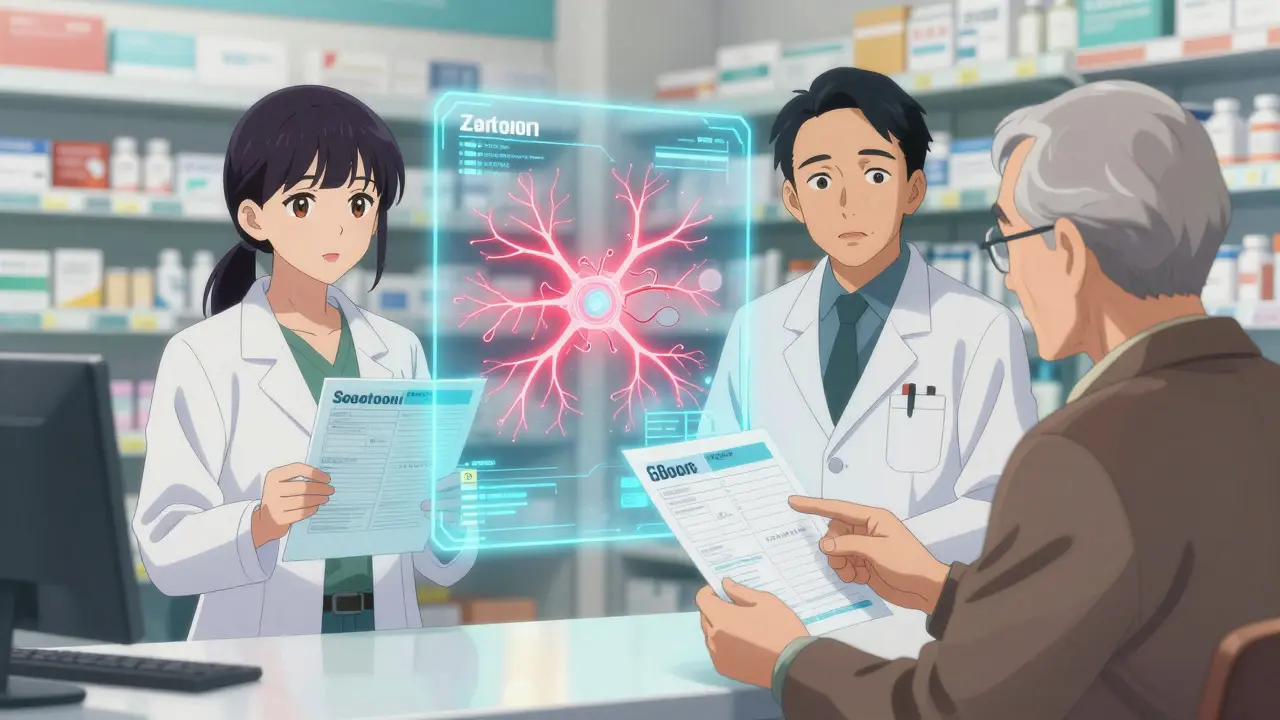
- Take it to your pharmacist - Print or screenshot the results. Don’t rely on memory. Pharmacists see hundreds of these cases every week. They’ll tell you if it’s a real threat or a false alarm.
What These Tools Can’t Do
No app replaces a human expert. Here’s where they fall short:- False alarms - About 18-23% of flagged interactions aren’t actually dangerous. A 2023 survey found WebMD users got unnecessary warnings for things like taking aspirin with vitamin C.
- Missing new drugs - If a medication was approved in the last 3 months, it might not be in the database yet.
- Can’t assess your body - Your liver, kidneys, age, and genetics affect how drugs work. A checker doesn’t know if you’re a slow metabolizer or have a history of falls.
- Don’t handle complex regimens - If you’re on six or more meds, the tool might miss hidden chains of interactions.
Red Flags to Watch For
Even if your checker says “minor,” pay attention to your body. Call your doctor if you notice:- Sudden confusion or memory loss
- Unexplained bruising or bleeding
- Rapid heartbeat or chest pain
- Severe dizziness or fainting
- Swelling in hands, feet, or throat
- Dark urine or yellow skin
Pro Tips to Reduce Risk
You don’t have to rely only on apps. Here’s how to stay safer:- Use one pharmacy - If you fill all your prescriptions at one place, the pharmacist can track everything you’re taking. Studies show this cuts interaction risks by 31%.
- Scan your pills - Apps like Medisafe let you take a photo of your pill bottle. It auto-fills the name, dose, and frequency. Saves time and avoids typos.
- Update your list every 30 days - New meds, discontinued ones, seasonal OTCs - keep it current.
- Ask your pharmacist: “Is there anything here I shouldn’t mix?” - They’re trained to catch what computers miss.
- Never stop a prescription because of a checker alert. A “major” flag might mean you need a different dose - not to quit cold turkey.
What’s Coming Next
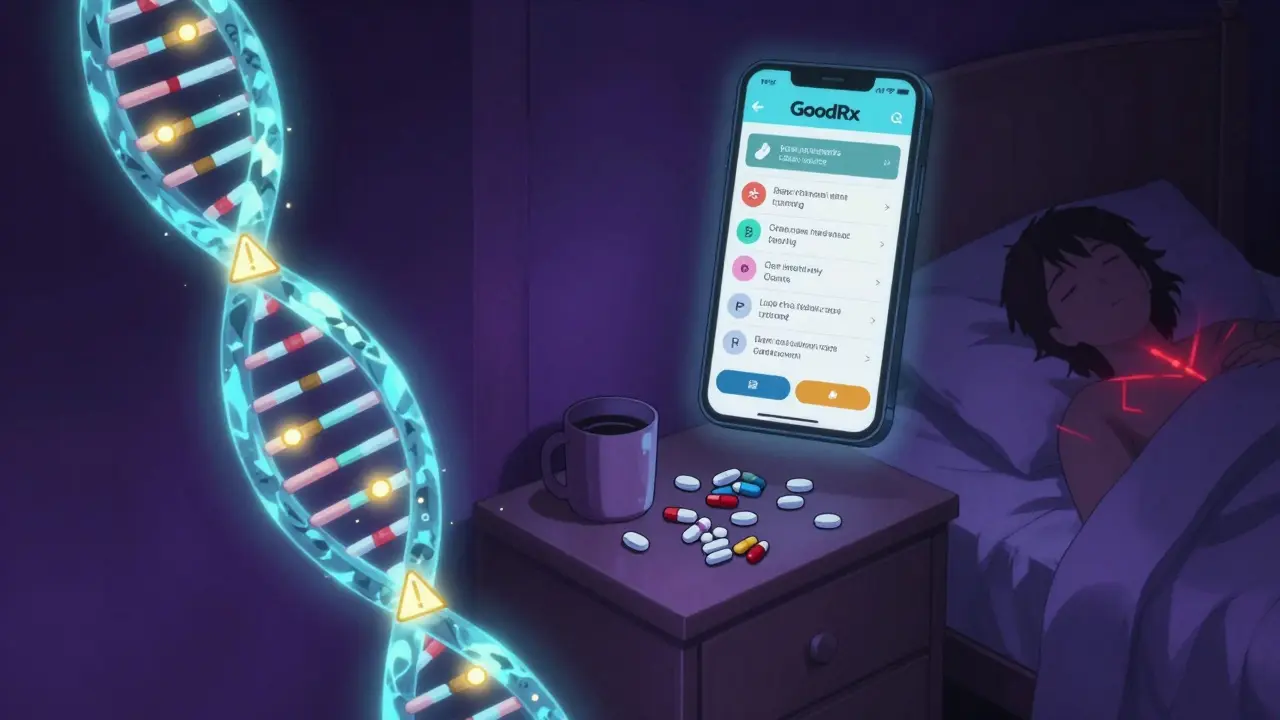
By 2024, the CDC plans to link interaction checkers directly to Medicare accounts. That means if you’re on a government plan, you’ll get alerts built into your portal. In late 2024, 23andMe and GoodRx are launching a new feature: genetic-based interaction alerts. If your DNA shows you’re a slow metabolizer of certain drugs, the tool will warn you before you even take them. But for now, the safest strategy is simple: use a free checker, write down what it says, and bring it to your pharmacist. It’s not magic. But it’s the best shield you have against preventable harm.Can I trust free drug interaction checkers?
Yes, but with limits. Tools like Drugs.com and WebMD are backed by major medical databases and updated daily. They catch most serious interactions. But they can’t replace a pharmacist’s judgment. Always follow up with a professional if you see a major warning.
Do I need to check interactions if I only take one prescription?
Yes. Even one prescription can interact with OTC meds, supplements, or food. For example, statins (like Lipitor) can react badly with grapefruit juice. Antibiotics like ciprofloxacin lose effectiveness if taken with calcium supplements. Always check everything you take, even if it seems harmless.
What if the checker says there’s an interaction but my doctor says it’s fine?
Your doctor may have a reason - maybe they’ve adjusted your dose or know your medical history well. But don’t assume. Ask them: “What makes this safe for me?” Write down their answer. If they can’t explain clearly, get a second opinion from a pharmacist. They specialize in drug safety.
Are herbal supplements really dangerous with prescription drugs?
Absolutely. Many people think “natural” means safe. But St. John’s Wort can make birth control, antidepressants, and blood thinners useless. Garlic and ginkgo can increase bleeding risk with aspirin or warfarin. Kava can damage the liver when mixed with alcohol or acetaminophen. Always list every supplement - no exceptions.
How often should I check for interactions?
Check every time you start, stop, or change a medication - even if it’s just a new OTC pain reliever. Also check every 30 days. Your body changes. Your meds change. A combo that was safe last month might not be now. Keep your list updated like you would your calendar.
What should I do if I think I’m having a drug interaction?
Stop the suspected medication only if instructed by a professional. Call your pharmacist or doctor immediately. If you have chest pain, trouble breathing, swelling, or confusion, go to the ER. Don’t wait. Save your interaction report and bring it with you. It helps them act faster.
13 Comments
Frank Drewery December 19, 2025 AT 22:29
This is actually super helpful. I never realized how many OTC meds have acetaminophen in them. I’ve been taking Tylenol and NyQuil together for years thinking I was fine. Going to check my meds right now.
Danielle Stewart December 21, 2025 AT 02:23
I love that you included the pharmacist tip. My grandma started using one pharmacy and her med errors dropped by half. Pharmacists are unsung heroes. Seriously, go talk to yours. They’ll thank you later.
mary lizardo December 21, 2025 AT 06:33
The use of informal language and lack of citation for the CDC statistics is deeply concerning. Furthermore, the assertion that '40% of Americans over 65 take five or more medications daily' is statistically imprecise without a source from the National Health and Nutrition Examination Survey. This article reads like a blog post masquerading as public health guidance.
jessica . December 21, 2025 AT 20:02
They dont want you to know this. Why? Because Big Pharma makes billions off interactions. These free tools are just a distraction so you dont ask why your pills cost 500 bucks. The CDC? Government shill. My cousin got sick after using Drugs.com. They deleted his data. Trust nothing.
Ryan van Leent December 22, 2025 AT 01:33
I dont even bother with these apps anymore because they always flag stuff that isnt even a problem like vitamin D and blood pressure med and then you stress out for nothing and your doctor thinks youre crazy
Sajith Shams December 23, 2025 AT 13:27
You missed the most important tool: Medscape’s Drug Interaction Checker. It’s far more accurate than Drugs.com and includes pharmacokinetic models. WebMD is garbage for clinical use. Also, you didn’t mention that many supplements are unregulated by the FDA - so their actual content may not even match the label. That’s a bigger risk than the interaction itself.
Adrienne Dagg December 23, 2025 AT 16:20
OMG YES 🙌 I just found out my turmeric supplement was messing with my blood thinner and I didn’t even know it 😱 Thanks for the reminder - going to print this out and take it to my pharmacist tomorrow 💪❤️
Glen Arreglo December 25, 2025 AT 06:27
I appreciate the effort here, but this post lacks global context. In countries like India, most people don’t have access to smartphones or reliable internet. Relying on apps like GoodRx is a luxury. We need low-tech solutions - printed charts, community health workers, radio broadcasts. Tech isn’t the answer for everyone.
shivam seo December 26, 2025 AT 10:08
This is just another American obsession with over-medicalizing everything. In Australia we just take our meds and don’t stress. If you’re worried, see a doctor. Not a website. You people turn every pill into a life-or-death crisis. Chill out.
benchidelle rivera December 28, 2025 AT 07:38
The emphasis on pharmacists as frontline professionals is critical. However, the assumption that all patients have equal access to pharmacy services is flawed. Rural communities, low-income populations, and elderly individuals without transportation are left behind. This toolset is useful - but only if paired with systemic support.
Isabel Rábago December 28, 2025 AT 22:02
I’ve been on 7 medications for 12 years. I’ve never once checked an interaction app. I trust my doctor. If I had a problem, I’d know. You’re scaring people with false alarms and turning healthy people into hypochondriacs.
Ashley Bliss December 30, 2025 AT 03:36
Every time someone says 'just use an app' I feel a little piece of my soul die. We’ve outsourced our health to algorithms. We don’t listen to our bodies anymore. We don’t ask questions. We just scan a barcode and pray the algorithm says it’s safe. What happened to intuition? To wisdom? To the quiet, sacred act of trusting your own experience?
Dev Sawner December 30, 2025 AT 18:52
The assertion that WebMD exhibits a 23% false positive rate is misleading. The referenced 2023 survey lacks peer review and methodological transparency. Furthermore, the claim that GoodRx 'shows cheaper, safer alternatives' is a marketing narrative, not a clinical validation. Without citing primary literature or FDA-registered databases, this entire framework lacks scientific credibility.