

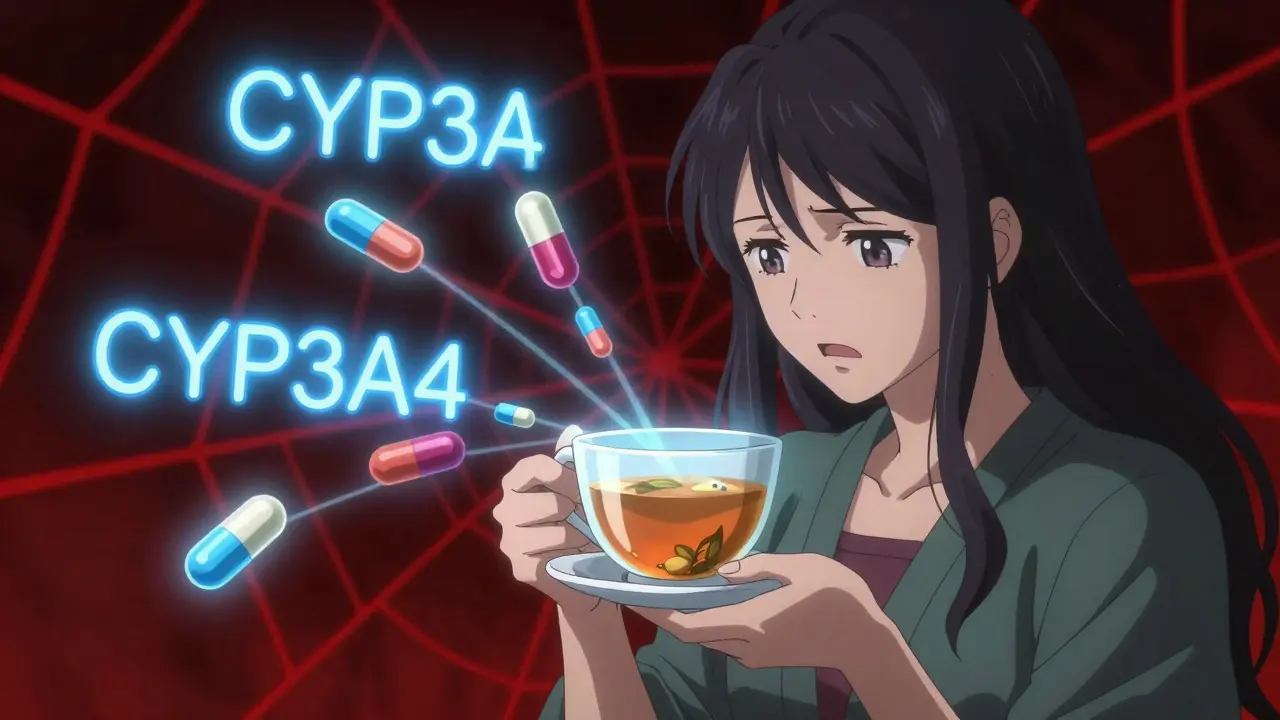
More than 1 in 4 adults in the U.S. take herbal supplements. Many think they’re harmless because they’re "natural." But if you’re on prescription meds, that assumption could be dangerous. You might not realize that the tea you drink every morning or the pill you take for stress could be quietly canceling out your blood thinner, lowering your cholesterol drug’s effect, or sending your blood pressure crashing. This isn’t speculation-it’s documented, repeated, and often deadly.
Why Herbal Supplements Aren’t Just "Safe Naturals"
The idea that "natural" equals "safe" is one of the biggest myths in health. Herbal supplements aren’t regulated like prescription drugs. Under the 1994 Dietary Supplement Health and Education Act (DSHEA), manufacturers don’t need to prove their products are safe before selling them. No testing for interactions. No mandatory labeling of risks. And no requirement to list ingredients accurately. The FDA only steps in after someone gets hurt. That’s why you see 23,000 different herbal products on U.S. shelves in 2024-with only 15% including any warning about drug interactions. Meanwhile, 38% of people who take supplements are also on prescription medications. That’s a recipe for trouble.St. John’s Wort: The King of Dangerous Interactions
If you take one herbal product, know this: St. John’s wort is the most dangerous. It doesn’t just mildly interfere-it actively shuts down the effectiveness of many critical drugs. It works by turning up the activity of CYP3A4 and P-glycoprotein, two systems in your liver and gut that break down and remove drugs from your body. When St. John’s wort activates them, your meds get flushed out too fast. - Birth control pills: Studies show a 20-70% drop in hormone levels. There are at least 15 documented cases of unplanned pregnancies in women taking St. John’s wort with oral contraceptives. - HIV medications: Protease inhibitors like indinavir drop by 40-80%. That means the virus can rebound, leading to drug resistance. - Transplant drugs: Cyclosporine levels fall by 57%. One study showed transplant patients rejecting their new organs because of this interaction. - Digoxin: Used for heart failure, its levels drop by 25%. That can cause irregular heartbeat or heart failure. Dr. Paul Offit, a top infectious disease expert, called it "the king of drug interactions." If you’re on any of these meds, stop St. John’s wort before you start it.Other High-Risk Herbs and What They Do
You don’t need to avoid all herbs-but you do need to know which ones to treat like medications.- Ginkgo biloba: Thins the blood. When taken with warfarin, aspirin, or clopidogrel, it increases bleeding risk by 30%. One hematologist reported three bleeding incidents in a year tied to ginkgo use. Patients didn’t tell their doctors because they didn’t think it mattered.
- Garlic: Also thins blood. But it also lowers saquinavir (an HIV drug) by 51%. That’s a massive drop. If you’re on HIV meds, skip garlic supplements.
- Goldenseal: Blocks liver enzymes that break down drugs. This causes meds like metoprolol (for blood pressure) and dextromethorphan (in cough syrup) to build up to toxic levels. One study showed dextromethorphan levels jumped 30-50%. That can cause seizures or coma.
- Danshen (Salvia miltiorrhiza): Used in traditional Chinese medicine for heart health. But it increases bleeding risk with warfarin and can cause dangerous irregular heart rhythms when mixed with digoxin. One study found a 35% higher risk of arrhythmia.
- Ginseng: Can lower the effect of warfarin by mimicking vitamin K. One patient’s INR dropped from 4.9 to 1.9 in just days after starting ginseng. That’s like going from a high-risk zone to no protection at all.
- Hawthorn: Often taken for heart support. But when combined with beta-blockers or digoxin, it can drop blood pressure by 10-15 mmHg extra-and make digoxin more toxic. One patient’s systolic pressure hit 85 mmHg. He ended up in the ER.
What About the "Safe" Herbs?
Some herbs like milk thistle, saw palmetto, and black cohosh have low interaction risk. But "low" doesn’t mean "none." Even American ginseng-often thought to be safe-has been missed by 62% of healthcare providers in training studies. Valerian root, often used for sleep, can make sedatives like benzodiazepines stronger. That means you might feel overly drowsy or even pass out. The problem isn’t just the herbs. It’s that no one asks.Why Doctors Don’t Know (And Why You Should Speak Up)
A 2016 study of 299 hospitalized patients found that 25% were taking herbal supplements. But doctors didn’t know about it in 72% of cases. Why? Because patients don’t mention them. People assume: - "My doctor only cares about pills." - "It’s just tea." - "I didn’t think it mattered." But here’s what happens when they don’t speak up: - A woman on warfarin starts taking ginkgo. Her INR spikes. She has a brain bleed. - A man on statins takes red yeast rice (a natural statin) and develops severe muscle damage. - A patient on antidepressants takes St. John’s wort and spirals into serotonin syndrome. These aren’t rare. They’re preventable.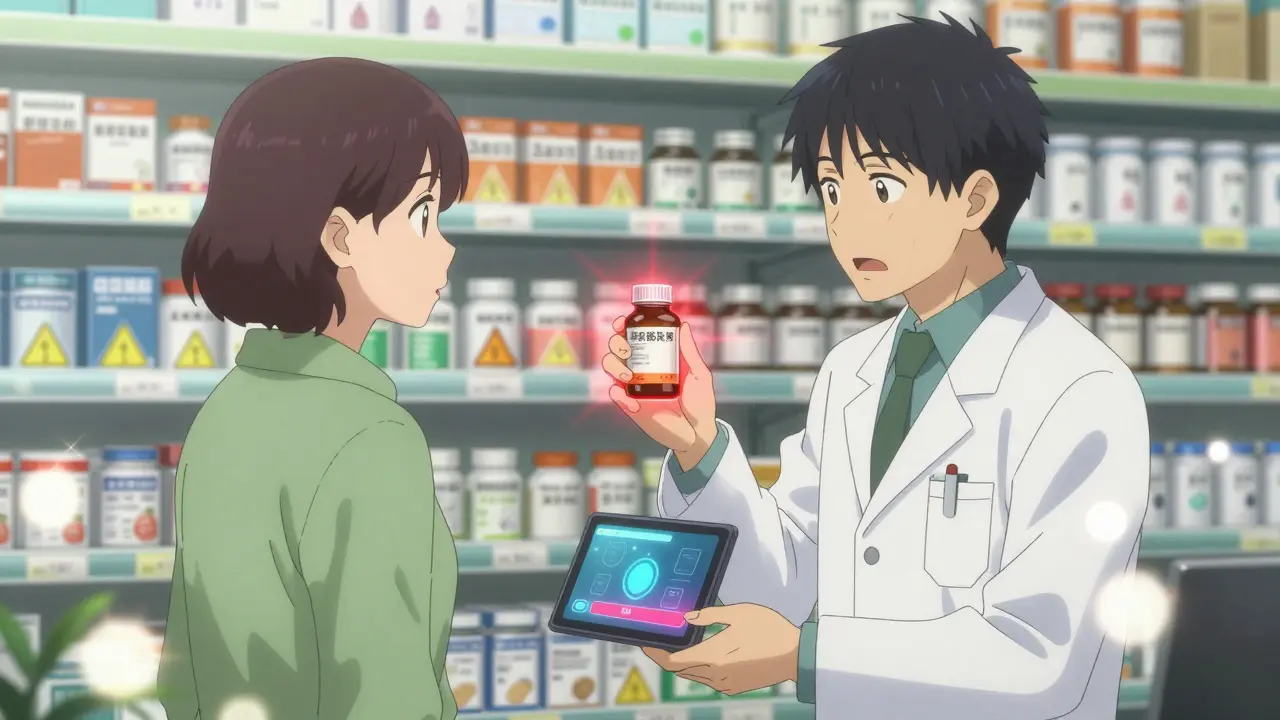
How to Protect Yourself
You don’t have to quit supplements. But you need a smarter approach.- Make a list. Write down every herb, tea, tincture, or capsule you take-even if you think it’s harmless.
- Ask your doctor and pharmacist. Don’t say "Do you know about supplements?" Say: "I take [name] daily. Is it safe with my [medication]?"
- Use visual aids. Bring a photo of the bottle or the label. Studies show this increases disclosure by 47%.
- Check with reliable sources. The National Center for Complementary and Integrative Health (NCCIH) has a free, science-backed database. Mayo Clinic’s website also has clear interaction guides.
- Wait before starting. If you’re starting a new herb, wait at least 7 days before adding it to your routine if you’re on critical meds. Watch for changes in energy, bleeding, heart rate, or mood.
8 Comments
Alex Danner January 7, 2026 AT 17:04
St. John’s wort is the silent killer in your medicine cabinet. I had a cousin on antidepressants who started taking it for ‘anxiety relief’-three weeks later, she was in the ER with serotonin syndrome. No one warned her. Not her doctor, not the label, not even the guy at the vitamin store. It’s insane that this stuff is sold next to granola bars. If you’re on meds, treat every herb like a new prescription. No exceptions.
And don’t even get me started on ginkgo. My uncle had a brain bleed after taking it with aspirin. He didn’t even think it counted as a ‘drug.’ Natural doesn’t mean harmless. It means unregulated. And that’s terrifying.
Why does the FDA wait for people to die before acting? This isn’t a niche issue. It’s a public health crisis hiding in plain sight.
Stop trusting marketing. Start trusting science. And for God’s sake, tell your doctor what you’re really taking-even if it’s just ‘a little tea.’
Mina Murray January 8, 2026 AT 12:59
Of course the FDA doesn’t regulate this stuff. Big Pharma owns Congress. They want you to keep buying pills while they sell you ‘natural’ junk that’s actually poison. St. John’s wort? That’s been known since the 90s. But the supplement industry spends millions lobbying to keep things this way. You think they care if you die? No. They care about profit. The same people who sell you ginseng for ‘energy’ are the ones who profit when you end up in the hospital with a heart attack. It’s all a scam. And you’re paying for it.
Also, ‘milk thistle is safe’? Lol. Ever check the heavy metal content? Most of it’s grown in China with pesticides and lead. Your liver’s not thanking you. It’s screaming.
Jonathan Larson January 8, 2026 AT 16:46
The fundamental issue here is not merely pharmacological-it is epistemological. We live in a culture that conflates tradition with efficacy, and nature with innocence. This is a profound misunderstanding of biology. Plants evolved chemical compounds to deter herbivores, not to heal humans. The fact that we extract and concentrate these compounds without rigorous oversight is not an accident of regulation-it is a symptom of our collective refusal to engage with complexity.
St. John’s wort does not ‘help’ depression. It alters cytochrome P450 enzymes with the precision of a sledgehammer. To treat it as benign is to misunderstand the very nature of pharmacology. The burden of safety should not rest on the individual consumer. It should be borne by those who profit from the sale of untested substances.
Let us not mistake the absence of regulation for the presence of safety. Let us not confuse the absence of warning labels for the absence of risk. The human body does not distinguish between ‘natural’ and ‘synthetic.’ It responds only to molecular structure. And in that truth, we find both our peril and our responsibility.
Katrina Morris January 9, 2026 AT 14:48
i just started taking turmeric for my knees and honestly i didnt even think about my blood pressure med but now im kinda scared
maybe i should just stop everything and go back to walking and stretching like my grandma did
also why do all the labels say ‘this product is not intended to diagnose treat cure or prevent any disease’ like duh yeah i know but still…
anyone else just feel like the system is rigged?
steve rumsford January 11, 2026 AT 01:21
bro i took ginseng for a month while on metoprolol and felt like a robot on caffeine. no joke. my heart was racing and i thought i was having a panic attack. turned out it was the herb. never again. why does no one talk about this? everyone’s too busy selling you ‘superfoods’ to tell you they might kill you.
also goldenseal? yeah that one’s wild. i saw a guy on Reddit say he took it with cough syrup and almost went to the ICU. that’s not a joke. that’s real life.
Andrew N January 12, 2026 AT 13:22
the data is solid. st johns wort reduces drug levels by 40-80%. that’s not a rumor. that’s peer reviewed. but people still take it because they trust amazon reviews more than their doctor. also ginkgo increases bleeding risk by 30%. that’s not small. that’s a hospital visit waiting to happen. why do people think they know more than clinical trials? they don’t. they just like feeling in control.
and yes, your ‘natural’ tea is probably interacting with your meds. you’re not special. you’re just lucky so far.
LALITA KUDIYA January 12, 2026 AT 15:54
i live in india and here everyone uses turmeric and ashwagandha daily. no one thinks its a drug. but i just learned from my cousin in usa that it can mess with thyroid meds. i told my aunt and she said ‘but it’s from our village!’
maybe we need to teach people that tradition and science can both be right. not one or the other. 🙏
thank you for writing this. i will show this to my family.
Poppy Newman January 14, 2026 AT 01:37
so… if i take chamomile tea every night with my blood thinner… should i panic? 😬
also why is no one talking about how hard it is to find reliable info? i googled ‘ginseng and warfarin’ and got 3000 ads for ginseng supplements. where’s the science??
ps: i showed my pharmacist my supplement bottle and she actually paused and said ‘oh wow, i didn’t know that one.’ 🤯
we need better labeling. like, seriously. a red flag icon for dangerous combos. 🚩