

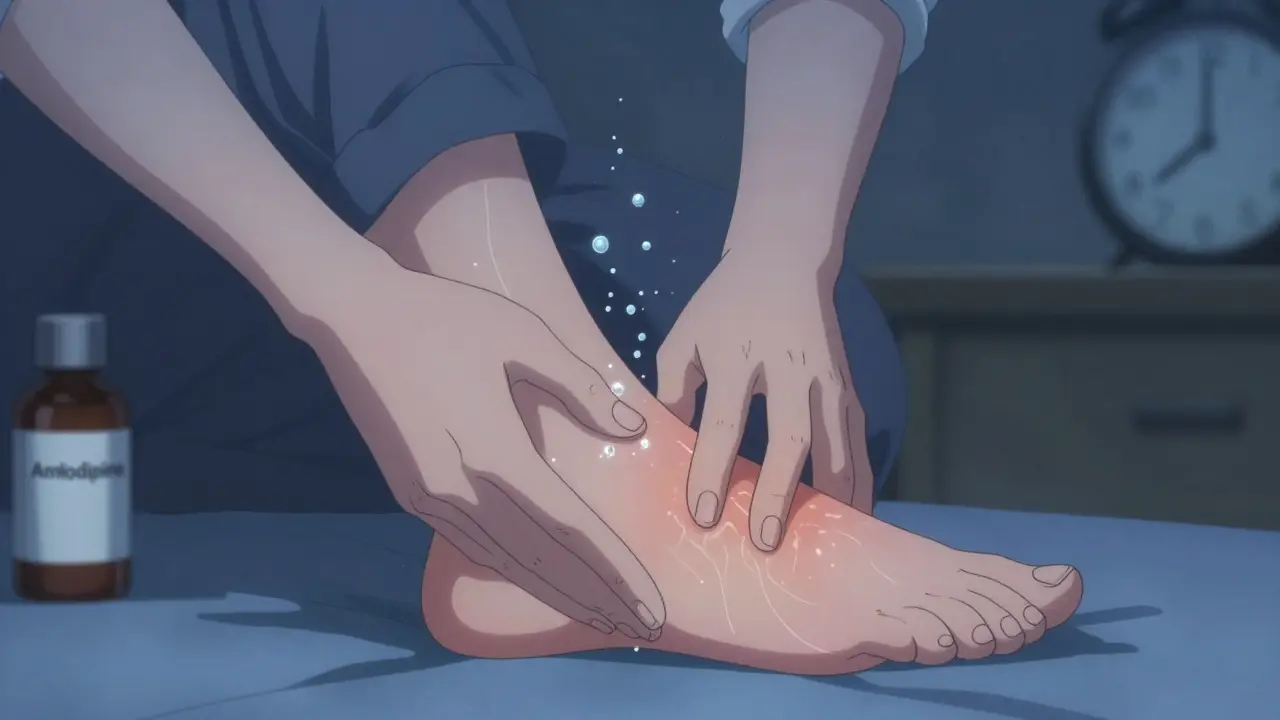
Swelling in your hands or feet might seem like a minor annoyance-maybe you wore tight shoes, or you stood too long at work. But if it shows up after starting a new medication, it could be more than just a nuisance. It might be your body’s way of telling you something serious is happening. Medication-induced swelling isn’t rare. In fact, up to 15% of people taking common blood pressure drugs like amlodipine develop noticeable swelling in their ankles or feet. And for those on certain chemotherapy drugs, hand and foot swelling can become so severe it stops them from holding a toothbrush or turning a doorknob.
What Kind of Swelling Are You Seeing?
Not all swelling is the same. The type you get depends on the drug you’re taking. There are two main patterns you need to recognize.The first is pedal edema-swelling in the lower legs and feet. This is most often caused by calcium channel blockers (like amlodipine, nifedipine), some diabetes meds (pioglitazone), and even gabapentin. This swelling is usually bilateral (both sides), pitting (you press your finger and it leaves a dent), and worse at the end of the day. It often improves after lying down overnight. If you’ve started amlodipine and suddenly your shoes feel tight, this is likely why.
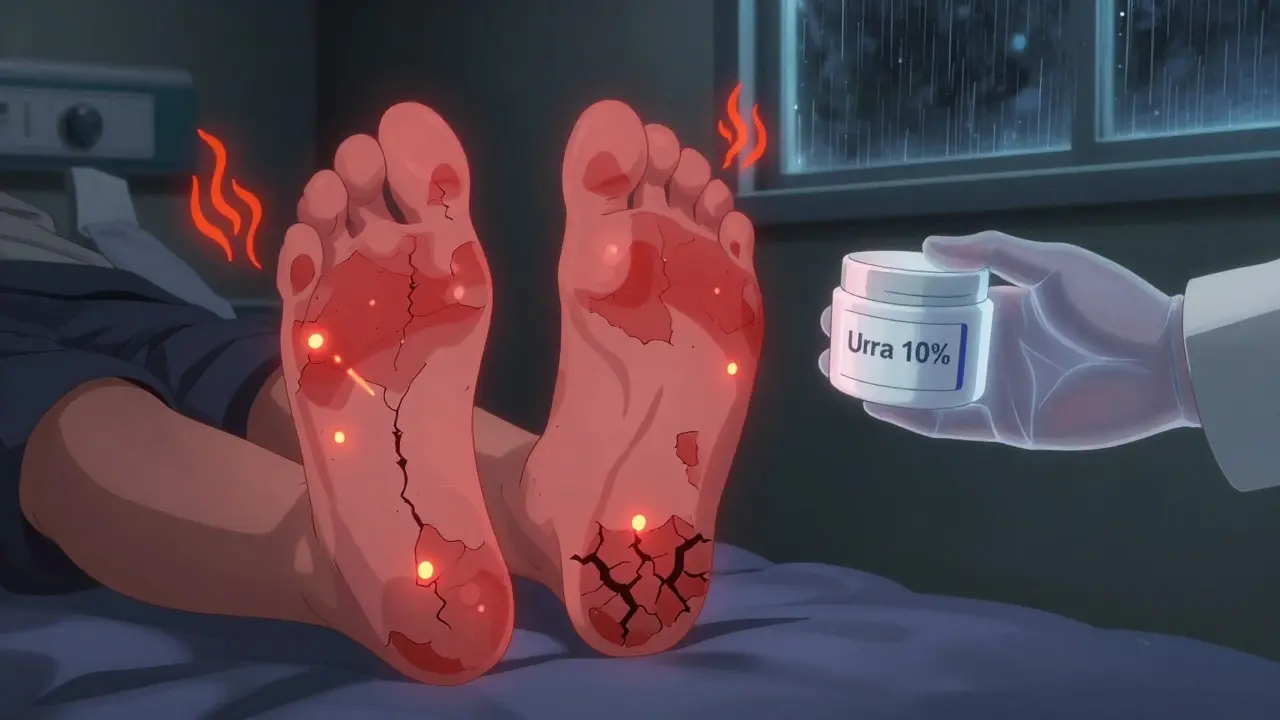
The second type is hand-foot syndrome (also called palmar-plantar erythrodysesthesia). This one hits the palms of your hands and soles of your feet. It starts with redness, tingling, or numbness, then progresses to swelling, peeling skin, and sometimes painful blisters. This is most common with chemotherapy drugs like capecitabine-up to 60% of people on this drug develop it. Unlike pedal edema, hand-foot syndrome doesn’t improve with rest. It gets worse with heat, friction, or pressure.
Here’s the key difference: pedal edema is usually a side effect of long-term meds like blood pressure pills. Hand-foot syndrome is typically tied to cancer treatment and can escalate quickly. Knowing which one you have helps determine how urgent your next step should be.
When Is Swelling a Red Flag?
Most people wait too long to call their doctor. A 2023 survey found that over half of patients with medication-related swelling didn’t reach out because they thought it was “normal.” But some signs mean you need to act fast.Call your doctor today if you have:
- Swelling on just one side (like only your right ankle)-this could signal a blood clot.
- Swelling along with shortness of breath, chest pain, or rapid heartbeat-this might mean your heart is struggling.
- Weight gain of more than 2 pounds in 24 hours or 5 pounds in a week-this is fluid overload, and it’s dangerous.
- Blistering, open sores, or skin turning dark or purple on your hands or feet.
- Fever with swelling-this could mean infection or a severe reaction.
- Urine output drops below 500 mL per day (about 2 cups)-your kidneys may be affected.
For hand-foot syndrome specifically, if you can’t grip a cup, button a shirt, or walk without pain, you’re likely at Grade 2 or higher. The American Society of Clinical Oncology says you should contact your oncologist within 24 hours at that point. Delaying can mean needing to stop your cancer treatment entirely.
And don’t forget timing. If swelling shows up within 72 hours of starting a new drug, there’s a 78% chance it’s caused by that medication. That’s not coincidence-it’s a clear signal.
What Doctors Do When Swelling Happens
Your doctor won’t just tell you to “elevate your feet” and call it a day. They’ll look at your meds, your health history, and your symptoms before deciding what to do.For calcium channel blocker swelling, the most common fix is switching to another blood pressure medication. Studies show switching from amlodipine to losartan resolves swelling in 85% of cases within two weeks. Sometimes, instead of switching, doctors add a low-dose ACE inhibitor like lisinopril-which helps reduce fluid buildup. Compression stockings (20-30 mmHg) can help too, cutting swelling by about 40% in clinical trials.
For hand-foot syndrome, the main approach is adjusting the chemotherapy dose. Lowering the amount or pausing treatment for a few days often lets skin heal. Some doctors try vitamin B6, but a major 2022 review found it doesn’t work better than placebo. Topical creams like urea 10% are sometimes used for prevention, but evidence is mixed. One small study found arnica gel helped reduce symptoms, but it’s not standard care yet.
There are also simple lifestyle steps that help:
- Elevate your feet above heart level for 30 minutes, three times a day-this can reduce swelling volume by 15% in just two days.
- Limit salt to under 2,300 mg per day. That’s about one teaspoon. Processed foods, canned soups, and restaurant meals are the biggest culprits.
- Wear shoes with extra depth-no tight socks or constricting footwear.
- Avoid hot showers, saunas, and direct sun on your hands and feet.
- Do light walking or swimming to keep blood moving, but avoid high-impact activities.
One patient on Reddit shared that after switching from amlodipine to losartan, their ankle swelling vanished in five days. Another, on a cancer forum, said they avoided a treatment delay by reporting early tingling in their palms-doctors cut their dose just enough to let skin heal.
Why Waiting Can Be Dangerous
The biggest mistake people make is assuming swelling is harmless. But the FDA’s adverse event database shows that 37% of serious outcomes from medication-induced swelling happened because people waited too long to get help. The average delay? Over eight days.Left untreated, pedal edema can lead to skin breakdown, infections, and even chronic lymphedema-where fluid builds up permanently. For hand-foot syndrome, delaying care can force doctors to stop life-saving cancer treatment. In one study, 11% of patients with unresolved swelling developed long-term swelling that never fully went away.
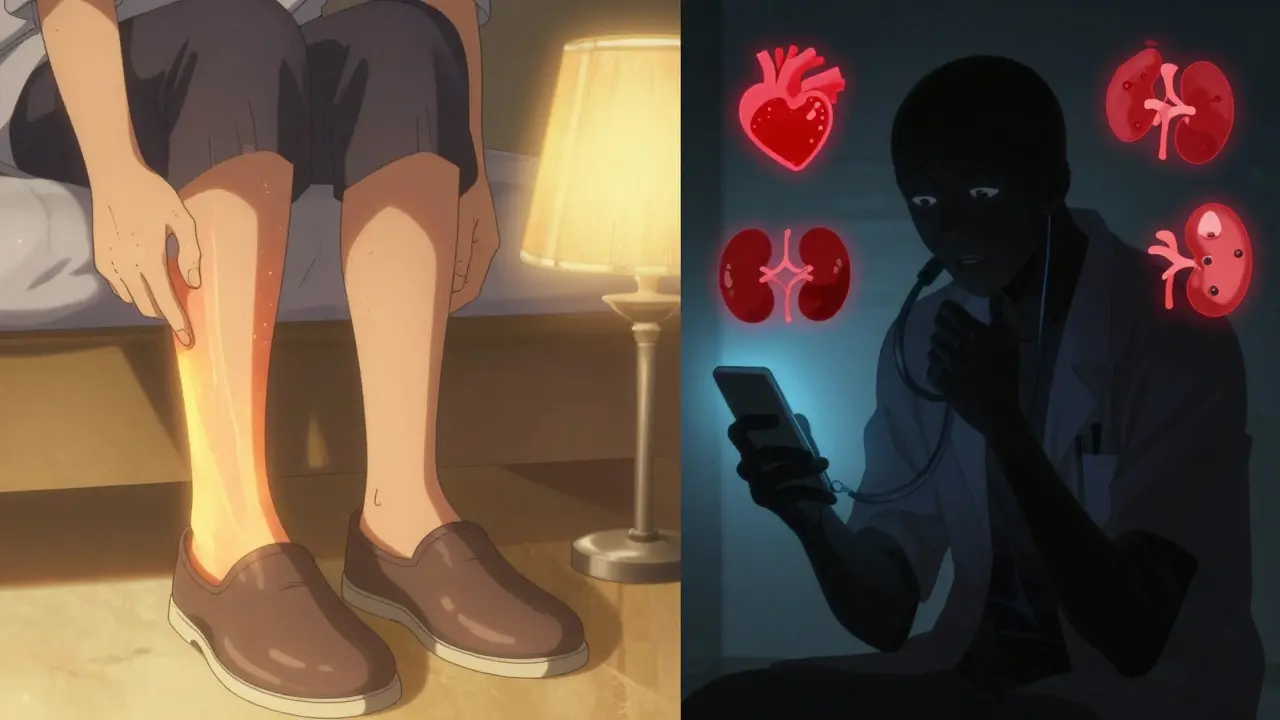
And here’s something most don’t realize: swelling can be the first sign of heart failure, kidney problems, or liver disease-especially if you’re on multiple medications. A sudden change in your body isn’t just a side effect. It’s a clue.
How to Prevent It Before It Starts
If you’re about to start a new medication known to cause swelling, you can take steps ahead of time.For blood pressure meds like amlodipine, starting at a lower dose (2.5 mg instead of 5 or 10 mg) cuts swelling risk by 60%. Ask your doctor if that’s an option.
If you’re on chemotherapy, some cancer centers now recommend applying urea 10% cream to your hands and feet twice daily-even before symptoms appear. One trial showed it reduced hand-foot syndrome by 25%.
But the most powerful tool is education. Patients who received clear instructions on what swelling looks like and when to call their doctor were 3.2 times more likely to act early. That’s not just helpful-it’s life-changing.
What to Do Right Now
If you’re noticing swelling and you’re on a medication:- Check your symptoms against the red flags above.
- Write down when the swelling started and what meds you’re taking.
- Take a photo if you can-it helps your doctor see the progression.
- Call your doctor or pharmacist today if you have any red flags.
- If you don’t have red flags but the swelling is new and bothering you, schedule a call within 72 hours.
Don’t wait for it to get worse. Don’t assume it’s “just a side effect.” Your body is giving you information. Listen to it.
Is swelling from medication normal?
Some swelling is common with certain drugs, like calcium channel blockers or chemotherapy agents, but it’s not something you should ignore. Even if it’s expected, it still needs to be monitored. Mild swelling may not be dangerous, but it can quickly become serious if left unchecked. Always report new or worsening swelling to your doctor.
Can I take a diuretic to reduce the swelling?
Not without your doctor’s approval. While diuretics help with fluid buildup from heart or kidney issues, they don’t always fix medication-induced swelling-and they can cause other problems like low potassium or dehydration. For example, diuretics won’t help hand-foot syndrome, and they might make calcium channel blocker swelling worse by triggering more fluid retention. Only use diuretics if your doctor recommends them.
Will the swelling go away if I stop the medication?
In most cases, yes-but don’t stop your medication on your own. For calcium channel blockers, swelling usually improves within 1-4 weeks after switching to another drug. For chemotherapy-related hand-foot syndrome, symptoms often get better after a dose reduction or short break. But stopping treatment without medical guidance can be dangerous, especially for life-saving drugs like cancer meds.
Which medications most commonly cause hand and foot swelling?
For feet and ankles: calcium channel blockers (amlodipine, nifedipine), pioglitazone (for diabetes), gabapentin, pregabalin, and NSAIDs like ibuprofen or naproxen. For hands and feet: chemotherapy drugs like capecitabine, fluorouracil, and doxorubicin. Even some antidepressants and migraine meds can cause swelling in rare cases.
How long does it take for swelling to go away after changing meds?
It varies. With calcium channel blockers, most people see improvement in 1-2 weeks after switching. For hand-foot syndrome, symptoms often begin to ease within days of lowering the chemo dose, but full recovery can take 2-4 weeks. If swelling doesn’t improve after 4 weeks of a new treatment plan, your doctor may need to investigate other causes like heart, kidney, or thyroid issues.
Should I avoid exercise if I have swelling?
No-light movement helps. Walking, swimming, or cycling improves circulation and can reduce fluid buildup. But avoid high-impact activities or anything that rubs or presses on swollen areas, especially with hand-foot syndrome. Wear supportive shoes, avoid tight bands on wrists or ankles, and don’t walk barefoot if your soles are sensitive.
8 Comments
Brian Furnell December 21, 2025 AT 13:23
Let’s break this down clinically: pedal edema from CCBs is a vasodilatory side effect mediated by precapillary sphincter relaxation → increased hydrostatic pressure → fluid extravasation. It’s not ‘water retention’-it’s a hemodynamic shift. The fact that losartan resolves it in 85% of cases? That’s RAAS inhibition counteracting the nitric oxide-mediated venodilation. Also, compression stockings at 20-30 mmHg aren’t ‘just helpful’-they increase venous return by 30-40% via external counterpressure. Stop treating this like a lifestyle issue. It’s pathophysiology.
Siobhan K. December 22, 2025 AT 15:25
So let me get this straight-doctors will switch you off amlodipine because your ankles look like balloons, but they’ll keep you on capecitabine until your hands are peeling like a banana? And we’re supposed to be grateful they didn’t just say ‘take ibuprofen’? The system is designed to make you suffer quietly until you scream loud enough to be heard.
Hannah Taylor December 24, 2025 AT 00:21
wait so u mean like… the gov and big pharma are literally MAKING us swell on purpose?? like… its not a side effect, its a FEATURE?? i swear i read somewhere that the pills have little water traps inside to make you need the bathroom more so u buy more toilet paper. also my cousin’s dog got swollen paws after eating kibble with corn syrup. coincidence? i think not.
Jason Silva December 24, 2025 AT 02:42
Bro this is wild 😳 I’ve been on amlodipine for 3 years and my feet look like overinflated beach balls but my dr just said ‘drink more water’ 🤡 I’m switching to losartan tomorrow. Also if you’re on chemo and your hands are cracking open? DONT TOUCH ANYTHING. Just sit there and cry into your pillow. 🤕🫂
mukesh matav December 25, 2025 AT 22:17
Interesting. In India, many patients with swelling are treated with herbal diuretics like punarnava or gokshura. Not widely studied in Western trials, but in rural clinics, it’s common. No one rushes to change prescriptions here. We wait. Sometimes it resolves. Sometimes it doesn’t. The body has its own rhythm.
Peggy Adams December 27, 2025 AT 11:15
i didn’t even read all this but i know if you take any med that makes you swell you should just stop it. duh. also why do doctors even prescribe these things? if your blood pressure is high just eat less salt and stop being lazy. also i think they put stuff in the meds to make you fat so they can sell you more pills. it’s obvious.
Jay lawch December 29, 2025 AT 10:43
Look, the entire pharmaceutical industrial complex is built on the illusion of control. Swelling isn’t a side effect-it’s a symptom of systemic dissonance between human biology and synthetic chemistry. We’ve replaced ancestral wisdom with patentable molecules. The body doesn’t ‘react’ to drugs-it screams in protest against the violation of its natural equilibrium. Amlodipine? A chemical leash. Capecitabine? A poisoned chalice disguised as salvation. And the doctors? They’re not healers-they’re gatekeepers of a broken altar. The real cure? Abandon the pill. Return to the earth. Eat whole foods. Walk barefoot. Breathe. The swelling? It’s your soul’s last warning before the machine consumes you completely.
Christina Weber December 31, 2025 AT 06:32
There are multiple grammatical errors in the original post, including inconsistent punctuation, incorrect use of em dashes, and dangling modifiers in the section on hand-foot syndrome. Additionally, the claim that ‘37% of serious outcomes… happened because people waited too long’ is not properly cited-no source is provided for the FDA database figure. This undermines the entire credibility of the article. Furthermore, the assertion that ‘patients who received clear instructions were 3.2 times more likely to act early’ lacks a reference to the study. Without peer-reviewed citations, this reads like marketing copy masquerading as medical advice.