

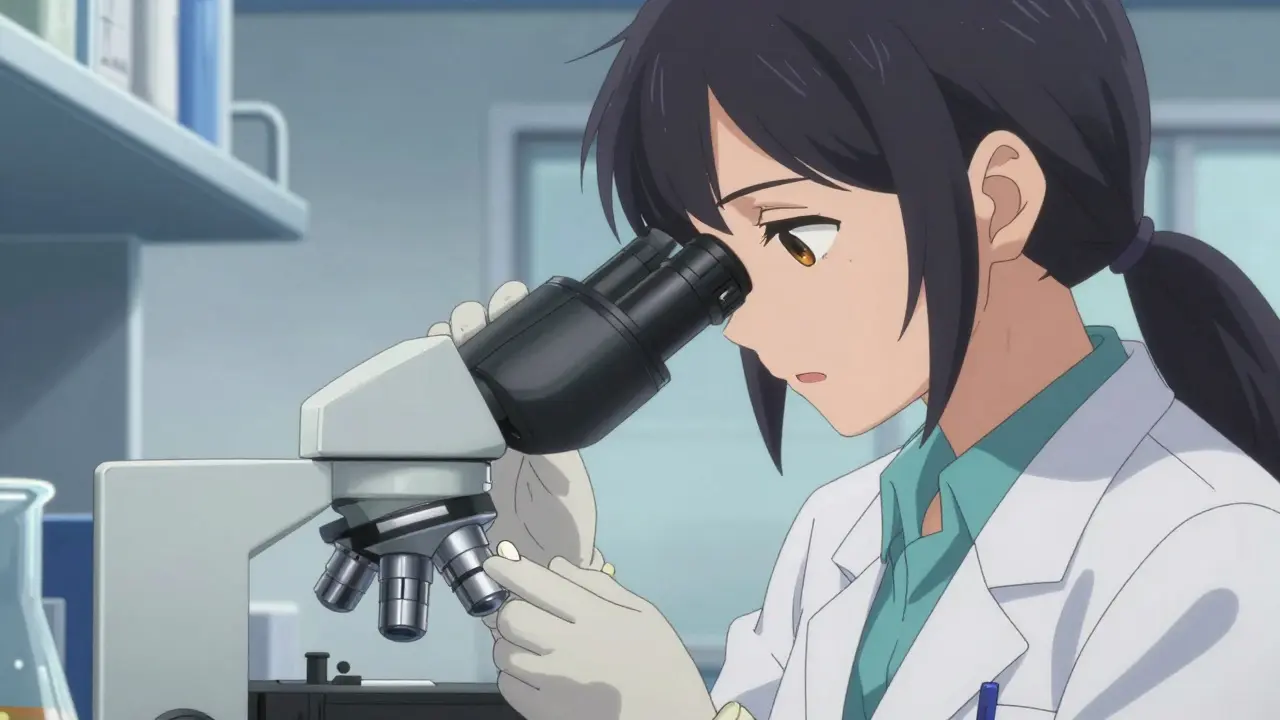
Generic drugs aren't copies-they're scientifically validated alternatives. Many people think generics are inferior versions of brand-name medications, but that's not true. The U.S. Food and Drug Administration (FDA) requires generic drugs to meet strict standards for safety and effectiveness. Let's clear up common myths and explain what really happens behind the scenes.
Food and Drug Administration (FDA) is the federal agency responsible for ensuring drugs are safe and effective. For generic drugs, they require proof of bioequivalence and strict quality control.What Makes a Generic Drug?
The FDA defines generic drugs as pharmaceutical equivalents. This means they must contain the same active ingredient, strength, dosage form, and route of administration as the brand-name drug. For example, a generic version of the blood pressure medication lisinopril must have the same active ingredient and work the same way in the body. Differences only exist in inactive ingredients like fillers, colors, or flavors-these don't affect how the drug works but help avoid trademark issues.
The Hatch-Waxman Act and ANDA Process
Hatch-Waxman Act (officially the Drug Price Competition and Patent Term Restoration Act) was a game-changer for drug pricing. It balanced patent protection for innovators with competition from generics.The modern path for generic drugs began with the 1984 Hatch-Waxman Act. Before this law, brand-name drug companies held exclusive rights for decades after patent approval. The Hatch-Waxman Act created the Abbreviated New Drug Application (ANDA) process. This allows generic manufacturers to bring products to market without repeating expensive clinical trials once patents expire. The ANDA process focuses on proving bioequivalence rather than conducting new safety studies.
How Bioequivalence Testing Ensures Effectiveness
Bioequivalence is the scientific process that confirms a generic drug works the same as the brand-name version. It's not just about matching ingredients-it's about proving identical effects in the body.To get FDA approval, generic drugs must pass rigorous bioequivalence tests. These tests measure how much of the active ingredient enters the bloodstream and how quickly. The FDA uses two key metrics: AUC (area under the curve) and Cmax (maximum concentration). For approval, the 90% confidence interval of the test drug's results must fall between 80% and 125% of the brand-name drug's values. This ensures the generic delivers the same therapeutic effect. The FDA's 2018 Bioequivalence Guidance for Industry sets these standards, and manufacturers must prove their products meet them before approval.

Cost Savings and Real-World Impact
Generic drugs save patients and healthcare systems billions each year. According to the Congressional Budget Office in 2021, the average generic drug costs 85% less than its brand-name equivalent. GoodRx data from 2023 shows generic prescriptions average $4.27 per prescription versus $61.85 for brand names. This is why 90% of all prescriptions in the U.S. are generics, yet they account for only 23% of total drug spending.
For example, the generic version of Lipitor (atorvastatin) costs around $4 for a 30-day supply, while the brand name can exceed $200. Similarly, generic omeprazole (Prilosec) costs about $10 versus $50 for the brand. These savings add up fast for people managing chronic conditions. A Kaiser Family Foundation survey found 78% of insured adults receive generics as their first prescription option, with 89% expressing satisfaction.
Myths vs Reality: Clearing the Confusion
| Myth | Reality |
|---|---|
| Generics contain less active ingredient | FDA testing shows generics contain 99.2% of the active ingredient on average. They meet strict quality standards. |
| Generics work slower or less effectively | Bioequivalence testing proves generics deliver the same amount of active ingredient at the same rate as brand-name drugs. |
| Generics are made in unsafe facilities | Generic manufacturers must meet the same FDA inspection standards as brand-name companies. Over 50% of generic plants are inspected alongside brand-name facilities. |
| All generics are interchangeable | For narrow therapeutic index drugs (like warfarin), small differences can matter. Always consult your doctor before switching. |
| Generics are only for poor people | Generics are used by people of all income levels. 78% of insured adults receive generics as their first prescription option. |
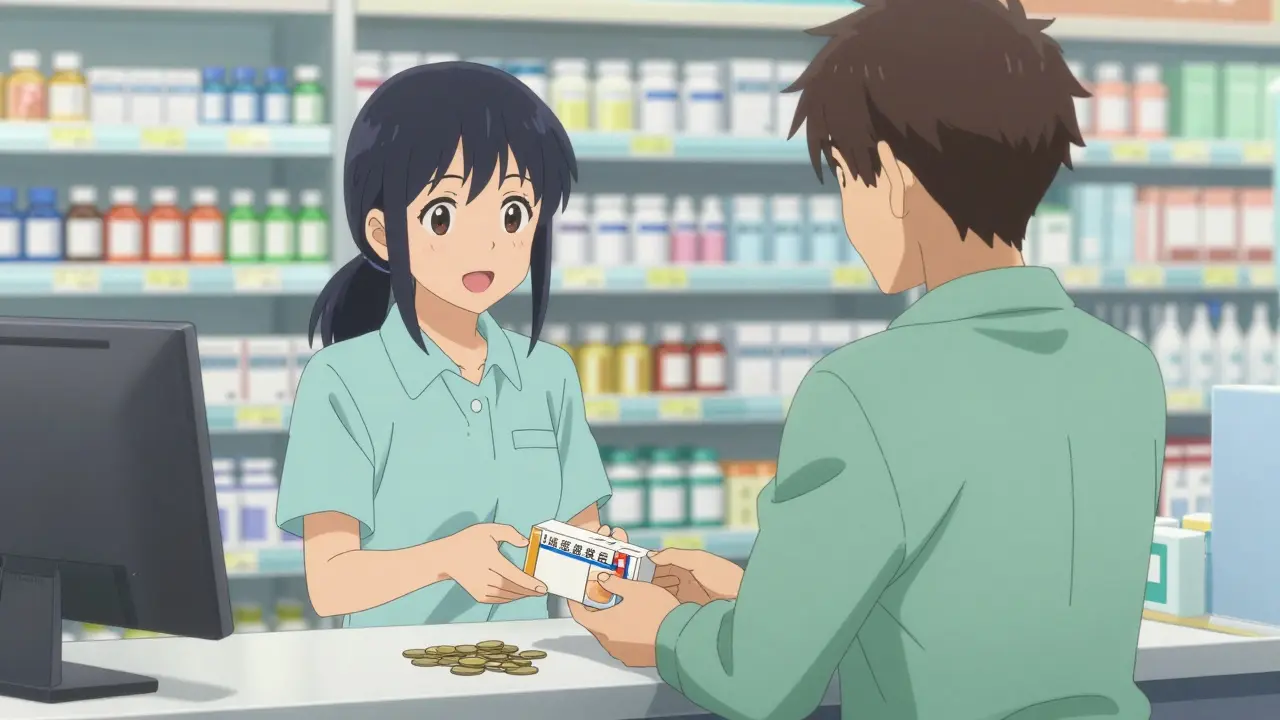
Narrow Therapeutic Index Drugs: When Generics Require Care
Narrow therapeutic index drugs require careful handling. Doctors often recommend sticking with the same brand for consistency to avoid potential risks.Some medications have a narrow therapeutic index (NTI), meaning small differences in blood levels can cause serious issues. The FDA identifies specific NTI drugs like warfarin (blood thinner), levothyroxine (thyroid medication), and certain antiepileptic drugs such as phenytoin. For these drugs, even minor variations in absorption could lead to therapeutic failure or toxicity.
Real-world data from IQVIA shows that 96% of prescriptions for non-NTI drugs successfully substitute generics without issues. However, for NTI drugs, substitution rates are lower. For example, 92% of levothyroxine prescriptions use generics, but patients need close monitoring. The Epilepsy Foundation's 2021 survey found 17% of respondents experienced breakthrough seizures after switching antiepileptic generics, though FDA analysis suggests most cases were due to other factors like medication adherence.
Practical Advice for Patients
When should you choose a generic? For most medications, generics are safe and effective. Check the FDA's Orange Book to confirm a generic is approved. Pharmacists can substitute generics unless your doctor writes "dispense as written" on the prescription. In 49 states, pharmacists can switch to a generic without doctor approval. Only Mississippi requires physician notation for substitution.
If you're taking an NTI drug, talk to your doctor before switching. Some patients may need to stay on the brand-name version. Also, if you notice side effects after switching, contact your healthcare provider. Sometimes, different inactive ingredients (excipients) can cause reactions-like gluten in fillers for celiac patients. State laws vary. Twenty-eight states allow patients to request brand-name drugs at generic cost if therapeutically equivalent. Always ask your pharmacist to explain any changes to your prescription.
Future Developments in Generic Drug Approval
GDUFA (Generic Drug User Fee Amendments) is a program that funds FDA reviews for generics. The latest version, GDUFA IV, focuses on speeding up approvals for complex drugs.The FDA's Generic Drug User Fee Amendments (GDUFA) IV program aims to reduce approval timelines to 10 months by 2027. This addresses previous backlogs where 4,200 applications piled up in 2018. Biosimilars (generic biologics) are growing fast, with a 22.3% annual growth rate. As patents expire for blockbuster drugs like Eliquis and Entyvio, more generics will enter the market.
The FDA's 2023 Generic Drug Implementation Plan targets 95% approval rates for priority generics by 2025. This includes complex drugs like inhalers and topical products where equivalence determination is more challenging. The 2022 Consolidated Appropriations Act mandates Medicare Part D to automatically substitute generics unless medically inappropriate, projected to save $156 billion over 10 years.
Are generic drugs as safe as brand-name drugs?
Yes. The FDA requires generic drugs to meet the same safety and quality standards as brand-name drugs. They undergo rigorous testing for bioequivalence and are manufactured in facilities inspected to the same standards. Between 2018-2022, the FDA reviewed 1,842 adverse event reports linked to generics, with only 0.3% confirmed as bioequivalence failures.
Why do generics look different from brand-name drugs?
U.S. trademark laws require generics to look different from brand-name drugs. This means different colors, shapes, or sizes. However, the active ingredient and effectiveness remain the same. Differences in inactive ingredients (excipients) like fillers or dyes don't affect how the drug works but may cause minor side effects in sensitive individuals.
Can I switch from a brand-name drug to a generic?
For most medications, yes. Pharmacists can substitute generics unless your doctor specifies "dispense as written." However, for narrow therapeutic index drugs like warfarin or levothyroxine, consult your doctor first. Small differences in blood levels could impact effectiveness or safety for these specific drugs.
Do generics cost less because they're lower quality?
No. Generics cost less because they don't repeat expensive clinical trials. The Hatch-Waxman Act allows generic manufacturers to use the brand-name drug's safety data. This reduces development costs while maintaining quality. On average, generics cost 85% less than brand-name drugs but deliver identical therapeutic effects.
What if I experience side effects after switching to a generic?
Contact your healthcare provider. Side effects could be due to inactive ingredients (excipients) in the generic. For example, some fillers contain gluten or lactose, which might affect people with allergies or sensitivities. Your doctor can determine if the issue is related to the switch and recommend alternatives.
How can I check if a generic drug is approved?
Use the FDA's Orange Book, which lists approved generic drugs and their reference listed drugs. You can search online at fda.gov or ask your pharmacist. The Orange Book also shows therapeutic equivalence ratings-marked with "A" for fully equivalent drugs.
9 Comments
Diana Phe February 5, 2026 AT 19:55
The FDA is a puppet of Big Pharma! Generics are dangerous! They're made in China with toxic ingredients!
The government is in cahoots with drug companies to make us sick! You should be afraid!
They're using cheap fillers that cause cancer! The FDA only tests a fraction of generics!
They're all fake! Trust me, I've seen the evidence!
The real drugs are made in the USA, but they're hiding the truth! You're all being poisoned! Wake up!
Andre Shaw February 7, 2026 AT 11:08
Actually, studies show generics are often less effective. I've had multiple prescriptions where generics didn't work.
The FDA's bioequivalence tests are flawed. They only require 80-125% similarity, which is a huge range!
That means a generic could be 20% weaker or 25% stronger than the brand! How is that safe?
I've had seizures from a generic epilepsy med! The FDA doesn't care about real-world outcomes.
They're just protecting Big Pharma profits. It's all a scam!
Dr. Sara Harowitz February 8, 2026 AT 10:35
This is all misinformation! The FDA has strict standards! You should know better!
Generics are perfectly safe! But people like you spread fear!
The data shows 99.2% active ingredient consistency! Stop spreading lies!
The FDA inspects all manufacturing facilities-same as brand names!
Don't believe conspiracy theories! Trust science!
It's your responsibility to get facts right!
These myths are dangerous!
Brendan Ferguson February 9, 2026 AT 21:49
While generics are generally safe, it's important to note that for NTI drugs like warfarin, some patients do experience issues. Always consult your doctor.
For most medications, generics work just as well. The FDA requires rigorous testing.
However, individual reactions can vary. If you switch and notice side effects, talk to your healthcare provider.
It's not about brand vs generic-it's about what works for you.
Don't let fear stop you from saving money on meds.
But do stay informed and communicate with your doctor.
jan civil February 10, 2026 AT 15:35
Exactly. For most meds, generics are fine. But for thyroid meds, some people need the brand. It's about individual response.
My doctor always checks my levels after switching.
But for most people, generics are safe and effective.
Don't overcomplicate it.
Jennifer Aronson February 11, 2026 AT 11:49
The data shows generic drugs meet FDA standards. They are a cost-effective solution for healthcare.
Over 90% of prescriptions are generics, saving billions annually.
The FDA's bioequivalence testing ensures they work the same as brand names.
Patients should feel confident using generics unless advised otherwise by their doctor.
It's a win-win for patients and the healthcare system.
Gregory Rodriguez February 12, 2026 AT 22:57
Oh yeah, generics are great! Just like how the FDA 'safety checks' are totally trustworthy. *rolls eyes*
I've had bad reactions to generics. Probably because they use cheaper fillers.
But hey, who cares about safety when you're saving money? *sarcasm*
It's a conspiracy to make us sick! The FDA is in cahoots with Big Pharma.
Trust me, I know what I'm talking about.
Johanna Pan February 14, 2026 AT 19:00
i think generics are fine but sometimes they make me feel weird. maybe the fillers? idk.
like i had a rash once after switching. but maybe it's nothing. i don't know.
maybe i'm just sensitive.
but most of the time they're okay.
lance black February 16, 2026 AT 01:55
Generics save money without compromising quality.