

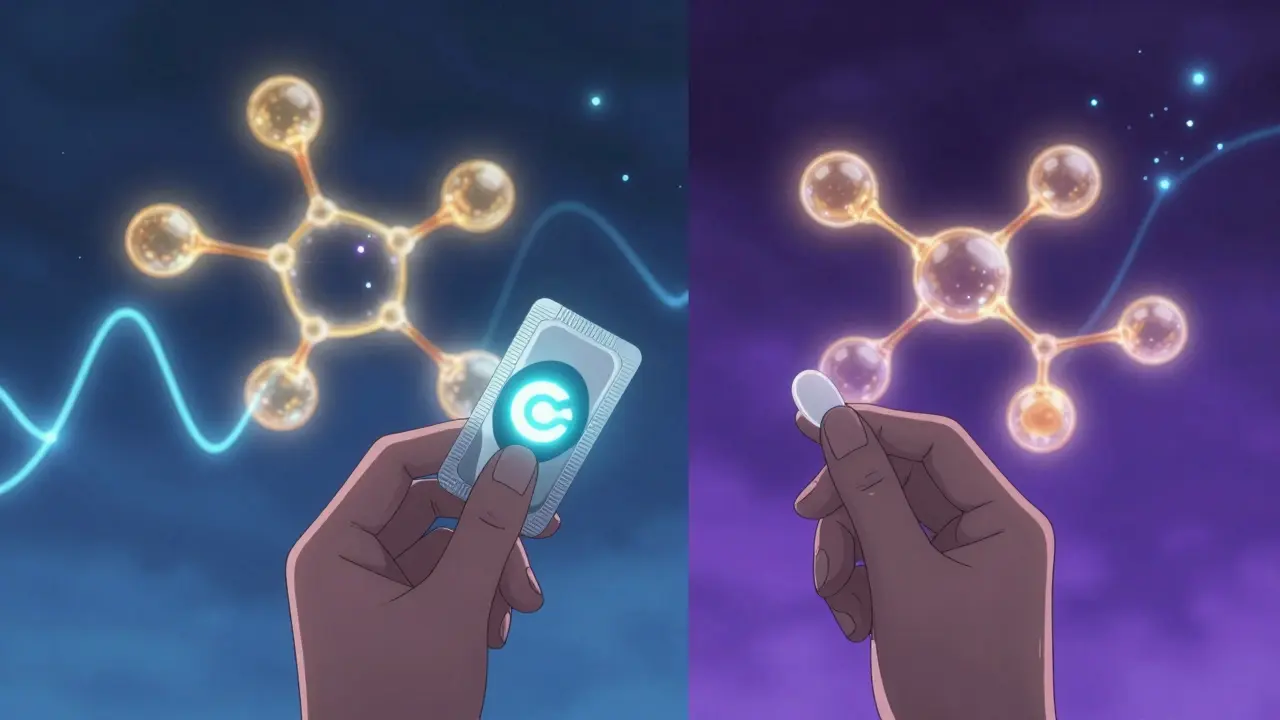
When you pick up a prescription, you might see two options: the brand-name pill you recognize from TV ads, or a smaller, cheaper version with a different color and shape. That’s a generic drug. It’s not a copy. It’s not a substitute. It’s the exact same medicine-just without the marketing costs, the fancy packaging, and the patent protection.
What Exactly Is a Generic Drug?
A generic drug is a pharmaceutical product that contains the same active ingredient as a brand-name drug, in the same strength, dosage form, and route of administration. It works the same way in your body. It’s held to the same strict standards. The only real difference? Price. The U.S. Food and Drug Administration (FDA) defines it clearly: a generic drug must be identical or bioequivalent to its brand-name counterpart in dosage, safety, strength, quality, performance, and intended use. That means if your doctor prescribes 10 mg of lisinopril, the generic version you get from the pharmacy delivers the same amount of the same chemical into your bloodstream at the same rate as the brand-name version. Generic drugs become available only after the original patent expires. Most drug patents last 20 years from the date they’re filed. Once that window closes, other manufacturers can apply to make the same drug. This system was formalized by the Hatch-Waxman Act of 1984, which created the Abbreviated New Drug Application (ANDA) process. Instead of repeating expensive clinical trials, generic makers prove their product behaves the same way in the body as the original.How Do Generic Drugs Prove They Work the Same Way?
The key requirement is bioequivalence. That means the generic drug must deliver the same amount of active ingredient into your bloodstream at the same speed as the brand-name drug. The FDA requires that the 90% confidence interval for two critical measurements-AUC (area under the curve, which measures total exposure) and Cmax (peak concentration)-fall between 80% and 125% of the brand-name drug’s values. To test this, manufacturers run studies with 24 to 36 healthy volunteers. These aren’t long-term trials. They’re short, controlled studies that measure blood levels over time. If the results fall within that 80-125% range, the FDA approves it. That’s it. No need to retest safety or effectiveness on thousands of patients. The original drug already proved that. You might wonder: what if the generic works a little differently? The FDA allows only minimal variation. For example, both brand and generic drugs can have up to a ±5% difference in active ingredient content. That’s not a loophole-it’s a standard tolerance level built into pharmaceutical manufacturing for every drug, brand or generic.Are Generic Drugs Made to the Same Standards?
Yes. The FDA inspects every facility that makes generic drugs-whether it’s in the U.S., India, China, or elsewhere. In 2023, the agency conducted around 3,500 inspections of generic manufacturing sites worldwide. These inspections follow the same Current Good Manufacturing Practices (cGMP) rules that apply to brand-name drugs. The FDA checks everything: how ingredients are handled, how tablets are pressed, how sterile injectables are filled, how packaging is sealed. They look at 177 specific quality parameters. If a facility fails, the FDA can block shipments or shut it down. Generic drugs don’t get a pass because they’re cheaper. They’re held to the same bar. Even inactive ingredients-like dyes, fillers, or flavorings-must be safe and not affect how the drug works. That’s why a generic version of a pill might be blue instead of green, or oval instead of round. Those changes are required to avoid trademark infringement. But they don’t change how the medicine affects your body.Why Are Generic Drugs So Much Cheaper?
Because they don’t have to pay for the research, development, and marketing that brand-name companies do. Developing a new drug can cost over $2.6 billion, according to studies. That includes failed attempts, clinical trials, advertising, and lobbying. Once a patent expires, generic manufacturers skip all that. They just need to prove bioequivalence, which costs a fraction of the original R&D. The result? Generics typically cost 80-85% less than brand-name drugs. The Congressional Budget Office found that within a year of a generic entering the market, prices drop to about 15% of the original brand price. When five or more generic makers enter the race, prices can fall to just 9% of the original. In 2022, generics made up 90.5% of all prescriptions filled in the U.S.-but only 13.1% of total drug spending. Over the past decade, they saved the American healthcare system an estimated $2.18 trillion. That’s not just a savings for patients. It’s a savings for insurers, Medicare, Medicaid, and employers.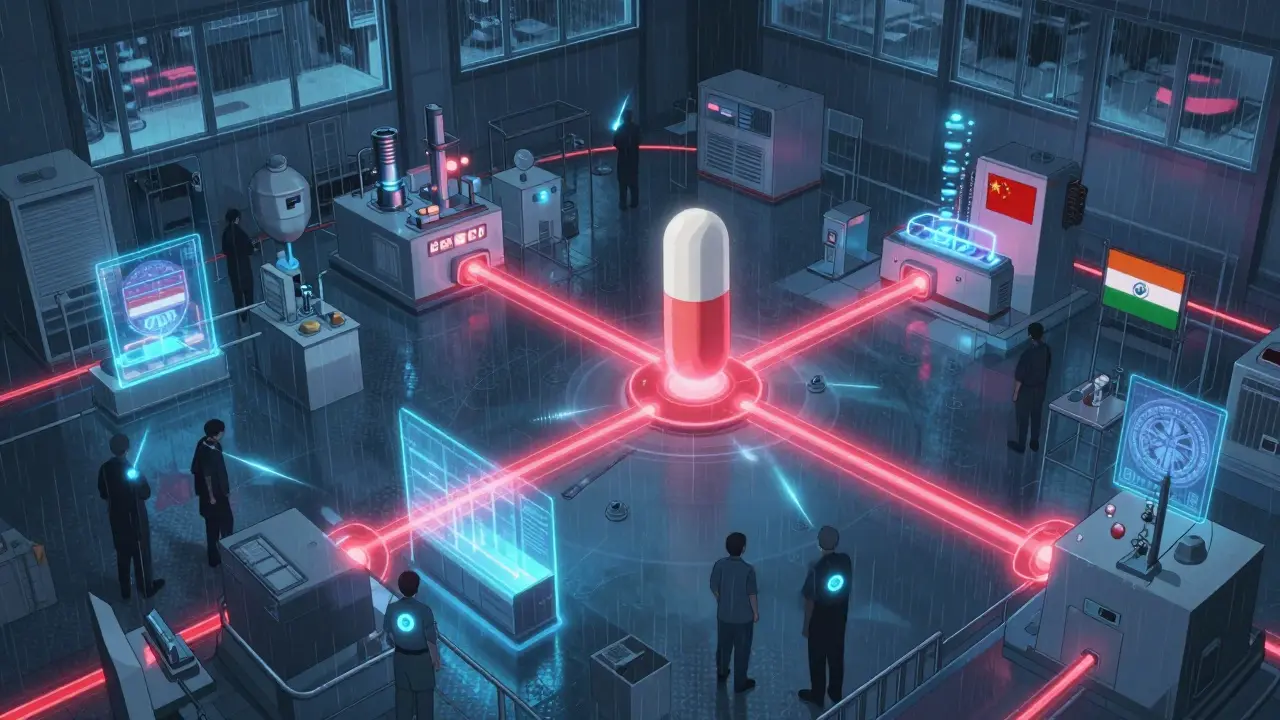
Are There Any Exceptions or Risks?
For most drugs, the answer is no. But there are a few areas where extra caution is advised. Drugs with a narrow therapeutic index (NTI) are the main concern. These are medicines where even a small change in blood levels can cause serious side effects or reduce effectiveness. Examples include warfarin (a blood thinner), levothyroxine (for thyroid conditions), and some anti-seizure drugs like phenytoin. The FDA still approves generics for these drugs. But some doctors prefer to stick with one brand or generic version once a patient is stabilized. It’s not because the generic is less effective-it’s because switching between different formulations, even if they’re all approved, might cause tiny fluctuations in blood levels that could matter for sensitive patients. The American College of Physicians and the Institute of Medicine both reviewed dozens of studies and found no meaningful clinical difference between brand and generic versions of cardiovascular drugs. But Dr. Aaron Kesselheim from Harvard Medical School notes that for NTI drugs, consistency matters more than the name on the bottle.What About Biosimilars? Are They the Same?
No. Biosimilars are not the same as generic drugs. They’re a different category entirely. Brand-name biologics-like Humira, Enbrel, or Remicade-are made from living cells. They’re complex proteins, not simple chemicals. You can’t just copy them like you can a pill made of aspirin or metformin. Biosimilars are highly similar to the original biologic, but not identical. They require more testing, more data, and more time to get approved. And they don’t usually drop prices as dramatically. While traditional generics cut costs by 80-90%, biosimilars typically reduce prices by only 20-30%. The FDA approved the first biosimilar in 2015, but adoption has been slow. By 2022, biosimilars had captured only 31% of their potential market share in approved conditions. That’s changing, but slowly.How Are Generic Drugs Approved and Monitored?
The process starts with an ANDA. The manufacturer submits detailed data on chemistry, manufacturing, and bioequivalence. The FDA’s Office of Generic Drugs reviews about 1,000 applications each year. The average review time is 10 months. Once approved, the drug doesn’t disappear from scrutiny. The FDA monitors adverse events just like it does for brand-name drugs. If a pattern of side effects emerges, the agency can issue warnings, require label changes, or even pull the product. Manufacturers must report any changes in ingredients, suppliers, or production methods. If a facility changes its process, it must reprove bioequivalence. The FDA can also require post-market studies if there’s any uncertainty.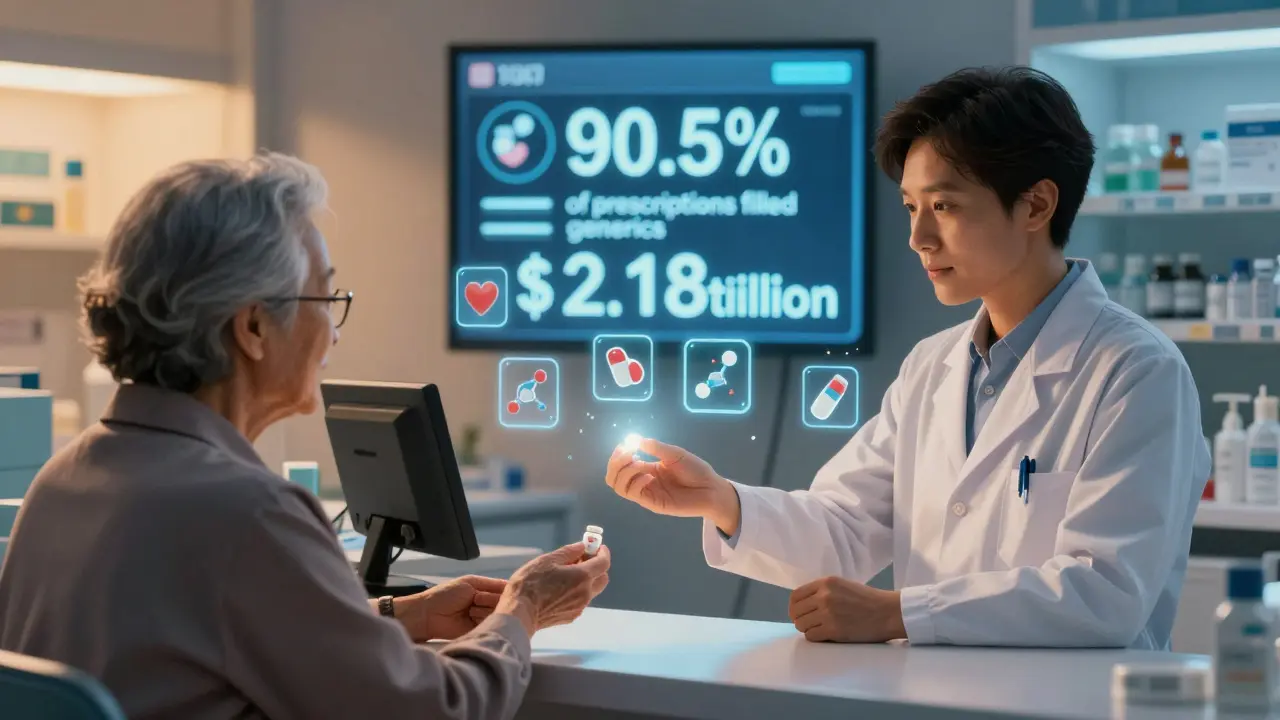
Can Pharmacists Switch My Brand to a Generic?
In 49 U.S. states, yes-unless your doctor writes “dispense as written” on the prescription. That’s called “substitution.” Pharmacists are trained to know which generics are interchangeable with which brands. But if you’re on a narrow therapeutic index drug, your pharmacist may call your doctor before switching. That’s standard practice, not a restriction. It’s about safety, not cost. The FDA requires that generic drug labeling be identical to the brand-name label, except for the brand name itself. Patient information sheets should be the same. If your pill looks different, it’s not because the medicine changed. It’s because the manufacturer chose a different dye.What’s Next for Generic Drugs?
More than 350 brand-name drugs, worth $138 billion in annual sales, are expected to lose patent protection between 2023 and 2027. That means a wave of new generics is coming-especially for high-cost medications like those for diabetes, heart disease, and mental health. The FDA is also pushing for faster approvals under its GDUFA III program, aiming for 90% of ANDAs to be reviewed in 10 months or less. At the same time, it’s increasing oversight of complex generics-like inhalers, eye drops, and topical creams-where bioequivalence is harder to prove. But there’s a risk. About 80% of the active ingredients in generic drugs come from facilities in India and China. Supply chain disruptions-like those seen during the pandemic-can lead to shortages. The FDA is working to diversify sources, but global manufacturing remains a challenge. Meanwhile, some brand-name companies are launching their own “authorized generics”-identical versions sold under a different label. These undercut independent generics and can delay price drops. But they still save patients money compared to the original brand.Bottom Line: Should You Choose Generic?
If your doctor hasn’t told you otherwise, choose the generic. It’s not a compromise. It’s the same medicine, tested just as rigorously, made to the same standards, and approved by the same agency. You’re not getting less. You’re just paying less. And that’s a win-for your wallet, your insurance, and the healthcare system as a whole.Are generic drugs as safe as brand-name drugs?
Yes. Generic drugs must meet the same FDA standards for safety, strength, quality, and performance as brand-name drugs. The FDA requires proof of bioequivalence and inspects manufacturing facilities to ensure compliance with the same strict rules. There is no evidence that generics are less safe.
Why do generic drugs look different from brand-name drugs?
By law, generic drugs cannot look identical to brand-name drugs to avoid trademark infringement. That’s why color, shape, or flavor may differ. But the active ingredient, strength, and effectiveness are the same. These differences are only cosmetic and do not affect how the drug works in your body.
Can I switch between different generic brands of the same drug?
For most medications, yes. The FDA considers all approved generics for a drug to be interchangeable. But for drugs with a narrow therapeutic index-like warfarin or levothyroxine-your doctor may recommend sticking with one version to avoid small fluctuations in blood levels. Always talk to your provider before switching.
Are all generic drugs made in the U.S.?
No. About 80% of the active ingredients in generic drugs come from facilities in India and China. However, all manufacturing sites-wherever they are located-must pass FDA inspections and meet U.S. quality standards before their products can be sold in the United States.
Do generic drugs take longer to work than brand-name drugs?
No. Generic drugs must demonstrate bioequivalence, meaning they reach the same concentration in your bloodstream at the same rate as the brand-name version. There is no delay in onset or duration of action. If you feel a difference, it’s likely due to psychological factors or changes in inactive ingredients-not the active drug.
12 Comments
Oluwatosin Ayodele December 26, 2025 AT 00:16
Let’s cut through the marketing fluff-generic drugs aren’t just cheaper, they’re scientifically identical. The FDA doesn’t approve anything that’s even 1% off. If you think the blue pill works differently than the pink one, you’re not dealing with pharmacology-you’re dealing with placebo branding. I’ve been prescribing generics for 18 years. No patient has ever had a clinical difference. Stop overthinking it.
Jason Jasper December 26, 2025 AT 12:47
Interesting breakdown. I’ve always trusted generics, but reading about the bioequivalence range (80-125%) made me pause. Not because I doubt the FDA, but because that’s a wider margin than I assumed. Still, the data holds up. If 90% of prescriptions are generics and the system hasn’t collapsed, that’s a pretty strong endorsement.
Mussin Machhour December 27, 2025 AT 00:29
Y’all are overcomplicating this. Generic = same drug, less money. End of story. My grandma takes 7 different generics and still kicks ass at bingo. If your body reacts weird, it’s probably the filler dye, not the medicine. Also-stop paying full price for pills that look like they came from a cereal box. You’re literally throwing away hundreds a year.
Winni Victor December 28, 2025 AT 13:27
Oh wow. So the government says it’s safe, so it must be. Meanwhile, the same people who told us Vioxx was fine, thalidomide was okay, and that lead paint was ‘not a big deal’ are now handing out gold stars to the FDA. I’m not buying it. Who’s really inspecting those factories in India? A guy with a clipboard and a mango smoothie? The supply chain is a goddamn puppet show.
Christopher King December 30, 2025 AT 02:39
EVERYTHING YOU THINK YOU KNOW ABOUT DRUGS IS A LIE. The FDA? Controlled by Big Pharma. The ‘bioequivalence’ studies? Done with 36 college kids on Adderall. The real active ingredient? Corporate greed. They want you dependent on pills so you keep buying them. Generics? Just a Trojan horse. They’ll slip in a new ‘inactive’ ingredient next year-something that makes you crave more meds. Wake up. The system is rigged. And yes, I’ve seen the documents.
Zabihullah Saleh December 31, 2025 AT 08:09
It’s funny how we treat medicine like it’s sacred, but when it’s cheap, we assume it’s trash. We’ll buy a $1200 handbag because it has a logo, but a $4 pill with no logo? ‘Too good to be true.’ We’ve been trained to equate price with value. But medicine isn’t fashion. It’s chemistry. And chemistry doesn’t care about branding. The real tragedy? People skip doses because they can’t afford the brand. That’s not science-it’s systemic cruelty.
Terry Free January 2, 2026 AT 06:45
Wow. Someone actually wrote a 2000-word essay to say ‘generics are fine.’ Congrats. You just proved the entire pharmaceutical industry’s PR campaign works. Next up: ‘Tap water is basically bottled water, but cheaper.’ Newsflash: if it’s not patented, it’s not ‘innovative.’ And if it’s not innovative, it’s not worth your trust. Also, why are you still using a phone made in China? Same logic.
Lindsay Hensel January 3, 2026 AT 05:36
Thank you for this comprehensive and meticulously referenced overview. The distinction between generics and biosimilars is particularly crucial for public understanding. The data regarding cost savings and FDA oversight is both compelling and reassuring. I would encourage all patients to discuss substitution with their providers, especially in cases involving narrow therapeutic index medications. Safety and consistency remain paramount.
Sophie Stallkind January 5, 2026 AT 02:37
It is imperative to recognize that the regulatory framework governing generic pharmaceuticals is among the most rigorous in the world. The bioequivalence standards, manufacturing inspections, and post-market surveillance protocols are not merely procedural-they are foundational to public health. One must not conflate cost reduction with quality compromise. The evidence overwhelmingly supports the safety and efficacy of approved generic agents.
Katherine Blumhardt January 6, 2026 AT 07:27
ok so i just got my generic blood pressure med and it’s a tiny blue oval and the brand was a big white round one and i swear i felt weird for like 2 days?? like my head was foggy?? but then i realized i was just stressed because it looked different?? like?? i dont know?? i think my brain just glitched?? 😅
sagar patel January 7, 2026 AT 00:22
India makes 40% of global generics. China makes 60% of APIs. FDA inspects 10% of facilities annually. That’s not oversight. That’s negligence. Your life is being shipped in containers across oceans with no real audit trail. Don’t be fooled by the paperwork. The system is broken.
Bailey Adkison January 8, 2026 AT 22:43
Generics are fine for people who don’t care about their health. I take the brand name because I’m not a guinea pig. If you’re saving $5 a month but risking your liver, your kidneys, your mental clarity-what’s the point? Also, the FDA’s ‘bioequivalence’ range is basically ‘close enough.’ That’s not medicine. That’s a gamble. And I don’t gamble with my body.