


When a brand-name drug’s patent runs out, you’d think generic versions would flood the market right away. But that’s not how it works. The FDA’s 180-day exclusivity rule is the hidden engine behind why some generics show up quickly - and why others take years. It’s not a reward for being first to file paperwork. It’s a high-stakes race with financial cliffs, legal traps, and strategic delays that can cost patients billions.
What Exactly Is the 180-Day Exclusivity?
The 180-day exclusivity isn’t a gift from the FDA. It’s a legal carve-out created by the Hatch-Waxman Act of 1984. The goal? Encourage generic companies to challenge weak or overreaching patents on brand-name drugs. If a generic manufacturer files an Abbreviated New Drug Application (ANDA) with a Paragraph IV certification - meaning they say the brand’s patent is invalid or not infringed - and they’re the first to do it, they get 180 days of exclusive rights to sell that generic. During that time, the FDA can’t approve any other generic versions of the same drug.
That’s the theory. The reality? It’s messier. The clock doesn’t always start when the FDA approves the drug. It starts when the first generic company actually begins selling it - or when a court rules the patent is invalid. And here’s the kicker: if no one launches, the exclusivity can sit idle for years. That’s not a bug. It’s a feature that’s been exploited.
Why Do Generic Companies Risk It?
Challenging a patent is expensive. Legal fees can hit $10 million or more. It can take three to five years just to get to trial. So why do it? Because if you win, you get a monopoly on the generic market for six months. During that window, you can charge 80% less than the brand drug - but still make a killing. Studies show generics launch at 15-20% of the brand’s price during exclusivity. After that, when five or six other generics jump in, prices drop to 9-12%.
For small generic makers, this is often the only path to survival. According to FDA data, 63% of small generic companies say this exclusivity is the main reason they even bother with a Paragraph IV challenge. Without it, they’d never have the capital to compete against big pharma’s legal teams.
How the System Gets Gamed
Here’s where things go sideways. The 180-day clock doesn’t run while lawsuits drag on. If a company gets approval but waits to launch - say, because they’re negotiating a deal with the brand-name maker to delay competition - the clock doesn’t start. The exclusivity just sits there, blocking everyone else.
The Federal Trade Commission found 147 cases between 2015 and 2020 where this exact tactic was used. One example: a generic company gets approval in 2019 but doesn’t launch until 2021. The brand drug stays at full price for two extra years. Patients pay $13 billion more each year because of these delays, according to Harvard’s Dr. Aaron Kesselheim.
Even worse, some companies file Paragraph IV challenges not because they believe the patent is invalid - but just to trigger the exclusivity and block others. The FTC calls these “sham certifications.” They’re legal loopholes dressed up as innovation.

Who Gets the Exclusivity - And Who Loses
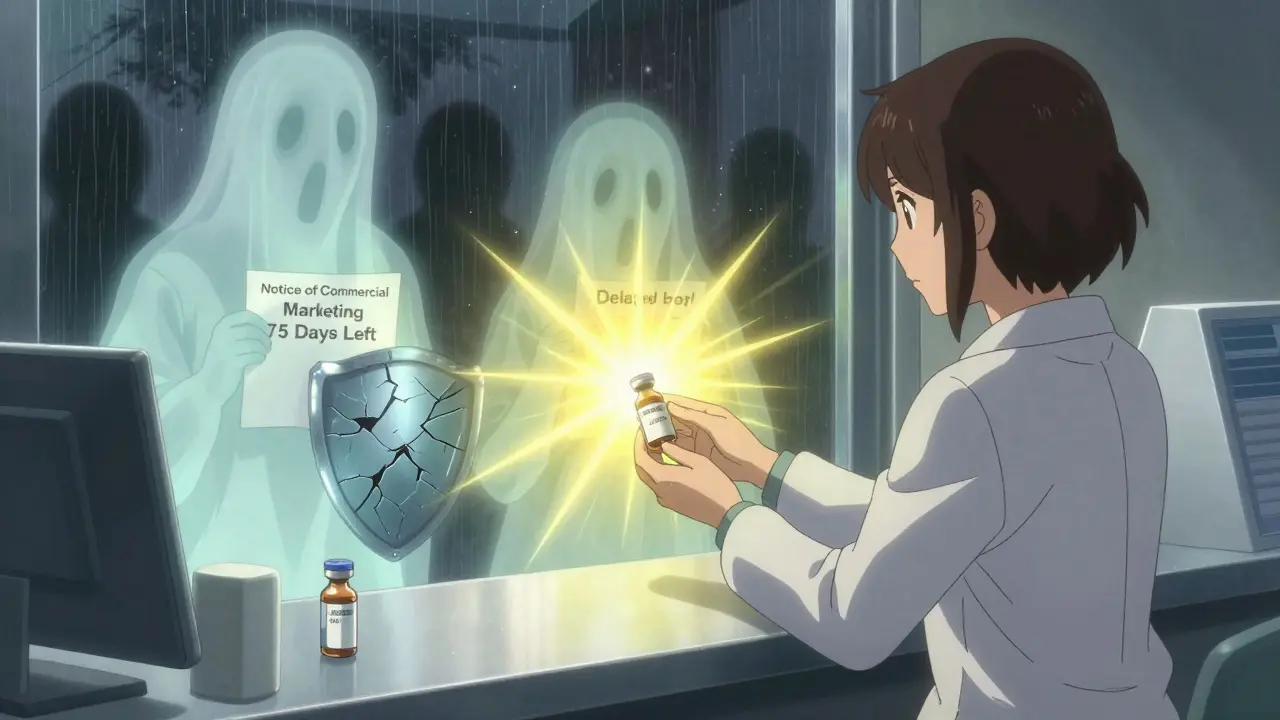
It’s not just about being first to file. If two or more companies file on the same day with Paragraph IV certifications, they all share the 180 days. But if one fails to launch within 75 days of getting a “Notice of Commercial Marketing” from the FDA, they forfeit their share. Roughly 35% of first applicants lose their exclusivity this way.
The top five generic manufacturers - Teva, Viatris, Sandoz, Amneal, and Hikma - captured 58% of all 180-day exclusivity periods between 2018 and 2023. That’s not because they’re better. It’s because they have the legal teams, cash reserves, and patience to play the long game. Smaller companies? They get squeezed out.
In 2020, six companies qualified for exclusivity on the blood thinner apixaban. Only three launched within the window. The other three lost their shot. The ones who did launch split the 180 days - meaning each got about 60 days of monopoly pricing. That’s still profitable. But it’s a far cry from the original intent: one company gets six months, everyone else waits.
What’s Changing - And Why It Matters
The FDA has had enough. In March 2022, they proposed a major overhaul: switch to the Competitive Generic Therapy (CGT) model. Under this new system, the 180-day clock starts only when the first generic hits the market. No more sitting on approval for years. No more legal games. The exclusivity lasts exactly 180 days from launch - not from court ruling or tentative approval.
Why does this matter? Because it forces action. If you want the exclusivity, you have to sell the drug. No more holding it hostage. The Congressional Budget Office estimates this change would speed up generic entry by 8.2 months per drug and save $5.3 billion a year.
Sensoria, a drug pricing watchdog, found that drugs with CGT-style exclusivity saw generic entry 11.3 months faster than those under the old system. That’s not just savings. That’s access. For patients on insulin, cancer drugs, or heart medications, those months can mean the difference between sticking to a treatment plan or skipping doses.
What Happens If You Don’t Launch?
Forgetting to launch isn’t an accident. It’s a business decision. If you’re a small generic company and you’re worried a bigger player will undercut you once exclusivity ends, you might delay. You might wait for the brand to lower its price first. Or you might strike a deal - pay the brand not to launch their own generic, or get paid to delay yours.
The FDA says forfeiture only happens if you don’t launch within 75 days of getting your “Notice of Commercial Marketing.” But that notice doesn’t come until after the patent case is resolved. So if the case drags on for four years, you get the notice at year four - and then you have 75 days to act. If you don’t, you lose. And so does the public.
Between 2018 and 2023, over 100 exclusivity periods were forfeited. That’s 100 chances for cheaper drugs that never happened.
Is the System Working?
Yes - and no.
Since 1984, the Hatch-Waxman Act has helped bring over 14,000 generic drugs to market. Today, 90% of prescriptions in the U.S. are filled with generics. They cost just 23% of what brand drugs do. That’s a win.
But the 180-day exclusivity was supposed to be the spark that lit the fire of competition. Instead, it’s become a tool for delay. The system works best when the first applicant launches quickly. It fails when they don’t - and too often, they don’t.
The real measure of success isn’t how many exclusivity periods are awarded. It’s how many lead to lower prices, faster. And right now, that’s not happening nearly enough.
What’s Next?
Legislation like the Preserve Access to Affordable Generics and Biosimilars Act (S. 202), introduced in early 2023, aims to crack down on sham patent challenges. The FTC is pushing for stricter enforcement. The FDA’s proposed CGT model is gaining traction.
By 2027, if the changes go through, generic launches could jump from 750-800 a year to 900-950. That’s hundreds more drugs becoming affordable - sooner.
For patients, it’s not about legal jargon or patent filings. It’s about whether they can afford their medicine next month. The 180-day exclusivity was meant to help them. Right now, it’s often working against them.
Who qualifies for the 180-day exclusivity?
Only the first generic company to file an ANDA with a Paragraph IV certification - challenging a brand-name drug’s patent - qualifies. If multiple companies file on the same day, they all share the exclusivity. But if one fails to launch within 75 days of receiving FDA’s Notice of Commercial Marketing, they forfeit their share.
When does the 180-day clock start?
It starts on the earliest of two dates: the day the first generic company begins selling the drug, or the day a court rules the brand’s patent is invalid, unenforceable, or not infringed. It does NOT start when the FDA approves the application.
Can the 180-day exclusivity last longer than 180 days?
Yes - and often does. Because the clock only runs after commercial launch or a court decision, companies can delay launch for years while patent lawsuits drag on. During that time, no other generic can enter the market, even though the exclusivity period hasn’t started. This can extend the brand drug’s monopoly far beyond its patent life.
Why do some generic companies forfeit their exclusivity?
About 35% of first applicants lose their exclusivity because they don’t launch within 75 days of getting the FDA’s Notice of Commercial Marketing. Reasons include waiting for patent litigation to end, negotiating deals with brand companies, or lacking the manufacturing capacity to scale up quickly.
What’s the difference between the current system and the proposed CGT model?
Under the current system, the 180-day clock can be paused for years. Under the proposed Competitive Generic Therapy (CGT) model, the clock starts only when the first generic is actually sold. This ensures the exclusivity lasts exactly 180 days - no more, no less - and forces companies to launch or lose their benefit.
How does this affect drug prices?
During the 180-day exclusivity, the first generic typically sells at 15-20% of the brand’s price. After that, when more generics enter, prices drop to 9-12%. Delays in launch mean patients pay higher prices longer. The Congressional Budget Office estimates the proposed CGT reform could save $5.3 billion annually by speeding up generic entry.
If you’re taking a generic drug today, there’s a good chance the 180-day exclusivity rule helped make it affordable. But if you’re waiting for a cheaper version of a drug that’s still priced like a brand-name product - even though the patent expired years ago - that same rule might be the reason why.
9 Comments
Dan Padgett December 17, 2025 AT 06:40
It's wild how a rule meant to help people afford medicine became a chess game for big pharma. I keep thinking about how many folks skip doses because they can't afford insulin, and the system's just sitting there with this 180-day clock that never ticks. It's not about patents anymore-it's about who can outwait who. And the patients? They're the ones holding their breath.
Kayleigh Campbell December 18, 2025 AT 23:56
So let me get this straight-the FDA gives a 6-month monopoly to whoever files first… but if you’re rich enough to sit on it for 3 years while you make a side deal with the brand, you win? 😏 That’s not innovation. That’s rent-seeking with a law degree. And we call this ‘competition’? Please. My grandma’s garage sale had better market dynamics.
Cassandra Collins December 20, 2025 AT 07:35
WAIT. So the FDA is in on it?? I knew it. They’re working with the big pharma lobbyists-secret meetings in DC, all the while telling us generics are ‘cheaper’. But if the clock only starts when they decide to launch… what if they never launch? What if this is all just a trap to keep prices high? I read somewhere that the FDA director owns stock in Pfizer. Coincidence? I think not. #PharmaControl
Aditya Kumar December 20, 2025 AT 15:32
Too much text. I just want my pills to be cheap.
sue spark December 22, 2025 AT 10:19
I’ve been on a generic for years and it saved me so much money. I never knew how the system worked until now. It’s kind of heartbreaking that the thing that made it affordable could also be the thing that delays it. I hope they fix it soon. People need this
Tiffany Machelski December 23, 2025 AT 06:28
Wow. I never realized how much legal maneuvering happens behind the scenes just to get a cheap pill. I thought it was just about patents expiring. But now I see… it’s like a maze where the only winners are the ones with lawyers and cash. Makes me mad. And also… kinda impressed? In a sad way.
SHAMSHEER SHAIKH December 24, 2025 AT 01:19
Dear fellow citizens, it is with profound gravity that I address this systemic failure of pharmaceutical equity. The 180-day exclusivity, originally conceived as a beacon of competitive justice, has, in its execution, devolved into a labyrinthine instrument of corporate entrenchment. The forfeiture rate of 35%-a staggering indictment of structural neglect-must be met with legislative urgency, regulatory reform, and moral clarity. We cannot permit the sanctity of health to be bartered in courtrooms. The CGT model is not merely preferable-it is ethically imperative. Let us act-not tomorrow, but today.
James Rayner December 25, 2025 AT 15:02
This is the kind of thing that makes me feel like I’m living in a dystopian sitcom. 🤦♂️ I’m so glad someone finally wrote this out clearly. I’ve been on a generic for my blood pressure for years-never thought about how it got there. Now I’m just… sad. Like, really sad. Like, ‘why are we like this’ sad. The fact that people are waiting years for cheaper meds just because some company is playing legal poker… it’s not just broken. It’s cruel.
Josias Ariel Mahlangu December 26, 2025 AT 01:37
If you're too lazy or too poor to launch a drug within 75 days, you don't deserve to be in the business. This isn't charity-it's capitalism. Those who delay are not victims, they're cowards. The system is working exactly as it should: the strong survive, the weak get left behind. Stop crying about it. Get better or get out.