

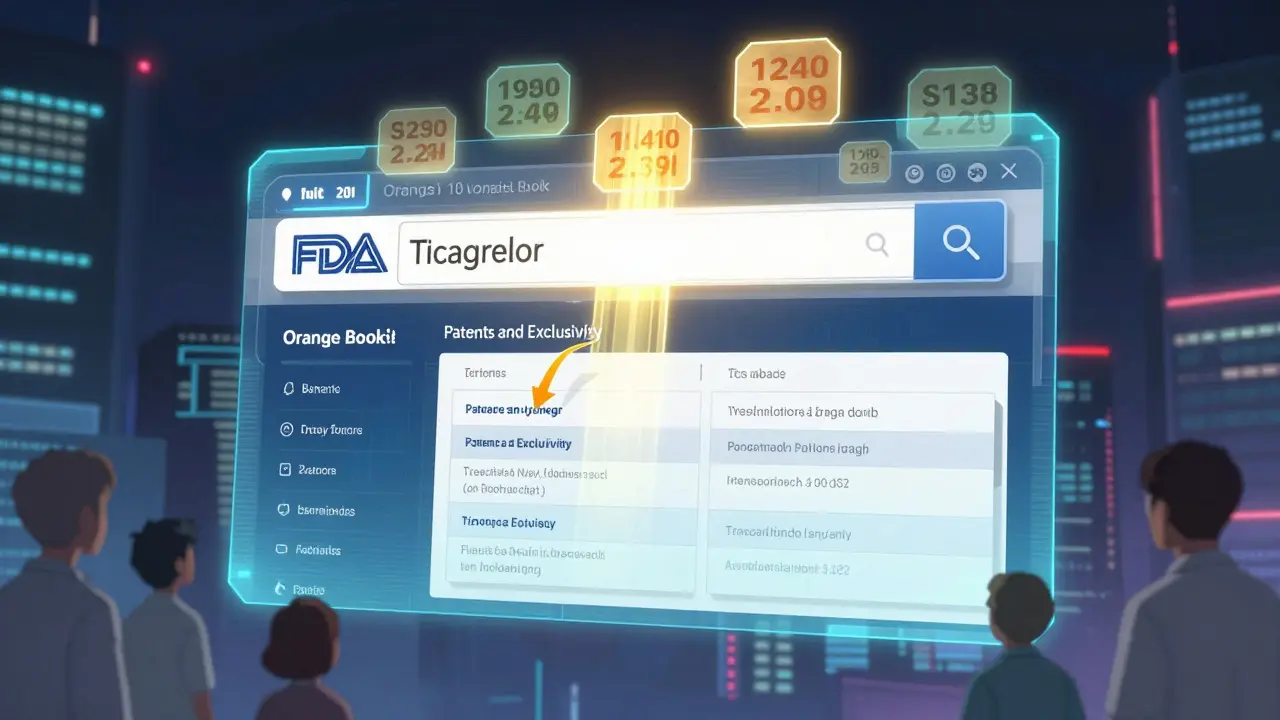
The FDA Orange Book is the single most important public resource for figuring out when a brand-name drug’s patent protection ends and generics can legally hit the market. If you’re a pharmacist, a generic drug manufacturer, a patient waiting for a cheaper version of your medication, or even a researcher tracking drug pricing trends, knowing how to find and interpret patent expiration dates in the Orange Book isn’t just helpful-it’s essential.
What Exactly Is the FDA Orange Book?
The FDA Orange Book, officially called Approved Drug Products with Therapeutic Equivalence Evaluations, has been around since 1985. It was created under the Hatch-Waxman Act to balance two goals: letting brand-name drug companies recoup research costs through patent protection, while also speeding up access to affordable generic versions once those protections expire. It doesn’t list every drug on the market. It only includes small-molecule, non-biological drugs approved by the FDA. Biologics like insulin or monoclonal antibodies are tracked elsewhere. For the drugs it does cover, the Orange Book shows you which patents protect them, when those patents expire, and any extra exclusivity periods granted by the FDA-like for pediatric studies or new uses. The data is updated daily. The most recent full update was November 15, 2023, and the FDA makes downloadable files available for bulk analysis. That means the information you see online is almost real-time.Where to Find Patent Expiration Dates
You don’t need a subscription or special access. The entire Electronic Orange Book is free and public at accessdata.fda.gov/scripts/cder/ob/index.cfm. Here’s how to find a specific drug’s patent expiration date:- Go to the Electronic Orange Book.
- Search using the drug’s brand name (like "Brilinta"), active ingredient (like "ticagrelor"), application number, or company name.
- Click on the Application Number link next to the drug you’re looking for.
- On the next page, scroll to the bottom and click View under the "Patents and Exclusivity" section.
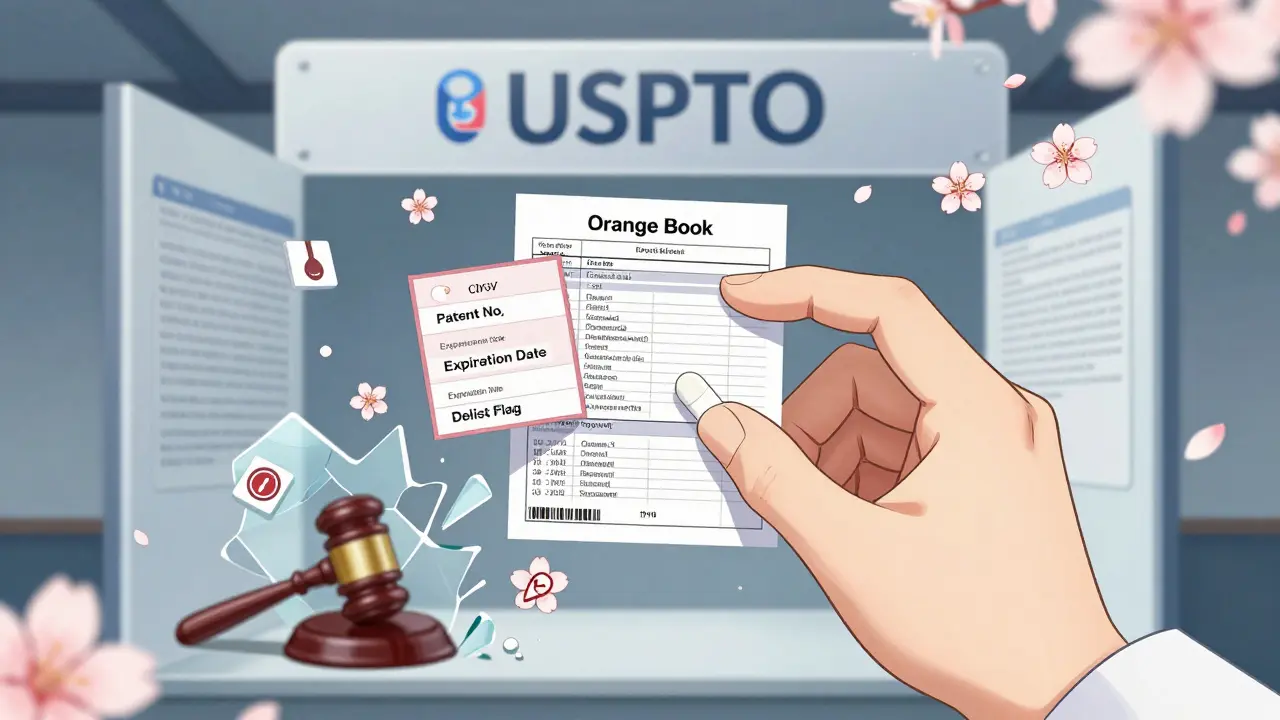
- Patent Number (e.g., 8,436,190)
- Patent Expiration Date (e.g., October 26, 2030)
- Patent Use Code (e.g., U-748), which tells you what the patent covers-like a specific use, formulation, or method of delivery
- Delist Request Flag (Y or blank), which tells you if the patent holder asked to remove it (often a sign the patent is weak or expired)
Understanding Patent Extensions and Exclusivity
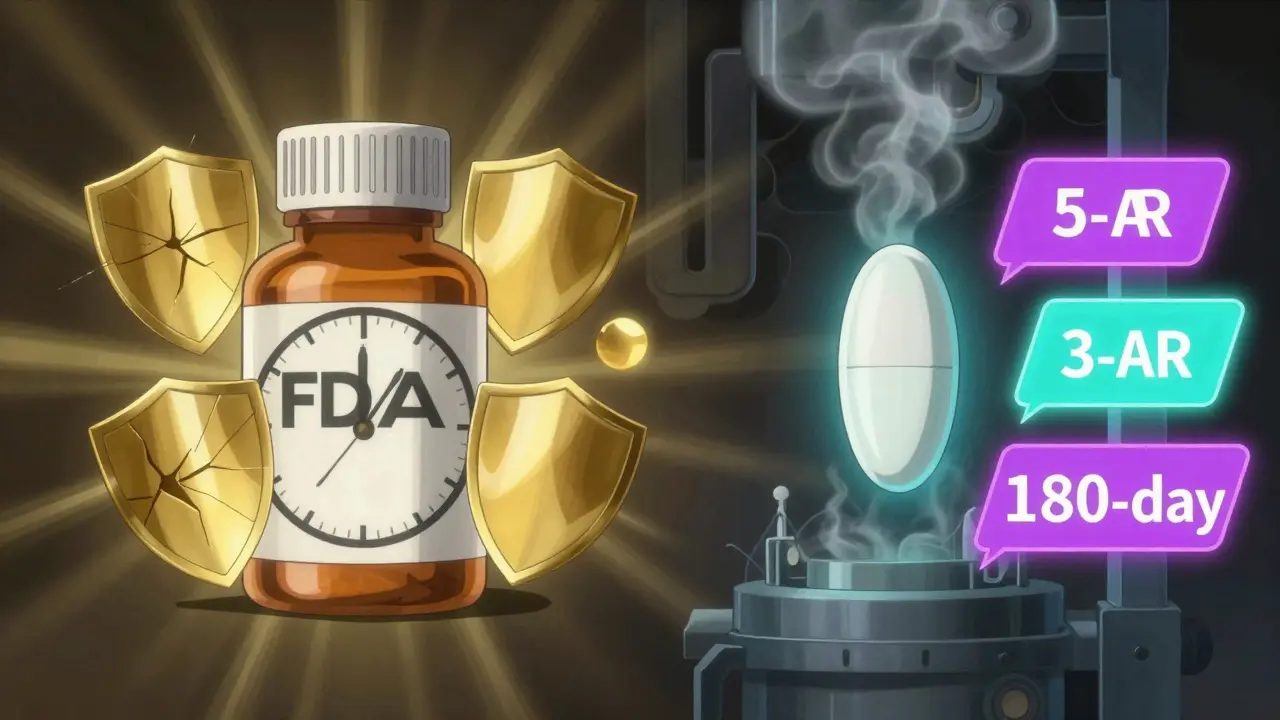
Don’t assume the expiration date you see is just the original patent term. Many drugs get Patent Term Extensions (PTE) under 35 U.S.C. 156. These extensions make up for time lost during FDA review. If a drug took five years to get approved, the patent can be extended by up to half that time-sometimes adding years to the clock. There’s also regulatory exclusivity, which is separate from patents. For example:- 5-year exclusivity for new chemical entities
- 3-year exclusivity for new clinical studies
- 180-day exclusivity for the first generic applicant who challenges a patent (Paragraph IV certification)
Why the Orange Book Isn’t Perfect
The Orange Book is authoritative-but not flawless. A 2023 study from the National Bureau of Economic Research found that while 89% of patent expiration dates matched USPTO records, 11% had discrepancies. Here are the big gaps:- Early expirations: About 46% of patents expire before their listed date because the patent holder didn’t pay maintenance fees. The Orange Book doesn’t update these retroactively.
- Delisted patents: If a patent is removed from the Orange Book, it doesn’t mean it’s expired-it could mean it was invalidated in court or voluntarily withdrawn.
- Delayed updates: Patents filed after drug approval must be submitted within 30 days, but sometimes they’re late. That means a new patent might not show up for weeks.
How to Use the Data Files for Bulk Research
If you’re looking at dozens of drugs or building a database, the web interface won’t cut it. The FDA offers downloadable Orange Book Data Files updated daily at fda.gov/drugs/orange-book-data-files. These are CSV files with columns like:- Product No - unique ID for each drug product
- Patent No - the actual patent number
- Patent Expiration - in MM/DD/YYYY format
- Drug Substance Flag - "Y" if the patent covers the active ingredient itself
- Patent Use Code - the U-code that tells you what the patent protects
- Delist Requested Flag - "Y" if the sponsor asked to remove it
- Submission Date - only available for patents submitted after 2013
What to Do When the Date Doesn’t Match
You find a drug with a patent expiration date of July 2026 in the Orange Book. But you hear rumors it’s already been invalidated. What now? Here’s your checklist:- Check the Delist Request Flag - if it says "Y," the patent is being removed. That’s a red flag.
- Search the USPTO Patent Center - look up the patent number. Check if maintenance fees were paid. If they weren’t, the patent is dead.
- Look up court records - search for the drug name + "patent litigation" on PACER or Google Scholar. A court ruling can invalidate a patent even if the Orange Book hasn’t updated yet.
- Watch for generic applications - if a company files a Paragraph IV certification with the FDA, they’re challenging the patent. That’s a strong signal.
Why This Matters to Patients and Providers
You might think this is only for lawyers and drug companies. But it affects you too. If your insurance won’t cover your brand-name drug, you’re waiting for a generic. The Orange Book tells you when that might happen. If a drug’s patent expires in January 2026, you can expect generics to appear in pharmacies by March or April 2026, sometimes sooner. Pharmacists use this info to advise patients. A 2022 FDA survey found that nearly 70% of pharmacists contacted the agency to ask about patent expiration dates. That’s because patients ask. And now, with the Orange Book online, you can answer those questions yourself.Next Steps
If you’re trying to find a patent expiration date:- Start with the Electronic Orange Book.
- Use the Application Number method-it’s the most reliable.
- Look for both patent and exclusivity dates.
- For critical decisions, cross-check with USPTO and court records.
- Download the data files if you’re doing research on multiple drugs.
Where can I find the FDA Orange Book online?
The FDA Orange Book is publicly available at https://www.accessdata.fda.gov/scripts/cder/ob/index.cfm. This is the official Electronic Orange Book, updated daily. You can search by drug name, active ingredient, application number, or company.
Are patent expiration dates in the Orange Book always accurate?
No. While 89% of expiration dates match USPTO records, about 11% have errors. The biggest issue is early expirations-46% of patents expire before their listed date due to unpaid maintenance fees. The FDA doesn’t update the Orange Book retroactively for these cases. Always verify with the USPTO Patent Center or court records if timing is critical.
What’s the difference between patent expiration and exclusivity expiration?
Patents are legal protections granted by the USPTO for inventions. Exclusivity is a regulatory period granted by the FDA, separate from patents. A drug can have both, only one, or neither. Exclusivity can delay generics even if the patent has expired. For example, a drug might have a patent expiring in 2027 but FDA exclusivity ending in 2025. The Orange Book lists both.
Why does the Orange Book show the same patent twice with different dates?
That’s pediatric exclusivity. If a drug company completes pediatric studies, the FDA grants a 6-month extension to all existing patents and exclusivity periods for that drug. The Orange Book shows the original patent date and then the same patent again with the 6-month extension added. It’s not a new patent-it’s just an extension of the original protection.
Can I download the full Orange Book data?
Yes. The FDA provides daily updated CSV files at https://www.fda.gov/drugs/drug-approval-applications-das/orange-book-data-files. These files include patent numbers, expiration dates, use codes, and delist flags. They’re ideal for researchers, analysts, and generic manufacturers doing bulk analysis.
What does a "Delist Requested" flag mean?
If the "Delist Requested" flag says "Y," it means the patent holder asked the FDA to remove the patent from the Orange Book. This often happens when a patent is invalidated in court, found unenforceable, or no longer relevant. It’s a strong signal that generic entry may happen sooner than the listed expiration date.
Do brand-name drugs always have patents in the Orange Book?
No. Some drugs have no patents at all. Others may have patents that weren’t submitted correctly, or were voluntarily withdrawn. The FDA requires patent information to be submitted within 30 days of approval or issuance, but not all companies comply. If a drug has no listed patents, it doesn’t mean it’s safe for generics-it may still be protected by exclusivity.
How do I know which patent actually protects the active ingredient?
Look for the "Drug Substance Flag" in the data files-it says "Y" if the patent covers the active ingredient itself. In the web interface, check the patent use code. Use codes starting with "U-" describe the drug’s approved use. For example, U-100 often means "treatment of hypertension," while U-123 might mean "tablet formulation." Patents covering the drug substance are usually the most important for generic entry.
10 Comments
Kitty Price December 16, 2025 AT 07:55
OMG this is so useful!! 🙌 I’ve been trying to figure out why my insulin isn’t generic yet and now I get it-biologics aren’t even in here. Thanks for breaking it down like this!
Elizabeth Bauman December 18, 2025 AT 00:40
The FDA is full of lies. They don’t want you to know that Big Pharma bribes them to delay generics. Check the delist flags-they’re hiding patents that were already thrown out in court. This is a cover-up.
Dylan Smith December 19, 2025 AT 06:14
I just looked up my med and saw two patent dates for the same number and was like what the heck then i read your pediatric thing and it clicked. thanks for explaining that part so clearly
Billy Poling December 19, 2025 AT 16:39
It is imperative to underscore the necessity of corroborating the data presented in the Orange Book with the official records maintained by the United States Patent and Trademark Office. Failure to undertake this due diligence may result in erroneous strategic projections regarding market entry timelines for generic pharmaceuticals, thereby exposing stakeholders to significant financial and legal risk.
Souhardya Paul December 21, 2025 AT 12:54
For anyone new to this, start with the CSV files. I built a little script that pulls all drugs expiring in 2025 and flags ones with no delist requests. Saved me hours. Also, U-codes are weird but once you get the pattern-like U-748 = heart stuff, U-902 = injection form-it’s easy. Happy to share the code if anyone wants.
Josias Ariel Mahlangu December 22, 2025 AT 04:16
In my country, we don’t have such transparency. People die waiting for medicine because patents are locked behind closed doors. This system is good, but it’s still a privilege. Not everyone can access it. Not everyone can understand it.
Kayleigh Campbell December 22, 2025 AT 05:45
So let me get this straight-Big Pharma pays the FDA to keep a patent on the books even after it’s dead, and we’re supposed to trust a spreadsheet that doesn’t even fix its own typos? Cute. I’ll check the USPTO. And maybe my lawyer. And my crystal ball. Just to be safe.
Joanna Ebizie December 23, 2025 AT 10:20
you people overthink this. just type the drug name into google and look for the first generic that shows up. if it’s on CVS, the patent’s dead. done.
Mike Smith December 24, 2025 AT 04:11
I want to thank you for this incredibly thorough breakdown. As a pharmacist, I’ve spent years explaining this to patients who just want to know when their medication will be cheaper. This is now my go-to resource. I’ve printed it and laminated it. Seriously.
Ron Williams December 25, 2025 AT 10:25
I’m from Nigeria and we don’t have access to the Orange Book here. But I shared this with a group of med students in Lagos. They’re translating it into Pidgin and Yoruba. Knowledge shouldn’t be gated by geography. Thanks for making it clear enough that even someone halfway across the world can use it.