

Ever feel like your ears are stuffed with cotton, especially after a flight, a cold, or even just waking up? You’re not imagining it. That heavy, muffled sensation - like you’re underwater - is often Eustachian tube dysfunction, or ETD. It’s not just annoying. Left unchecked, it can mess with your hearing, make you dizzy, or even lead to infection. The good news? Most cases clear up on their own. The better news? There are simple, proven ways to speed things up.
What Exactly Is the Eustachian Tube?
Deep inside your head, behind your eardrums, there’s a tiny tube - about the width of a straw - that connects your middle ear to the back of your throat. That’s the Eustachian tube. Its job? Equalize pressure. Every time you swallow, yawn, or chew, it opens briefly to let air flow in or out of your middle ear. This keeps the pressure on both sides of your eardrum balanced. When it works right, you don’t notice it. When it doesn’t? That’s when trouble starts.
When the tube gets blocked - usually from swelling due to a cold, allergies, or sinus infection - air gets trapped inside the middle ear. The lining of the ear slowly absorbs that air, creating negative pressure. That pulls the eardrum inward. The result? A feeling of fullness, muffled hearing, and sometimes a popping or clicking sound. In severe cases, fluid builds up behind the eardrum, making hearing drop by 20 to 50 decibels - enough to make conversations hard to follow.
How Do You Know It’s ETD and Not Something Else?
Not all ear problems are the same. If you’ve got constant, sharp pain, it’s likely an infection - acute otitis media. If your ear canal is red, itchy, or hurts when you tug on your earlobe, that’s swimmer’s ear. ETD is different. Its symptoms are usually:
- Fullness or pressure in one or both ears (reported by 87% of patients)
- Muffled hearing, like you’re listening through a blanket (92% of cases)
- Popping, clicking, or crackling sounds when you swallow
- Tinnitus - ringing or buzzing in the ear (65% of cases)
- Mild dizziness or imbalance (42% of cases)
- Ear pain that comes and goes, not constant (38% of cases)
Here’s the key: ETD symptoms get worse with altitude changes. Flying, driving over mountains, or even riding in an elevator can make the pressure feel unbearable. If your ear pain is constant, severe, or accompanied by fever, you’re probably dealing with something else. And while rare, tumors in the back of the nose can mimic ETD - but those account for less than 0.5% of cases.
Why Does This Happen? Common Triggers
ETD isn’t random. It’s usually triggered by something you can identify:
- Upper respiratory infections (68% of cases): Colds, flu, and even mild sinus infections cause swelling that blocks the tube.
- Nasal allergies (22%): Allergies swell the lining of your nose and throat, clogging the tube’s opening.
- Sinus infections (10%): Thick mucus and inflammation directly interfere with drainage.
- Children under 7: Their tubes are shorter, more horizontal, and narrower - making them naturally more prone to blockage.
- Adults 30-50: Often tied to chronic allergies or recurring sinus issues.
Seasonal patterns are clear: 65% of ETD cases happen between October and March - peak cold and flu season. And if you fly often? You’re at higher risk. One Reddit user, u/AirlineEmployee, shared: “After my third flight this month, the pressure hasn’t equalized for 10 days - decongestants aren’t helping.” That’s not unusual.
What You Can Do at Home: Simple Relief Techniques
Here’s the truth: 70% of ETD cases resolve on their own within two weeks. But you don’t have to wait. These proven methods help open the tube and equalize pressure fast.
1. Swallowing and Yawning
It sounds too simple, but it works. Every time you swallow, your Eustachian tube opens. Chewing gum, sucking on hard candy, or even sipping water every 15-20 minutes can keep the tube active. One study found that 78% of patients got relief just by yawning or opening their mouth wide.
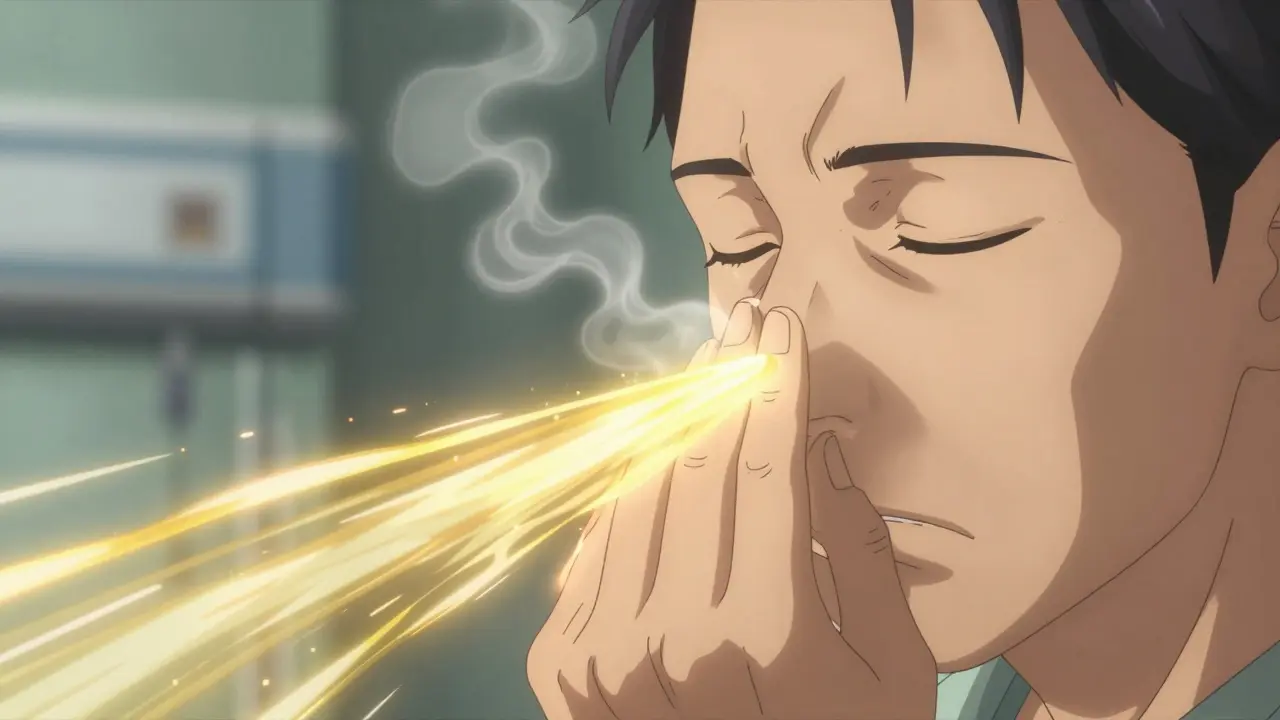
2. The Valsalva Maneuver
This is the go-to trick for flyers and divers. Here’s how to do it right:
- Take a deep breath.
- Pinch your nostrils shut with your fingers.
- Gently blow out through your nose - like you’re trying to pop a balloon - but keep your mouth closed.
- You should feel a slight pop in your ears.
Do this 3-5 times an hour, especially before and after flying. But don’t force it. Blowing too hard can damage your eardrum. About 45% of first-timers do it wrong - they blow too hard or hold their breath too long.
3. The Toynbee Maneuver
Another option: swallow while pinching your nose shut. This creates suction that helps open the tube. Try it with a sip of water.
4. Use a Warm Compress
Hold a warm (not hot) washcloth over your ear for 5-10 minutes. The heat helps reduce swelling and improves circulation around the tube.
When Home Remedies Aren’t Enough
If symptoms last more than two weeks, or if your hearing drops noticeably, it’s time to see a doctor. But don’t jump to antibiotics - they don’t work for ETD unless there’s a confirmed infection.
Decongestant Nasal Sprays
Products like oxymetazoline (Afrin) can reduce swelling in the nasal passages. But here’s the catch: use them for no more than 3 days. Longer than that, and they cause rebound congestion - making things worse.
Steroid Nasal Sprays
Fluticasone (Flonase) or mometasone (Nasonex) are safer for long-term use. They reduce inflammation in the nose and throat over 2-4 weeks. These are especially helpful if allergies are the root cause.
Oral Decongestants and Antihistamines
Pseudoephedrine (Sudafed) can help, but it’s not for everyone. It raises blood pressure and can cause insomnia. Antihistamines like loratadine (Claritin) help if allergies are involved, but they can dry out mucus - which might make drainage harder.

Medical Procedures for Chronic ETD
If ETD sticks around for more than 3 months, you might need more than pills and sprays.
Balloon Dilation of the Eustachian Tube (BDET)
This is the newest, least invasive option. A tiny balloon is inserted through the nose and guided into the Eustachian tube. It’s inflated for 2 minutes, then deflated and removed. The procedure takes about 20 minutes, is done under local anesthesia, and patients go home the same day. Studies show 67% of patients have lasting improvement at 12 months. One user, u/ETDWarrior, said: “Balloon dilation gave me 6 months of relief before symptoms returned.” It’s not a cure-all, but it’s a big step forward.
Myringotomy with Tubes
In this older procedure, a small incision is made in the eardrum, and a tiny tube is inserted to drain fluid and equalize pressure. It’s more common in kids with recurrent ear infections. Adults rarely need it unless fluid buildup is severe.
What Doesn’t Work - And What to Avoid
There’s a lot of misinformation out there.
- Antibiotics: The American Academy of Otolaryngology says not to use them for ETD unless there’s a confirmed bacterial infection. Most cases are viral or inflammatory.
- Ear candling: It’s dangerous and doesn’t work. The FDA warns against it.
- Overusing decongestants: More than 3 days of nasal spray = rebound congestion.
- Blowing too hard: The Valsalva maneuver isn’t a power move. Gentle is better.
Long-Term Outlook and What’s Next
ETD is on the rise. In-office balloon dilation procedures have grown by 220% since 2018. Researchers are now testing bioabsorbable stents - tiny, dissolvable devices that prop open the tube for weeks. Early trials show 85% symptom improvement at 3 months.
For now, the best strategy is simple: act fast. If you feel pressure after a cold or flight, start swallowing, chewing, and yawning. Use nasal sprays if allergies are involved. If it doesn’t improve in 10-14 days, see an ear specialist. Don’t wait until your hearing is noticeably worse. Most people don’t realize how much they rely on clear ear pressure - until it’s gone.
Can Eustachian tube dysfunction cause permanent hearing loss?
Permanent hearing loss from ETD is rare. Most hearing loss is temporary, caused by fluid buildup or pressure pulling the eardrum inward. If fluid stays in the middle ear for more than 3 months, it can lead to scarring or damage - but this is uncommon. The key is early intervention. Most cases resolve before any lasting damage occurs.
Why does ETD happen more in children?
Children’s Eustachian tubes are shorter, more horizontal, and narrower than adults’. This makes it harder for air and fluid to flow properly. Their immune systems are also still developing, so they get more colds and infections - which trigger swelling. That’s why ear infections and pressure issues are so common in kids under 7.
Is it safe to fly with ETD?
Flying with ETD can be painful, but it’s usually safe. The change in air pressure during takeoff and landing can make symptoms worse. To reduce discomfort, chew gum, swallow often, or use the Valsalva maneuver during ascent and descent. Avoid flying if you have a severe cold or sinus infection - wait until symptoms improve.
Can allergies cause Eustachian tube dysfunction?
Yes - allergies are the second most common cause of ETD, accounting for 22% of cases. Allergic inflammation swells the lining of the nose and throat, blocking the opening of the Eustachian tube. Using a steroid nasal spray like Flonase for 2-4 weeks often helps relieve both allergy symptoms and ear pressure.
How long should I try home remedies before seeing a doctor?
Try home remedies for 7-14 days. If your ear pressure, muffled hearing, or popping doesn’t improve, or if it gets worse, see a doctor. If you have severe pain, dizziness, or sudden hearing loss, don’t wait - get evaluated right away. Most cases resolve on their own, but knowing when to seek help prevents complications.
15 Comments
Emily Wolff February 23, 2026 AT 15:53
Ugh. Another one of these ‘simple fixes’ posts. Swallowing? Yawning? Like I haven’t tried that since I was five. If your ear pressure doesn’t vanish after 48 hours of basic human functions, you’re probably not dealing with ETD-you’re dealing with neglect. Go see an ENT. Stop Googling.
Bhaskar Anand February 24, 2026 AT 16:59
Why do Americans always assume everything can be fixed with home remedies? In India, we know better. If your ear is blocked after a flight, you don’t chew gum-you go to the clinic. No time for ‘Valsalva maneuvers.’ We have doctors. Real ones. Not blog posts.
Southern Indiana Paleontology Institute February 25, 2026 AT 03:54
So you're telling me I should just chew gum and hope? That's it? No pills? No science? I've got a degree in biology and this feels like a TikTok hack. Also, 'balloon dilation' sounds like something a wizard would do. I'm gonna try it though. What's the worst that could happen? My eardrum pops? Cool.
Anil bhardwaj February 26, 2026 AT 16:02
Been there. Felt that. After a long flight from Delhi to Mumbai, my ears were stuck for three days. I drank warm water, did the swallowing thing, and just waited. No drama. No panic. Sometimes the body knows what to do. Just chill.
lela izzani February 28, 2026 AT 04:33
Thank you for this. So many people don’t realize ETD isn’t just ‘ear stuffiness’-it’s a functional issue with real consequences. I’m an audiologist, and I see this daily. The Valsalva maneuver is often done wrong-people blow like they’re trying to inflate a tire. Gentle pressure. One breath. One pop. That’s all. And yes-steroid sprays work better than decongestants long-term. Don’t overuse Afrin. Seriously.
Joanna Reyes March 1, 2026 AT 05:17
I’ve had chronic ETD for seven years. It started after a bad sinus infection, then became allergic. I tried everything: nasal sprays, antihistamines, steam, acupuncture, yoga poses that supposedly ‘open the Eustachian tube’ (yes, really). Nothing worked until I started using Flonase daily for six months. It’s not a miracle, but it’s the only thing that’s kept my hearing stable. I still do the swallowing thing every 20 minutes. I’ve become weirdly good at swallowing discreetly in meetings. It’s a lifestyle now. Also, I avoid flying unless absolutely necessary. If you’re reading this and have had this for over a year-you’re not alone. It’s not ‘all in your head.’
Nerina Devi March 2, 2026 AT 18:02
As someone from Mumbai who’s flown 40+ times this year, I can confirm: chewing gum and yawning are life-savers. But the real game-changer? Drinking warm water with lemon and honey before takeoff. It clears the throat, reduces mucus, and helps the tube open naturally. No magic, just tradition. And yes, I’ve told my entire office about this. We all do it now. We call it ‘the Indian ear hack.’
Dinesh Dawn March 2, 2026 AT 21:01
My cousin’s kid had this bad after a cold. We tried everything. Then we just gave him a warm bath and let him chew on a teether. He yawned three times in the tub. Boom. Pressure gone. Sometimes the simplest things work. No need to overthink it.
Vanessa Drummond March 4, 2026 AT 01:56
Why is everyone so calm about this? I had ETD for 11 weeks. I cried in the shower. I couldn’t hear my dog bark. I had to ask people to repeat themselves 10 times. And now you’re all acting like it’s just a ‘mild annoyance’? This isn’t ‘oh, I got a stuffy nose.’ This is your brain being muffled by a wet sock. If you’re not scared, you haven’t lived it.
Nick Hamby March 5, 2026 AT 05:04
There is a profound philosophical dimension to Eustachian tube dysfunction. It represents a breakdown in internal equilibrium-a metaphor for how modern life disconnects us from our bodily rhythms. We are inundated with stimuli, yet our most fundamental regulatory systems-like pressure equalization-are ignored until they fail. The Valsalva maneuver, then, is not merely a physical act, but a ritual of reconnection. A silent plea to the body: ‘I am here. I am listening.’
kirti juneja March 6, 2026 AT 18:06
Y’all are overcomplicating this. I’m a hairstylist in Jaipur. My clients come in with ears like clogged drains after flights. I tell ‘em: chew sour candy. Like, really sour. The kind that makes your eyes water. The jaw movement? The saliva? It’s like a mini massage for your inner ear. Works better than half the meds I’ve seen. And it’s cheap. Also? It’s fun. Try it. You’ll laugh. And your ears will thank you.
Spenser Bickett March 7, 2026 AT 21:09
So you’re telling me the solution to modern medicine’s failures is… chewing gum? And yoga? And ‘warm compresses’? Wow. I’m so glad we stopped inventing drugs and started trusting the power of ‘just breathe.’ Next you’ll tell me penicillin was just a myth and the real cure was ‘drinking tea while staring at a candle.’
Christopher Wiedenhaupt March 9, 2026 AT 18:58
Thanks for the detailed breakdown. I appreciate the stats. One thing I’d add: if you're using nasal sprays, always rinse your nose with saline first. It helps the medication reach the tissue better. Also, avoid lying down immediately after spraying. Gravity matters. I learned this the hard way.
Khaya Street March 10, 2026 AT 20:58
Too long. Didn’t read. Just tell me what to do.
Christina VanOsdol March 12, 2026 AT 16:46
OMG I’M SO GLAD I’M NOT ALONE 😭 I’ve been doing the Valsalva like a maniac and now I think I ruptured something?? I’m scared. I need a doctor. I need a therapist. I need a hug. And maybe a new ear. 🥺