

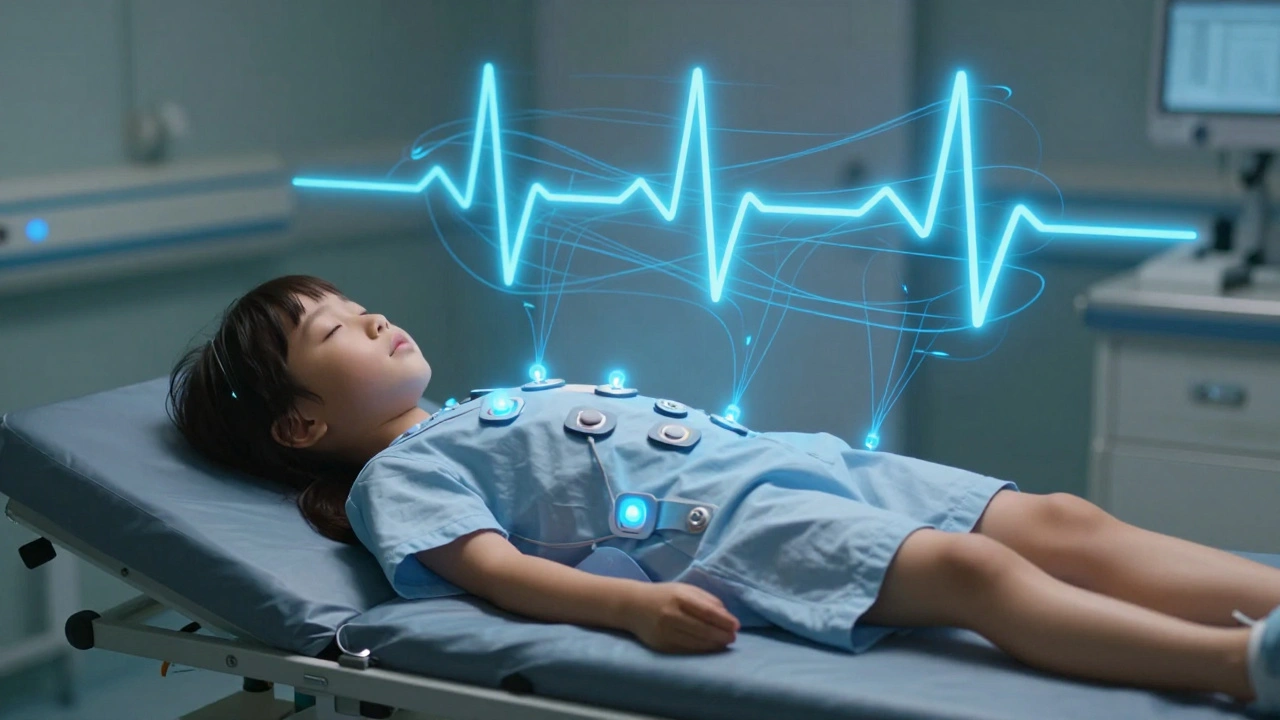
When your doctor says you need an ECG or a stress test, it’s not because they’re being overly cautious-it’s because they’re looking for answers your heart won’t give you at rest. These tests are simple, non-invasive, and among the most common ways doctors check if your heart is getting enough blood and oxygen, especially when you’re under pressure. Whether you’re experiencing chest tightness, unusual fatigue, or just have risk factors like high blood pressure or diabetes, understanding what these tests do-and what they don’t-can take the fear out of the process.
What an ECG Actually Measures
An electrocardiogram, or ECG (also called EKG), records the electrical signals that make your heart beat. It doesn’t measure blood flow or pumping strength. Instead, it shows the timing and pattern of those tiny electrical impulses traveling through your heart muscle. When those signals are off, it can mean a lot of things: a past heart attack, an irregular rhythm, or even just an electrolyte imbalance. The test itself takes less than five minutes. Ten small sticky patches-electrodes-are placed on your chest, arms, and legs. You lie still while the machine records about ten seconds of your heart’s electrical activity. No needles, no pain, no radiation. The result? A graph of waves and spikes that tell doctors if your heart’s rhythm is steady, too fast, too slow, or skipping beats. It’s important to know: a normal ECG doesn’t mean your heart is perfect. Many people with blocked arteries have perfectly normal resting ECGs. That’s why doctors sometimes need to push your heart harder to see what’s really going on.Why You Might Need a Stress Test
Think of a stress test like a workout for your heart-except you’re being watched closely. The goal? To see how your heart handles being pushed. When you’re at rest, your heart doesn’t always show signs of trouble. But when you’re walking fast on a treadmill or your heart is chemically stimulated to beat faster, problems like blocked arteries become obvious. The most common type is the exercise stress test. You walk on a treadmill that slowly gets steeper and faster. Every three minutes, the speed and incline increase. You keep going until you’re tired, your heart rate hits its target (usually 85% of 220 minus your age), or you start feeling symptoms like chest pain, dizziness, or shortness of breath. During the test, doctors monitor three key things: your heart’s electrical pattern (via ECG), your blood pressure, and how hard you’re breathing. If your ECG shows changes like ST-segment depression-where part of the wave flattens or dips-it’s a red flag that your heart muscle isn’t getting enough oxygen. That’s often a sign of coronary artery disease.What If You Can’t Exercise?
Not everyone can walk on a treadmill. Maybe you have bad knees, severe asthma, or recently had surgery. That’s where chemical stress tests come in. Instead of making you move, doctors use medications like adenosine, dipyridamole, or dobutamine to make your heart beat faster and harder-mimicking the effects of exercise. These drugs can cause side effects: flushing, chest pressure, shortness of breath, or a weird metallic taste in your mouth. For many, it feels scary-even though it’s normal and lasts only a few minutes. The good news? The effects fade quickly once the drug stops. And unlike exercise tests, you don’t need to be physically fit to complete one.Stress Echo vs. Nuclear Stress Test: What’s the Difference?
There are two main upgrades to the basic stress test: stress echocardiography and nuclear stress testing. A stress echocardiogram adds ultrasound imaging. Before and after exercise (or chemical stress), a technician takes pictures of your heart using a probe on your chest. If a part of your heart doesn’t move well under stress, it means that area isn’t getting enough blood. This test has no radiation, gives real-time images, and is especially useful for women, where traditional ECG stress tests can miss problems. A nuclear stress test uses a small amount of radioactive dye (like technetium-99m) injected into your vein. A special camera then takes pictures of your heart before and after stress. Areas with poor blood flow show up as dark spots. This test is more sensitive-it catches more blockages-but you’re exposed to radiation equivalent to 3-4 years of natural background exposure. It’s usually reserved for people with unclear results on other tests or those at higher risk. In terms of accuracy: nuclear tests catch more cases of disease (85% sensitivity), but stress echo is better at ruling out false positives (88% specificity). That means stress echo is less likely to tell you there’s a problem when there isn’t one.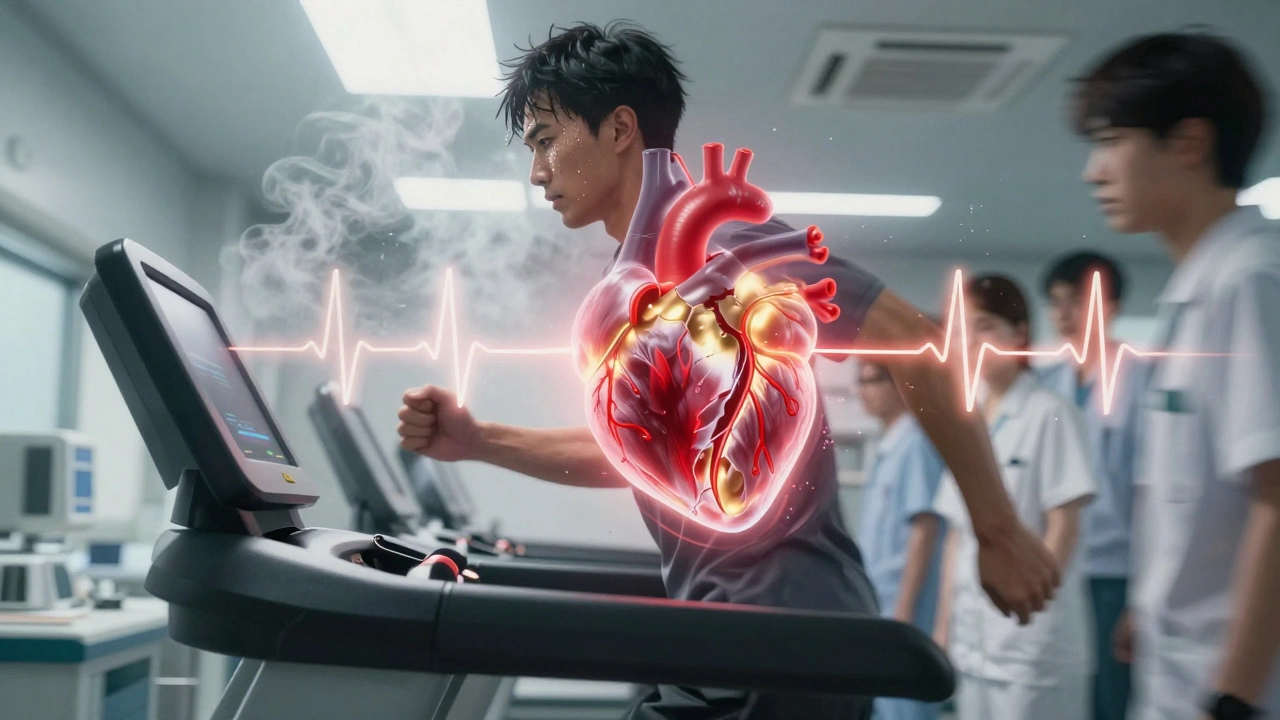
What the Results Really Mean
A stress test doesn’t give you a yes-or-no answer about heart disease. It gives you risk levels. If you can walk for 12 minutes on the treadmill without symptoms or ECG changes, your risk of a heart event in the next year is very low. Each extra minute you can go reduces your risk by about 12%. If your test shows abnormalities, your doctor will look at the whole picture: your age, symptoms, cholesterol levels, blood pressure, and family history. One abnormal ECG wave doesn’t mean you need a stent. But if you have chest pain, diabetes, and a positive stress test? That’s a strong signal to dig deeper-maybe with a CT scan or cardiac catheterization. And yes, false negatives happen. Studies show that up to 30% of women, especially younger ones, can have normal stress tests even when they have heart disease. That’s because their blockages are often in smaller vessels, not the main arteries. That’s why doctors are increasingly turning to stress echo for women with symptoms but no clear blockages on standard tests.What to Expect Before and After
Preparation is simple but important. You’re usually told to avoid caffeine for 24 hours before the test. That includes coffee, tea, soda, chocolate, and even some pain relievers. Caffeine can interfere with the chemicals used in pharmacological stress tests and mask problems. Wear comfortable clothes and walking shoes. No dresses or skirts-you’ll need access to your chest. Don’t apply lotions or oils to your skin; they can make the electrodes stick poorly. After the test, most people feel fine. You can drive yourself home, eat lunch, and go back to work. If you had a chemical stress test, you might feel a little shaky or nauseous for a few minutes, but that passes quickly. Results often come back the same day. Many clinics give you a preliminary read before you leave. A full report, with detailed measurements and interpretation, usually follows within a few days.Cost, Accessibility, and What’s Changing
Stress tests aren’t cheap, but they’re far less expensive than a heart catheterization. A basic exercise stress test with ECG runs around $500. Stress echo costs about $600-$700. Nuclear stress tests? Around $950. CT angiograms, which show actual blockages in the arteries, are cheaper now-around $400-and becoming more common as a first step for low-risk patients. The biggest shift in recent years? AI. Machine learning tools are now being used to analyze stress test ECGs with 18-22% higher accuracy than human interpretation alone. Portable devices like the Cardiac Dynamics StressPal are letting clinics run stress tests in primary care offices, not just hospitals. And research is moving fast. Stanford’s new technique using speckle-tracking ultrasound can detect tiny heart muscle changes in women with microvascular disease-something traditional tests miss entirely. That’s changing how we diagnose heart disease in women, who are often underdiagnosed.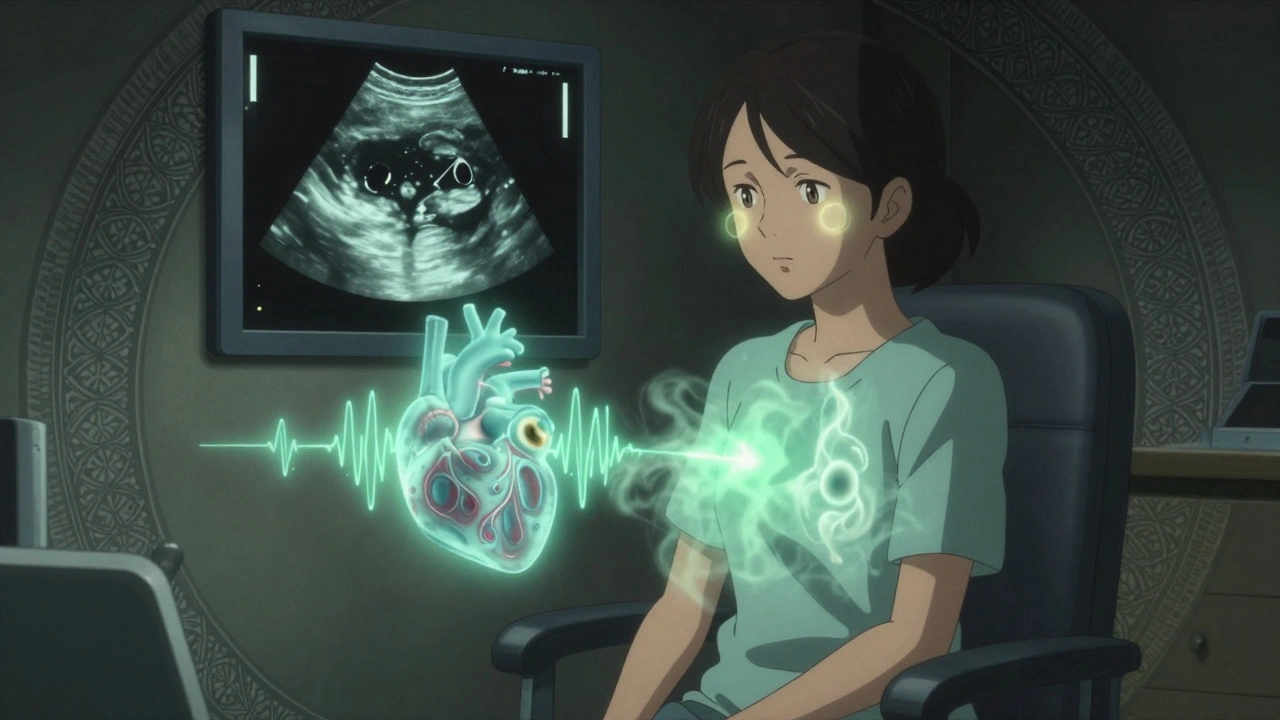
When Not to Have a Stress Test
Stress tests are safe for most people, but they’re not for everyone. Doctors avoid them if you’ve had a heart attack in the last 48 hours, have unstable angina, severe uncontrolled high blood pressure, or a dangerous heart rhythm. In those cases, the risk of triggering a problem during the test outweighs the benefit. If you’re unsure whether you need one, ask your doctor: “What are we looking for? What happens if we don’t do this test? What’s the next step if it’s positive?”Real Stories, Real Results
One Reddit user, "CardiacWarrior87," had a normal resting ECG but felt tired all the time. His stress test caught silent ischemia-he had a blocked artery he didn’t know about. He got a stent, changed his diet, and now runs marathons. Another person, "AnxiousPatient22," had a chemical stress test with adenosine. She felt like she was dying for three minutes-chest pressure, sweating, breathless. But when the drug wore off, she was fine. The test showed no blockages, and her anxiety dropped once she knew her heart was okay. These aren’t rare stories. Thousands of people get answers from these tests every day-some life-saving, some reassuring.What’s Next?
If your test was normal, keep living well: move daily, manage your blood pressure, don’t smoke, and get regular checkups. If it was abnormal, don’t panic. Most people don’t need surgery. Lifestyle changes, medications like statins or beta-blockers, and regular follow-ups can keep you healthy for years. The bottom line? ECG and stress tests aren’t about fear. They’re about clarity. They help you understand your heart’s true condition-not what it looks like when you’re sitting still, but how it holds up when it’s working hard. And that’s the only way to know if you’re truly at risk.Is an ECG the same as a stress test?
No. An ECG records your heart’s electrical activity while you’re at rest. A stress test monitors your heart while it’s under physical or chemical stress-usually during exercise or with medication. The stress test often includes an ECG, but it adds movement or drugs to reveal problems that don’t show up when you’re sitting still.
Can a stress test miss heart disease?
Yes. Standard exercise ECG stress tests have about a 30% false-negative rate in women, especially younger ones, because their heart disease often affects small vessels, not the main arteries. Stress echocardiography is more accurate in these cases. Even with the best tests, some forms of microvascular disease can still be missed.
Do I need to fast before a stress test?
You don’t need to fast, but you should avoid eating a heavy meal 2-4 hours before the test. More importantly, you must avoid caffeine for 24 hours before-this includes coffee, tea, chocolate, soda, and certain painkillers. Caffeine can interfere with the chemicals used in pharmacological stress tests and hide signs of heart problems.
How long does a stress test take?
The actual exercise part usually lasts 7-12 minutes. But the whole process-including setup, monitoring, and recovery-takes about 30-45 minutes. Chemical stress tests take longer, often 45-60 minutes, because of the time needed for medication to take effect and for monitoring afterward.
Are stress tests safe?
Yes, they’re very safe when done under medical supervision. Serious complications like heart attack or dangerous arrhythmias are rare-less than 1 in 1,000 tests. The staff is trained to stop the test immediately if any danger signs appear. The benefits of finding heart disease early far outweigh the small risks.
What’s the best stress test for women?
Stress echocardiography is now recommended as the first-line test for women with symptoms and intermediate risk of heart disease. It has higher accuracy than standard ECG stress tests and doesn’t use radiation. For women with suspected microvascular disease, newer ultrasound techniques like speckle-tracking strain analysis are showing even better results.
Can I drive myself home after a stress test?
Yes, in most cases. If you had an exercise stress test, you can drive right away. If you had a chemical stress test, you might feel dizzy or lightheaded for a few minutes after the test. Most clinics ask you to wait 15-30 minutes before leaving. If you feel fine, driving is okay. If you’re unsure, ask the staff or have someone with you.
How accurate are stress tests for detecting blockages?
Standard exercise ECG stress tests detect coronary artery disease with about 68% sensitivity and 77% specificity. Stress echocardiography improves specificity to 88%, and nuclear stress tests boost sensitivity to 85%. No test is perfect, but combining results with your symptoms and risk factors gives doctors the clearest picture.
13 Comments
Kyle Oksten December 7, 2025 AT 21:12
It's wild how we've turned something as fundamental as heart function into a numbers game. ECGs, stress tests, nuclear dyes - all these tools are great, but they're still just proxies for what's really happening inside. The heart doesn't care about sensitivity percentages or false negatives. It just beats. Maybe we need to listen to the body more and the machines less.
Helen Maples December 8, 2025 AT 22:32
Let's be clear: the article is accurate, well-researched, and properly cited. The distinction between stress echo and nuclear testing is critical for clinical decision-making. The 30% false-negative rate in women is not an oversight - it's a systemic failure in diagnostic paradigms that have been male-centric for decades. This is why guidelines must evolve.
Ashley Farmer December 9, 2025 AT 01:45
I remember my mom going through a chemical stress test. She was terrified - said it felt like her chest was being squeezed by a vice. But when they told her it was normal, she cried. Not from relief, but because she realized she’d been ignoring her symptoms for years thinking it was just ‘getting old.’ These tests don’t just find blockages. They give people permission to take their health seriously.
Sadie Nastor December 9, 2025 AT 17:02
ok so i just got my stress test results and they were totally normal 😌 but like… i still feel kinda tired all the time?? idk maybe im just lazy or maybe my heart is quietly judging me 🤔 maybe i should try speckle tracking?? someone pls tell me im not overthinking this
Sangram Lavte December 10, 2025 AT 23:31
Back in India, most people don’t even know what an ECG is. My uncle had chest pain for months, thought it was indigestion. Finally went to a clinic, got an ECG, turned out he needed a stent. These tests are cheap, fast, and life-saving. Why aren’t we pushing them harder in rural areas? Prevention isn’t just for rich countries.
Olivia Hand December 12, 2025 AT 09:25
AI analyzing ECGs with 18-22% higher accuracy? That’s not progress - that’s a paradigm shift. We’re moving from human interpretation - flawed, biased, fatigued - to algorithmic detection that doesn’t sleep, doesn’t get distracted, and doesn’t dismiss symptoms because the patient is young or female. The medical establishment will resist this. They always do.
Desmond Khoo December 14, 2025 AT 04:08
Just had my first stress test last week. Treadmill was brutal. Felt like I was running from my own mortality. But the best part? The tech said, 'You're doing great' like I was winning a race. I left feeling like I’d conquered something. Also, no caffeine for 24 hours? Bro, I’m not a monk. But yeah… worth it.
Jane Quitain December 14, 2025 AT 20:19
soo i just read this whole thing and i think i might have heart disease?? like i got tired after walking to the fridge and i drank coffee yesterday and now im panicking?? someone please tell me i’m not dying??
Nancy Carlsen December 16, 2025 AT 03:36
As a woman of color who’s been told 'it’s just anxiety' three times before finally getting diagnosed - this article gives me hope. Stress echo for women? YES. Speckle tracking? YES. We’ve been ignored for too long. Thank you for writing this with clarity and care. You didn’t just explain tests - you validated experiences.
Ted Rosenwasser December 16, 2025 AT 17:27
Let me educate you. The nuclear stress test is the gold standard - period. Anything less is amateur hour. You think a stress echo can match the sensitivity of technetium-99m? Please. The AI tools mentioned? Still training on biased datasets. And don’t get me started on how the FDA approves these devices without real-world validation. This isn’t medicine - it’s marketing dressed in white coats.
David Brooks December 17, 2025 AT 13:18
I had a chemical stress test. Adenosine hit me like a freight train. My heart felt like it was trying to escape through my throat. I screamed. The nurse said, 'This is normal.' I thought I was dying. Then - silence. No blockages. No stents. Just a whole new lease on life. If you’re scared - you’re not alone. But you’re also not broken. Your heart is fighting for you. Don’t ignore it.
Jennifer Anderson December 18, 2025 AT 05:10
my doctor said i need a stress test but i dont wanna… like what if they find somethin? what if i cant handle it? what if i have to change my whole life?? but then i thought… what if i dont do it and something happens? so i’m going. brb, gonna go buy comfy shoes and cry in the shower first
Nicholas Heer December 19, 2025 AT 09:52
THEY’RE HIDING THE TRUTH. WHY DO THEY USE RADIOACTIVE DYE? WHY NOT JUST USE A MAGNETIC RESONANCE? BECAUSE THE PHARMA COMPANIES OWN THE NUCLEAR INDUSTRY. THEY MAKE BILLIONS OFF THESE TESTS. AND THE AI? IT’S NOT IMPROVING DIAGNOSIS - IT’S TRAINED TO CONFIRM WHAT THEY WANT TO SEE. THEY DON’T WANT YOU TO KNOW YOU CAN FIX YOUR HEART WITH DIET AND SLEEP. THEY WANT YOU COMING BACK EVERY YEAR.