

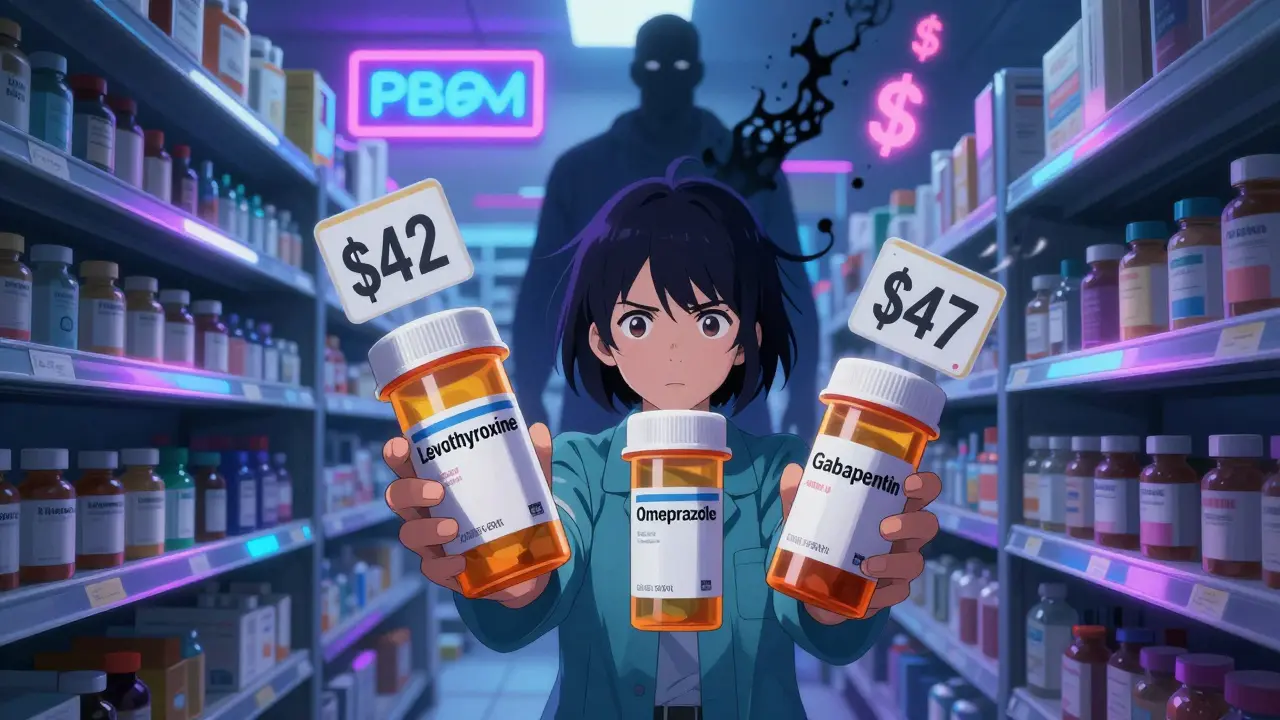
When you need a generic medication like metformin, lisinopril, or atorvastatin, do you pay through insurance-or straight out of pocket? More Americans are asking this question. Online pharmacies like Mark Cuban Cost Plus Drug Company is a direct-to-consumer pharmacy founded in 2020 that sells medications at cost plus a 15% markup, bypassing pharmacy benefit managers (PBMs). Also known as Cost Plus Drug Co, it was created to bring transparency to drug pricing., Amazon Pharmacy is an online pharmacy launched in November 2020 that offers cash-pay pricing for generics and integrates with Amazon Prime membership., Costco is a retail pharmacy chain that offers cash prices for generics, often under $20 for a 30-day supply, and has expanded its online delivery options since 2021., and Walmart is a major U.S. retailer that provides a $4 generic drug list and online pharmacy services for cash-paying customers. are cutting out the middleman. But here’s the catch: sometimes, they save you money. Other times, they cost more. And it all depends on what drug you need, how much your insurance charges, and whether you’re willing to spend hours comparing prices.
What’s the real savings on generic drugs?
A 2024 study in the Journal of General Internal Medicine looked at 100 of the most common and most expensive generic drugs used by Medicare Part D patients. The researchers compared prices across five major direct-to-consumer (DTC) pharmacies: Amazon, Mark Cuban Cost Plus Drug Company, Costco, Walmart, and Health Warehouse. They found something surprising: the savings weren’t the same for every drug. For the 50 most expensive generics-drugs like gabapentin, omeprazole, and levothyroxine-the savings were huge. On average, people paid $231 less per prescription than they would at a regular retail pharmacy. That’s a 76% drop. For example, a 30-day supply of the brand-name version of a common cholesterol drug might cost $300. The generic version through Mark Cuban Cost Plus Drug Company? $47. Through Amazon? $42. Through GoodRx at a local pharmacy? $273. That’s not a typo. You’re saving over $200. But for the 50 most common generics-like amoxicillin, hydrochlorothiazide, or metformin-the savings were much smaller. Just $19 per prescription on average. That’s still a 75% discount compared to retail prices. But if your insurance copay is $10, you’re not saving much. You might even pay more. Here’s how the prices broke down across platforms:| Drug Type | Lowest Price Leader | Percentage of Drugs with Lowest Price |
|---|---|---|
| Expensive Generics (top 50 by cost) | Amazon Pharmacy | 47% |
| Expensive Generics (top 50 by cost) | Mark Cuban Cost Plus Drug Company | 26% |
| Expensive Generics (top 50 by cost) | Health Warehouse | 14% |
| Expensive Generics (top 50 by cost) | Costco | 13% |
| Common Generics (bottom 50 by cost) | Costco | 31% |
| Common Generics (bottom 50 by cost) | Amazon Pharmacy | 27% |
| Common Generics (bottom 50 by cost) | Walmart | 20% |
| Common Generics (bottom 50 by cost) | Health Warehouse | 12% |
| Common Generics (bottom 50 by cost) | Mark Cuban Cost Plus Drug Company | 10% |
So if you’re on a high-cost drug, Amazon is your best bet. If you’re on a common one, Costco often wins. But you can’t assume one pharmacy is cheaper across the board. You have to check each one.
Why insurance sometimes costs more
Most people think insurance = lower prices. But that’s not always true. Pharmacy benefit managers (PBMs) like CVS Caremark, Express Scripts, and Optum run the system behind your insurance. They negotiate rebates with drugmakers, but those savings don’t always go to you. Sometimes, your copay is higher than the cash price. A 2023 study by CVS Health’s own researchers found that if every commercial prescription in the U.S. moved to DTC pharmacies, out-of-pocket spending would go up by $82 million. Why? Because DTC pharmacies don’t carry all drugs. For neurological medications like gabapentin, pregabalin, or levetiracetam, Mark Cuban Cost Plus Drug Company only carried 33 of the 79 drugs studied. And in only two cases were their prices lower than what insured patients paid out-of-pocket. That’s because PBMs often have deals with local pharmacies that give you a $5 or $10 copay for common generics-even if the actual cash price is $15. Insurance doesn’t always help. But it does give you access to drugs that DTC pharmacies don’t stock.What you can’t buy online
Here’s the biggest problem: one in five of the most expensive generic drugs aren’t available at any national DTC pharmacy. That means if you’re taking a rare or high-cost medication-like certain antivirals, immunosuppressants, or specialty generics-you might be out of luck. Even if you’re willing to pay cash, the pharmacy simply doesn’t carry it. The same 2024 study found that 10 of the 50 most expensive generics were completely unavailable on any of the five DTC sites. That’s not a glitch. It’s a structural flaw. DTC pharmacies focus on high-volume, high-savings drugs. They skip the ones that are harder to source, have low demand, or come from manufacturers with strict distribution rules. If you need one of those drugs, your insurance might be your only option. Or you’ll have to find a specialty pharmacy, which often costs more.
Who wins with DTC pharmacies?
The people who save the most are:- Those without insurance
- Those with high-deductible plans who haven’t met their deductible
- Those taking expensive generics like levothyroxine, omeprazole, or gabapentin
- Those willing to spend 15-30 minutes comparing prices across Amazon, Costco, Walmart, and Mark Cuban Cost Plus Drug Company
If you’re on Medicare Part D, you might already be getting good deals. The USC Schaeffer Center found that 90% of commonly prescribed generics could be bought at Costco for under $20 for a 30-day supply. So if you’re already paying $15 with insurance, you’re not saving much by switching.
But if you’re paying $150 for a generic drug because your insurance doesn’t cover it well, or your deductible is $5,000, then DTC pharmacies could cut your bill in half-or more.
The hidden cost: time
No one talks about this. But shopping for the cheapest drug online isn’t like buying toilet paper. You can’t just click “add to cart.” You have to:- Know the exact drug name and dosage
- Check each pharmacy’s inventory
- Compare prices for 30-day, 90-day, and sometimes 180-day supplies
- Factor in shipping time
- Confirm the pharmacy ships to your state
- Check if the drug is covered by your insurance if you switch back later
That’s not a one-time task. It’s something you have to do every time your prescription is refilled. If you’re on five different medications, that’s five price checks per refill. Multiply that by 12 refills a year. That’s 60 hours of work just to save money on pills.
Dr. Hatim Lalani, lead author of the 2024 study, put it plainly: “This variation in availability and cost requires patients and prescribers to shop around. It’s a time-consuming process with financial tradeoffs.”
And there’s no app that does this for you. No tool tells you, “Your lisinopril is cheapest at Walmart this month, but your metformin is $3 cheaper at Amazon.” The system is broken. And until someone builds a real-time, nationwide drug price comparison engine, you’re stuck doing the work yourself.
Should you ditch insurance?
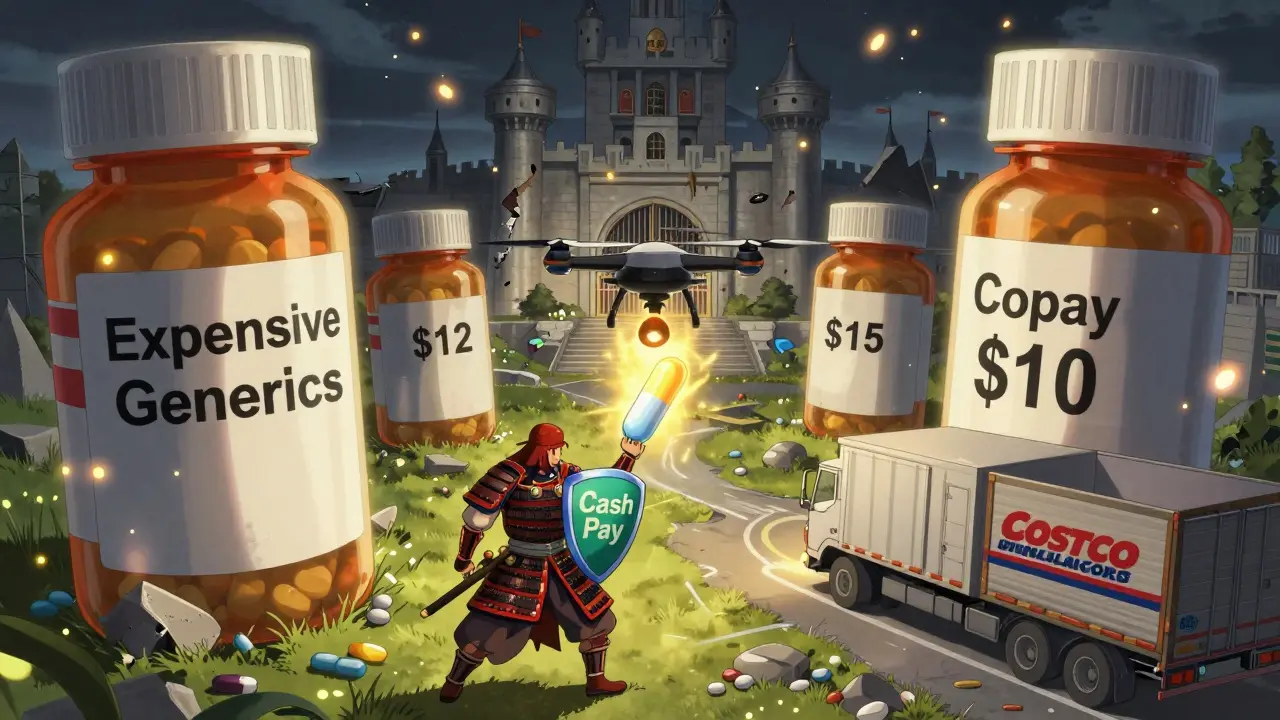
No. Not unless you’re certain you’ll never need a drug that DTC pharmacies don’t carry. Insurance isn’t perfect. PBMs are opaque. But they give you access to drugs, predictability, and sometimes, better prices than you can find on your own. Instead, use DTC pharmacies as a tool. Before you fill a prescription, ask yourself:- Is this drug on the DTC pharmacy’s list?
- What’s my insurance copay?
- What’s the cash price at Amazon, Costco, and Mark Cuban Cost Plus Drug Company?
- Am I paying more out-of-pocket than the cash price?
If the cash price is lower than your copay, pay cash. Use the pharmacy’s website or a price comparison tool like GoodRx or SingleCare to check. But don’t assume cash is always cheaper. Sometimes, your insurance is doing a better job than you realize.
And if you’re on a high-deductible plan? Use DTC pharmacies to help you meet your deductible faster. Pay cash for your generics, save the insurance use for when you really need it-like for a specialist visit or hospital stay.
What’s next?
The market is changing fast. Amazon is adding more drugs. Costco is expanding delivery. Mark Cuban Cost Plus Drug Company is negotiating directly with manufacturers. But until there’s a single, trusted source that shows you the lowest price across all pharmacies-insurance or cash-you’re still playing a game of price whack-a-mole.For now, the smart move is simple: don’t automatically use insurance. Don’t automatically pay cash. Check both. It takes a few minutes. But for expensive drugs, it could save you hundreds.
Are direct-to-consumer pharmacies cheaper than insurance?
It depends. For expensive generics, DTC pharmacies often save you $200 or more per prescription. For common generics, the savings are smaller-often just $10-$20. If your insurance copay is already low ($5-$15), you might not save anything. Always compare the cash price at Amazon, Costco, and Mark Cuban Cost Plus Drug Company to your insurance copay before filling a prescription.
Which DTC pharmacy is the cheapest?
There’s no single winner. For expensive generics, Amazon Pharmacy has the lowest price on nearly half of them. For common generics, Costco often wins. Mark Cuban Cost Plus Drug Company is cheaper on some high-cost drugs but doesn’t carry all medications. You need to check each pharmacy individually for each drug you take.
Can I use DTC pharmacies if I have Medicare?
Yes. Medicare Part D doesn’t require you to use your plan’s pharmacy. You can pay cash at any pharmacy, including DTC options. If the cash price is lower than your Part D copay, paying cash can save you money. Just make sure you’re not using your plan’s pharmacy if you want to avoid counting the cost toward your deductible.
Why don’t DTC pharmacies carry all drugs?
DTC pharmacies focus on high-volume, high-savings drugs. They avoid medications that are hard to source, have low demand, or come from manufacturers with strict distribution rules. One-fifth of the most expensive generics aren’t available on any major DTC site. If you need a rare drug, your insurance network may be your only option.
Is it worth the time to compare prices?
If you take one or two expensive generics, yes. You could save hundreds per month. If you take five or more medications, the time investment adds up. But even 15 minutes a month checking prices can pay off. Tools like GoodRx help, but they don’t show all DTC options. You still need to visit the pharmacy websites directly.
12 Comments
Helen Brown March 3, 2026 AT 00:17
The system is rigged. PBMs are just middlemen who take your money and give nothing back. I know someone who got charged $300 for metformin through insurance while the cash price was $12. They didn't even get a discount. This isn't about savings-it's about control. The pharmaceutical-industrial complex is laughing all the way to the bank while we scramble to compare prices like it's a game.
John Cyrus March 3, 2026 AT 21:23
People don't realize that insurance isn't supposed to be cheaper-it's supposed to be predictable. You think you're saving money by going cash but you're just avoiding the system that protects you when you need something expensive. DTC pharmacies only work if you're healthy and take three pills a year. Try needing a $5000 drug and see how fast your cash savings vanish.
marjorie arsenault March 5, 2026 AT 01:52
If you're taking multiple meds, just use GoodRx first. It's free, it shows you local prices, and it's way faster than checking five websites. I used to spend hours comparing but now I check once a month and save $80 on my blood pressure med. Small effort, big payoff. You don't need to be a detective to save money.
Deborah Dennis March 5, 2026 AT 08:00
....Seriously? You're telling people to 'check Amazon, Costco, and Mark Cuban' like it's a chore? This is a full-time job for people on 5+ meds. And don't even get me started on how some pharmacies don't ship to rural states. This isn't 'empowerment'-it's a cruel joke. The system is broken and we're being asked to fix it ourselves while they raise premiums. #RIPHealthcare
Shivam Pawa March 6, 2026 AT 01:31
In India, generics are sold at market stalls for pennies. No website, no app, no comparison. Just walk in, ask for the pill, pay cash. The US system is over-engineered. Complexity is a feature, not a bug. It keeps people confused and paying more. Simplicity would kill profits. So it won't happen.
Diane Croft March 6, 2026 AT 15:24
Small wins matter. Even if you save $10 on a prescription, that’s $10 you didn’t have to stress about. I started checking prices for my mom’s diabetes meds and we’ve saved over $600 this year. It’s not perfect, but it’s something. Don’t let the overwhelm stop you from doing what you can.
Megan Nayak March 8, 2026 AT 10:47
Let’s be honest: the whole DTC pharmacy movement is just another capitalist fantasy. Mark Cuban? He’s not saving lives-he’s building a brand. Amazon? They want your data, your habits, your future prescriptions. This isn’t transparency. It’s surveillance with a discount. And you’re falling for it because you’re tired of being exploited. But you’re still being exploited-just in a different way.
Tildi Fletes March 8, 2026 AT 23:23
It is imperative to recognize that the structural inefficiencies inherent in the U.S. pharmaceutical supply chain are not resolved through consumer-driven price comparison. Rather, they are exacerbated by the fragmentation of information access and the absence of regulatory oversight. The onus placed upon individuals to navigate this labyrinth constitutes a failure of public policy, not personal responsibility.
Alex Brad March 9, 2026 AT 04:17
My dad’s on three generics. He uses Costco. Always. No comparison. No hassle. He doesn’t even know what GoodRx is. He just walks in. And he pays less than $10 every time. Sometimes the simplest solution is the best one.
Renee Jackson March 9, 2026 AT 14:02
For those of you feeling overwhelmed-start with one medication. Pick the one that costs the most. Compare just that one price. If you save $50, you’ve already won. Then do the next one next month. You don’t need to fix everything today. Just take one step.
RacRac Rachel March 11, 2026 AT 12:10
OMG I just saved $187 on my gabapentin using Amazon! 🙌 I didn't even know I could do this. I thought insurance was the only way. Now I check every refill. It takes 5 minutes. Worth it. Also, Walmart has the best price on my metformin. You guys need to try this. It's life-changing.
Jane Ryan Ryder March 12, 2026 AT 04:08
Of course the system is designed this way. Who do you think benefits? The same people who profit from your confusion. They don’t want you to know the cash price is cheaper. They want you to believe insurance is magic. It’s not. It’s a tax on ignorance. And now you’re being asked to do the work of five different jobs just to afford your pills. Brilliant. Just brilliant.