

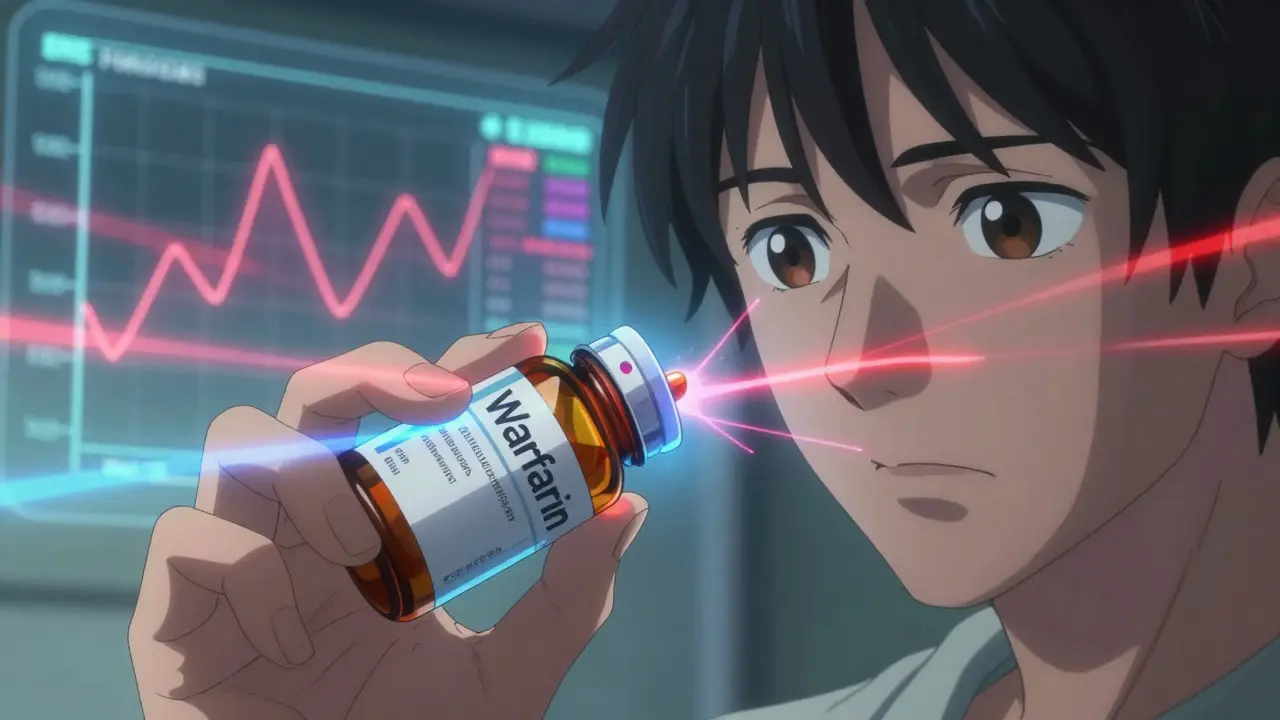
When a drug has a narrow therapeutic index, even a small change in dosage can mean the difference between healing and harm. Think of it like walking a tightrope-too little, and the drug doesn’t work. Too much, and it becomes toxic. This is the reality for medications like warfarin, phenytoin, digoxin, and levothyroxine. These aren’t ordinary pills. They’re life-critical drugs where precision isn’t optional-it’s mandatory.
That’s why generic versions of these drugs don’t get approved the same way as regular generics. For most medications, showing that the generic matches the brand-name drug in how it’s absorbed (bioequivalence) is enough. But for drugs with a narrow therapeutic index, regulators demand more. That’s where bridging studies come in. These aren’t just extra tests. They’re the gatekeepers of patient safety.
Why NTI Drugs Need Special Treatment
The term narrow therapeutic index (NTI) isn’t just jargon. It’s a scientific threshold. The FDA defines it as a drug where the difference between the minimum effective dose and the minimum toxic dose is no more than a 2-fold range. In practical terms, that means if your ideal dose is 5 mg, going to 6 mg could push you into danger. These drugs also require regular blood monitoring, and even tiny changes in how they’re absorbed can alter outcomes.
Warfarin, for example, is used to prevent blood clots. A 10% drop in blood levels might cause a clot. A 10% increase might cause internal bleeding. That’s why switching from a brand to a generic-or even between two different generics-can’t be treated like swapping one brand of aspirin for another.
Studies show that only about 6% of generic approvals between 2018 and 2022 were for NTI drugs, even though they make up around 14% of all small-molecule medications. Why? Because the bar is set much higher. The FDA rejected 37% of NTI generic applications between 2018 and 2022 due to inadequate bridging data. That’s more than triple the rejection rate for non-NTI generics.
What Makes a Bridging Study Different
Standard bioequivalence studies for most generics use a two-way crossover design: patients take the brand drug once, then the generic once, with a washout period in between. Blood samples are taken to measure how much of the drug enters the bloodstream (AUC) and how fast it peaks (Cmax). The acceptable range? 80% to 125%.
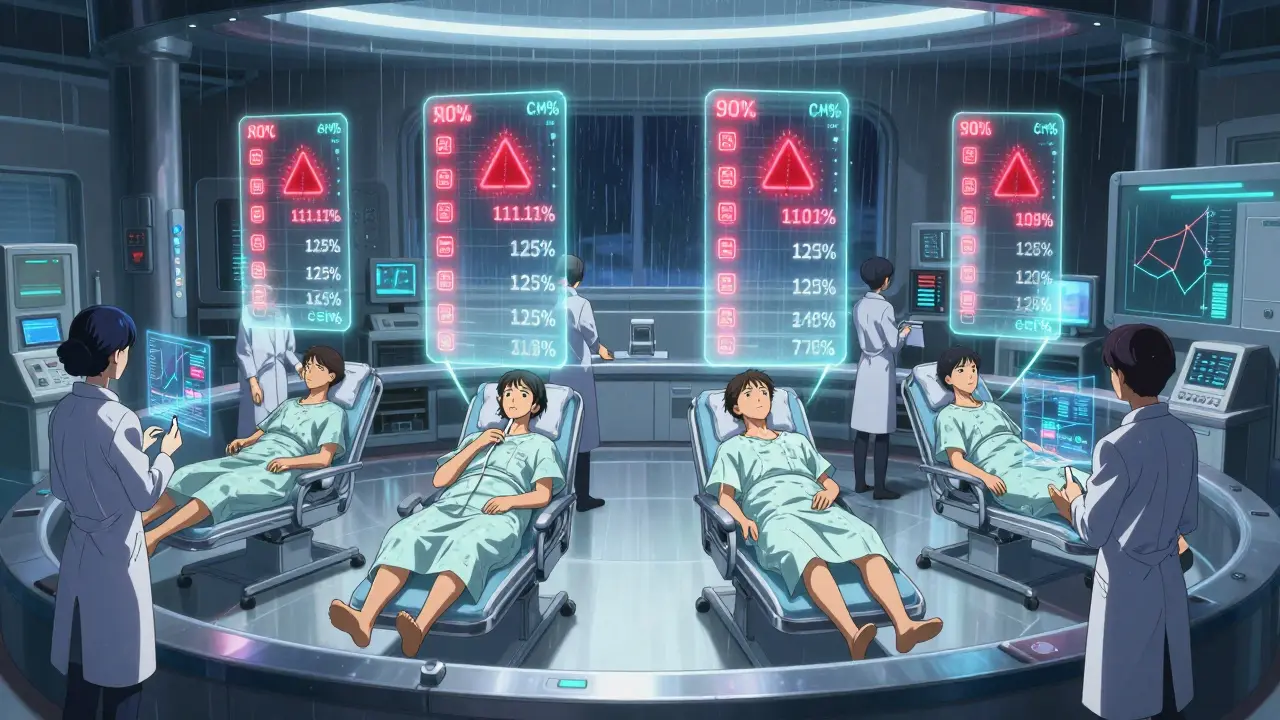
For NTI generics, that’s not enough. The FDA requires a four-way, fully replicated crossover design. That means each participant takes the brand drug twice and the generic drug twice, in a randomized order. This gives researchers more data points to account for natural variability in how people absorb drugs.
The acceptance criteria are also tighter. Instead of 80%-125%, the 90% confidence interval for both Cmax and AUC must fall between 90.00% and 111.11%. That’s a much narrower window. Even the quality control for the drug substance is stricter-active ingredient levels must be within 95% to 105%, not 90% to 110%.
These aren’t arbitrary numbers. They’re based on pharmacometric models that link small changes in exposure to clinical outcomes. Dr. Robert Lionberger of the FDA explained in 2021 that a therapeutic index of 3 or less is a reliable cutoff for identifying NTI drugs. That’s not guesswork-it’s math backed by decades of clinical data.
Cost, Time, and Complexity
Developing an NTI generic isn’t just harder-it’s exponentially more expensive and time-consuming. A standard bioequivalence study costs between $1.5 million and $2.5 million. For an NTI drug, that jumps to $2.5 million to $3.5 million. Why? More study periods, more subjects, more blood draws, more complex statistical analysis.
One study at Teva Pharmaceuticals found that NTI studies take 40-50% longer to complete because of the four-period design. Instead of 6 to 9 months, they can take 12 to 18 months just for the bioequivalence phase. Patient dropout rates are higher too-some people can’t handle four separate dosing periods with weeks between each.
And it’s not just about running the study. Companies need specialized staff: pharmacokinetic modelers, statisticians trained in reference-scaled average bioequivalence (RSABE), and regulatory experts who know the FDA’s exact expectations. Only about 35% of generic manufacturers have these skills in-house. Many end up hiring consultants or partnering with CROs, adding even more cost and complexity.
On average, bringing an NTI generic to market takes 3 to 5 years-compared to 2 to 3 years for a standard generic. And even then, approval isn’t guaranteed.
Why So Few NTI Generics Are on the Market
Despite the high demand for affordable medications, only 42% of the NTI drug market is covered by generics-compared to 85% for non-NTI drugs. That’s a $32.8 billion gap in potential savings by 2025.
Why hasn’t more been done? Because the financial risk doesn’t add up. Companies invest millions, wait years, and still risk rejection. The payoff is smaller too. Even when approved, NTI generics often face hesitancy from prescribers and pharmacists who worry about switching patients. Many doctors stick with the brand name, fearing instability.
The FDA has tried to help. Their pre-ANDA meeting program-where manufacturers can get feedback before submitting a full application-has been used by 82% of NTI applicants. Those who used it reported faster approvals and fewer surprises. But the process remains daunting.

What’s Changing? New Tools and Future Outlook
There’s hope on the horizon. In March 2023, the FDA expanded its list of NTI drugs requiring special testing from 12 to 27. That might sound like bad news, but it’s actually a step toward clarity. Companies now know exactly which drugs need the stricter approach.
More importantly, new tools are emerging. Physiologically-based pharmacokinetic (PBPK) modeling uses computer simulations to predict how a drug behaves in the body based on its chemical structure, formulation, and physiology. In a 2022 pilot study, PBPK modeling successfully predicted bioequivalence for warfarin generics without running a full clinical trial.
The FDA says these tools aren’t ready to replace bridging studies yet-but they’re close. By 2027, they may reduce the need for some clinical trials, especially for drugs with well-understood absorption patterns.
Meanwhile, global regulators are moving toward alignment. The European Medicines Agency and the International Council for Harmonisation are working on a unified framework for NTI drug classification and testing, with a target completion date of 2025. That could make it easier for companies to develop generics that work across multiple markets.
What This Means for Patients
At the end of the day, all this complexity exists for one reason: to protect you.
If you’re on warfarin, levothyroxine, or another NTI drug, you deserve a generic that works just as reliably as the brand. But you also deserve to know that switching won’t put you at risk. That’s why regulators don’t cut corners here. The cost is high. The process is slow. But the alternative-unpredictable blood levels, avoidable hospitalizations, or worse-is unacceptable.
As newer methods like PBPK modeling improve, we may see more NTI generics enter the market without sacrificing safety. Until then, the rigorous bridging studies remain the best tool we have to ensure that when you get a generic, you’re getting the same medicine-down to the last microgram.
What is a narrow therapeutic index (NTI) drug?
An NTI drug is one where the difference between the minimum effective dose and the minimum toxic dose is very small-typically no more than a 2-fold range. Examples include warfarin, phenytoin, digoxin, and levothyroxine. Even small changes in how the drug is absorbed can lead to treatment failure or serious side effects. These drugs usually require regular blood monitoring and are dosed in small increments.
Why can’t NTI generics use the same bioequivalence standards as regular generics?
Standard generics use an 80%-125% acceptance range for bioequivalence. For NTI drugs, that range is too wide. A 20% drop in absorption could push a patient below the therapeutic level, while a 20% increase could push them into toxicity. The FDA tightens the range to 90%-111.11% for NTI drugs to ensure safety. This is based on pharmacometric data showing that even minor exposure changes can affect clinical outcomes.
What is a bridging study for NTI generics?
A bridging study is a specialized clinical trial designed to prove that a generic NTI drug behaves the same way in the body as the brand-name version. It typically uses a four-way, fully replicated crossover design where participants receive both the brand and generic drug multiple times. Blood samples are taken to measure drug levels, and statistical methods like reference-scaled average bioequivalence (RSABE) are used to confirm equivalence within a much tighter range than standard generics.
How much does it cost to develop an NTI generic?
Developing an NTI generic costs 30-50% more than a standard generic. Bioequivalence studies alone range from $2.5 million to $3.5 million, compared to $1.5 million to $2.5 million for non-NTI drugs. The higher cost comes from longer study durations, more participants, complex statistical analysis, and stricter quality controls. Many companies also need to hire specialized consultants, adding to the expense.
Why are so few NTI generics approved?
Between 2018 and 2022, only 18 NTI generics were approved by the FDA, compared to over 1,000 non-NTI generics. The main reasons are the high cost and complexity of bridging studies, the risk of regulatory rejection (37% of NTI applications were rejected for inadequate data), and the lack of in-house expertise at many manufacturers. Even after approval, prescriber hesitation and market access challenges limit adoption.
Will PBPK modeling replace bridging studies for NTI generics?
Not yet, but it’s coming. PBPK modeling uses computer simulations to predict how a drug behaves in the body based on its chemistry and human physiology. Early pilot studies with warfarin generics showed promising results. The FDA believes these tools could eventually reduce or replace some clinical bridging studies, especially for drugs with well-characterized absorption. However, the FDA still says clinical data will remain essential for NTI drug approval for the foreseeable future.
15 Comments
Jessica Knuteson January 26, 2026 AT 02:22
NTI drugs are just nature's way of reminding us that biology doesn't care about your budget.
More money spent on testing than on actual patient care. Classic.
Robin Van Emous January 28, 2026 AT 00:11
I just want to say... thank you for writing this. Seriously. I've seen too many people treat these drugs like they're just aspirin. This is the kind of clarity we need.
Angie Thompson January 29, 2026 AT 04:30
This is why I love science 🤓
It’s not about cutting corners-it’s about not letting someone die because we got lazy. 💪💊
rasna saha January 30, 2026 AT 01:18
I'm from India and we don't have many NTI generics here. But I know someone on warfarin who switched generics and ended up in the ER. This post made me cry. Thank you.
Skye Kooyman January 30, 2026 AT 15:30
So the FDA is basically saying 'nope' to cheap shortcuts. Good.
James Nicoll January 30, 2026 AT 17:50
Ah yes, the FDA: where every dollar spent on safety is a dollar wasted on capitalism.
Meanwhile, my cousin's grandma is on three NTI drugs and pays $400 a month for brand-name. But hey, at least it's 'safe'.
Uche Okoro January 30, 2026 AT 19:46
The pharmacometric models referenced are predicated on Gaussian assumptions of inter-individual variability, which are empirically invalid in populations with high CYP2C9 polymorphism prevalence. The FDA’s 90–111.11% CI is statistically underpowered for global generalizability.
Ashley Porter February 1, 2026 AT 13:07
PBPK modeling is the future. We’ve been running simulations on digoxin formulations since 2020. The data correlates with clinical outcomes within 5% error margin. Time to phase out the 18-month trials.
shivam utkresth February 2, 2026 AT 19:18
You know what’s wild? In India, we make generics for everything-except these. Why? Because the labs here don’t have the equipment to measure microgram-level absorption differences. We’re not lazy-we’re under-resourced.
John Wippler February 2, 2026 AT 20:57
This isn’t just about science. It’s about dignity. People on these drugs aren’t test subjects-they’re mothers, fathers, teachers. They deserve to know their medicine won’t betray them. That’s not regulation. That’s love in action.
Kipper Pickens February 3, 2026 AT 01:07
The 37% rejection rate for NTI generics? That’s not a failure-it’s a feature. It’s the system working as designed: filter out the sloppy, the rushed, the dangerous. We don’t need more generics. We need better ones.
Betty Bomber February 4, 2026 AT 20:37
I work in a pharmacy. People get mad when we don’t substitute their levothyroxine. I just hand them the brand and say, 'I know you don’t want to pay more, but I’d rather not be responsible for your next heart attack.'
Mohammed Rizvi February 6, 2026 AT 02:38
The real joke? The brand companies charge $500/month for warfarin. The generic costs $10. But the bridging study? $3 million. So the system protects the brand... by making the generic impossible to make. Brilliant.
Curtis Younker February 6, 2026 AT 07:19
I’ve been in pharma for 20 years and let me tell you-this is the most important thing I’ve read all year. It’s not sexy. It’s not viral. But it’s the reason someone’s grandma is still alive. We need more people talking like this. Not just in FDA meetings. In living rooms. In schools. In Congress. This is public health. This is life. And it’s worth every penny, every month, every delay.
Suresh Kumar Govindan February 7, 2026 AT 21:02
The FDA's NTI framework is a deliberate economic suppression mechanism designed to maintain monopolistic pricing under the guise of safety. PBPK modeling is suppressed because it threatens the $12 billion annual revenue stream of brand-name NTI manufacturers. This is not regulation. It is corporate capture.